
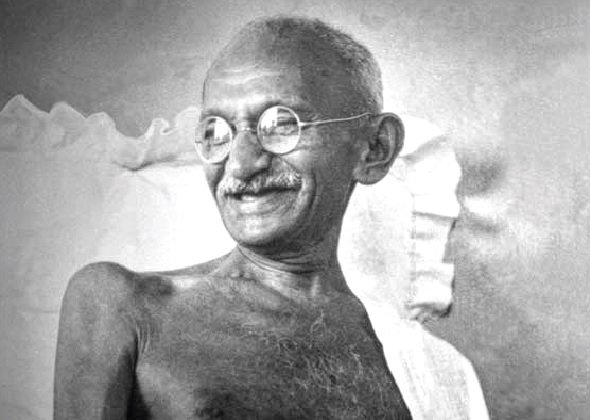
“Man becomes great exactly in the degree in which he works for the welfare of his fellowmen”. Mahatma Gandhi.
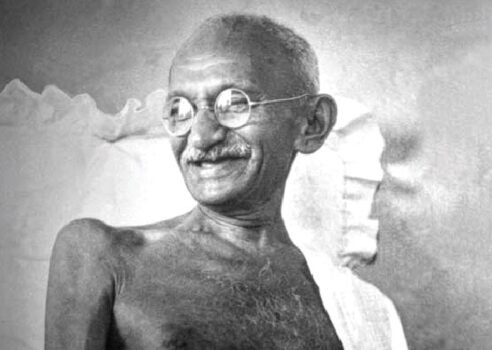
Gandhian Concept of Trusteeship does not permit an owner to misuse his wealth and exploitation. Mahatma Gandhi’s model of trusteeship strengthened the belief that, essentially, society was providing capitalists with an opportunity to manage resources that should be seen as a form of trusteeship on behalf of the community in general.
It provided a means for wealthy people to be trustees to look after the welfare of the common person. CSR gradually evolved into the corporate framework. CSR refers to a company’s sense of responsibility extending beyond its shareholders to all stakeholders, notably the people and ecology in its operation’s domain. It indicates a sense of ‘corporate citizenship’. A business entity incurs short-term costs without direct financial benefit, but it gains long-term by promoting social and environmental change through CSR.
During pre-independence days, the Mahatma called for the nation’s development by funding and providing education, health, and other social services. CSR in India has traditionally been seen as a philanthropic activity.
Entrepreneurs of early industrialism. Illustrious business families like Tata, Birla Bajaj and many others associated with our freedom struggle were sensitive to their social responsibilities. Mahatma Gandhi developed the principle of trusteeship not only from his deep understanding of our various religious traditions but also based on the generosity of industrialists associated with him. Gandhiji found the seeds of the principle of trusteeship, especially in the Ishavasya Upanishad and the Bhagavad Gita.
After independence, more and more business families and industries started following Gandhiji’s advice and returned a part of their profits to society when the nascent republic needed all help. They complemented the efforts of the government and the public sector, especially in education and healthcare.
Apart from making political donations for the freedom struggle, the business fraternity also contributed to many social and cultural causes. Mahatma Gandhi expounded on the theory of trusteeship of wealth. Influenced by his teachings, many people in business contributed to the cause of the removal of untouchability, women’s emancipation, and rural reconstruction.
As of date, the policymakers and the stakeholders of CSR in India can agree that all the prescribed areas under CSR have represented Gandhi’s vision of India. It would not be wrong to conclude that CSR is a true representation of Gandhi’s vision. It is in the hands of corporations, governments, and people to visualize how far and how better the vision of Gandhi is reflected in the implementation of Corporate Social Responsibility initiatives for the development of society and for reducing the problems that the nation is facing in different areas.