

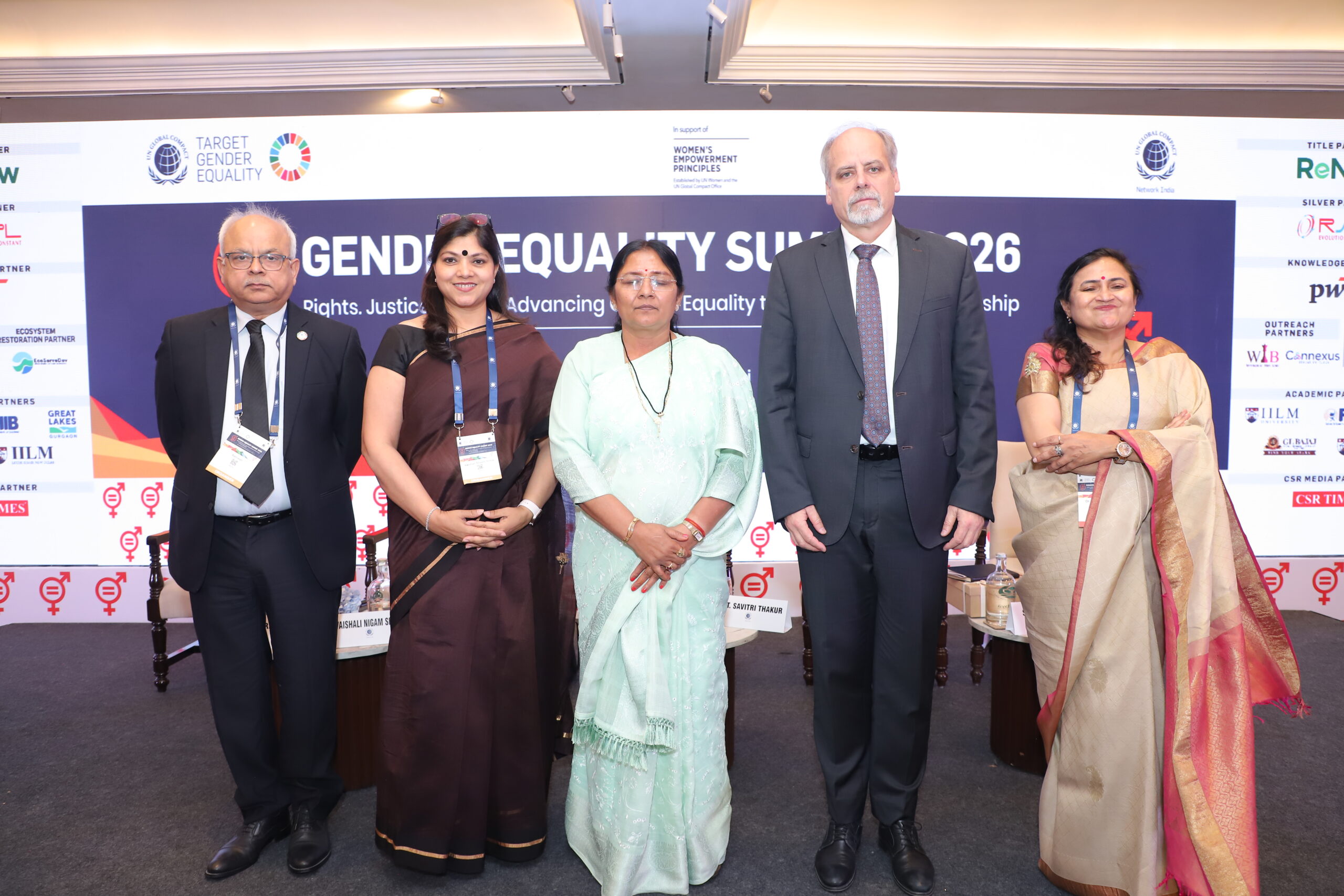
 New Delhi, March 6, 2026: Over 200 leaders from government, the United Nations, industry, academia, and civil society convened in New Delhi for the 9th Gender Equality Summit 2026, organized by the United Nations Global Compact Network India (UN GCNI) under the theme “Rights. Justice. Action – Advancing Gender Equality through Business Leadership.”
The Summit brought together policymakers, corporate leaders and global institutions to accelerate private sector action on gender equality, recognising that inclusive growth and sustainable development depend on expanding women’s participation in leadership, entrepreneurship and the workforce.
The Summit was inaugurated by Smt. Savitri Thakur, Hon’ble Minister of State, Ministry of Women & Child Development, Government of India, who attended as the Chief Guest. In her address, she reaffirmed the Government’s commitment to advancing women-led development and strengthening institutional frameworks that expand opportunities for women across sectors.
“Advancing women’s leadership and participation across the economy is central to India’s development journey. Through sustained policy action and partnerships with industry and institutions, we must continue to expand opportunities for women and ensure that growth is truly inclusive,” she said.
In her Presidential Address, Vaishali Nigam Sinha, President, UN Global Compact Network India and Co-founder, ReNew, emphasized that businesses must move decisively from commitments to measurable progress.
“Gender equality cannot remain an aspiration. Businesses must embed equity into their strategies, workplaces and value chains. When companies align capital, climate action and workforce participation with gender outcomes, they unlock both economic opportunity and social progress,” she said.
Dr. Rashmi Singh, Secretary, Department of Women & Child Development, Government of NCT of Delhi, highlighted the importance of translating policy commitments into institutional action to advance gender equality. She said, “Gender-sensitive policies must translate into safer environments and stronger institutional standards that enable women to work, lead, and excel. She also referred to the broader policy direction guided by our Honorable Prime Minister, Narendra Modi and discussions at NITI Aayog, emphasizing the need for stronger institutional frameworks for gender equity.”
Delivering the keynote address, Stefan Priesner, UN Resident Coordinator in India, underscored the growing intersection between gender equality, climate action and economic policy.
“Advancing gender equality is central to achieving sustainable development. Governments, businesses and institutions must work together to ensure that women’s rights, economic participation and leadership are integrated into climate, labour and development agendas,” he said.
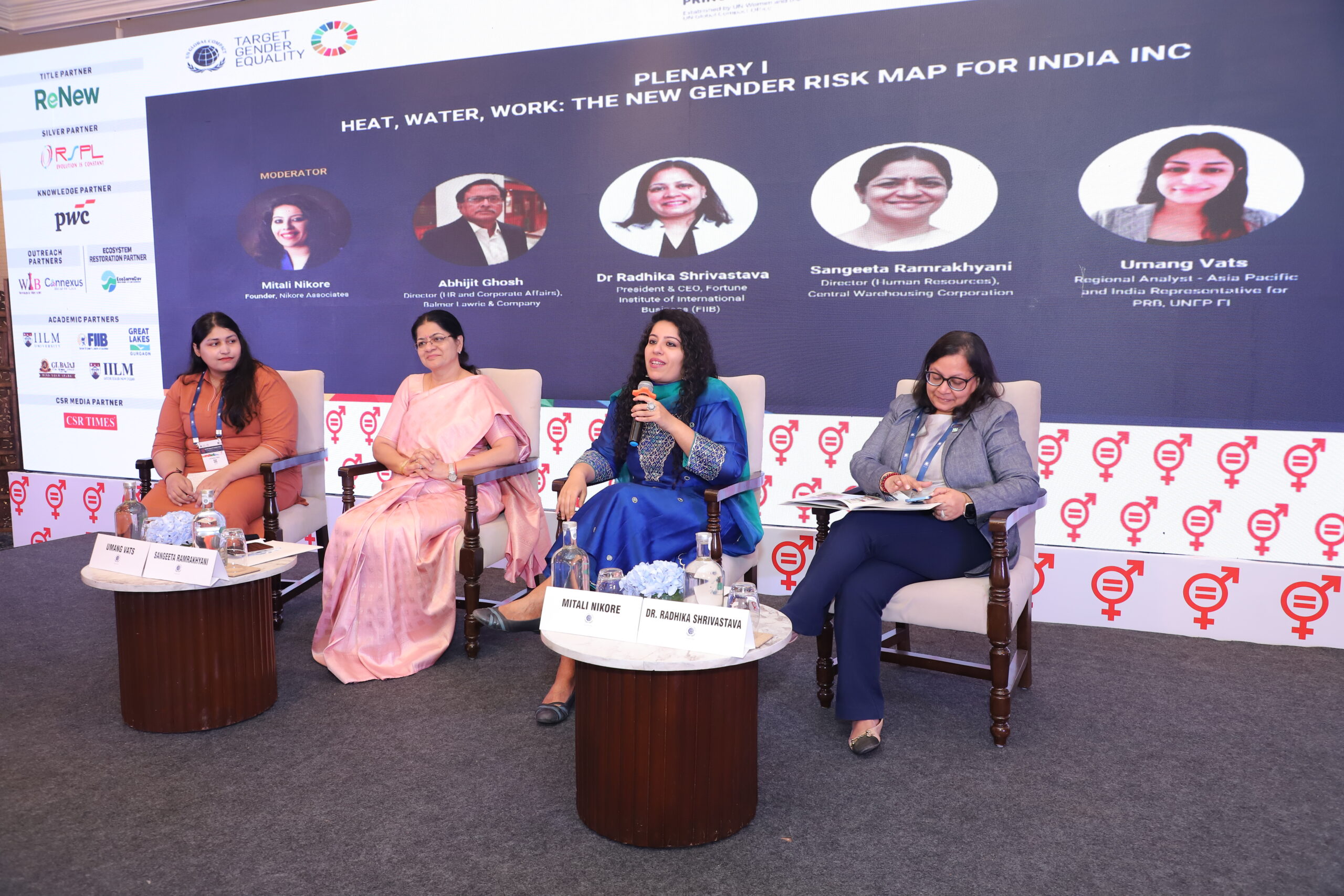 Through a series of plenaries and discussions, the Summit examined emerging challenges and opportunities shaping India’s development landscape — including climate-linked risks affecting women’s livelihoods, the economic potential of closing gender participation gaps, and the implications of AI and technological disruption for inclusive workplaces.
A highlight of the Summit was a fireside conversation titled “Grassroots to Growth: Women Driving India’s Economy,” featuring Vaishali Nigam Sinha; Chetna Gala Sinha, Founder and Chairperson, Mann Deshi Foundation; Isabelle Tschan, Deputy Resident Representative, UNDP India; and Arunabha Ghosh, CEO, Council on Energy, Environment and Water (CEEW). The discussion brought together perspectives from grassroots entrepreneurship, policy research and institutional leadership, underscoring the transformative role of women’s enterprise and financial inclusion in driving inclusive economic growth.
The Summit also featured discussions with leaders from institutions including State Bank of India, UNEP Finance Initiative, Reliance Industries, Trident Group, Oxford Policy Management, CEEW, InMobi and Google, reflecting growing recognition that gender equality is not only a social imperative but also a strategic driver of economic growth and competitiveness.
As the Summit concluded, UN GCNI reaffirmed its commitment under the leadership of President Vaishali Nigam Sinha to support businesses in embedding rights-based strategies, advancing the Women’s Empowerment Principles, and accelerating measurable progress toward gender equality across corporate India.