Experts’ Corner

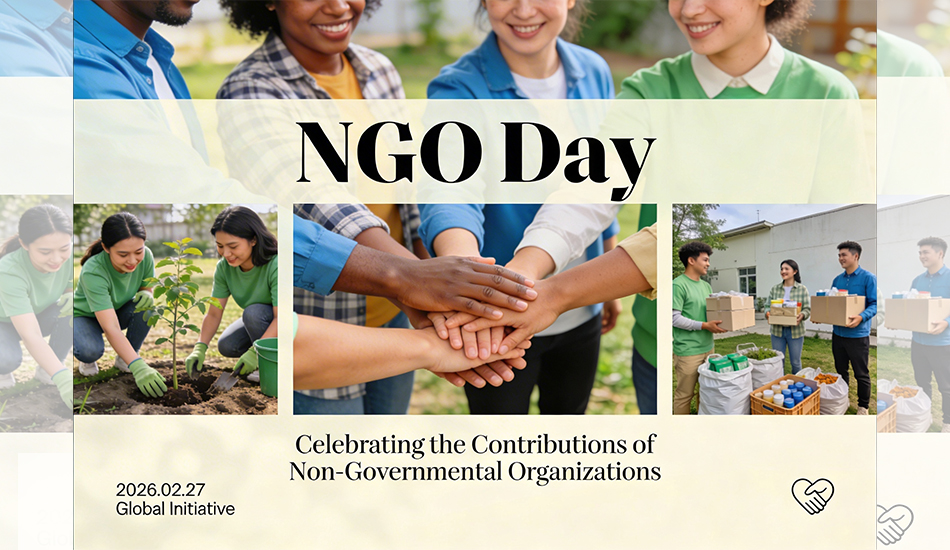
Celebrating World NGO Day globally

NGO Day: Understanding and Appreciating the Spirit of Service and Shared Responsibility

With the advent of the NGO Day this year, and every year in the past, unfurls an opportunity for celebration of civil society. This is also an opportune time for us to pause and reflect on the deeper meaning of service, solidarity, and social responsibility. For me, personally, NGO Day is much more than a date on the calendar; it makes me reflect on the journeys undertaken, communities transformed, and the countless unsung heroes who quietly reshape the world every single day. My journey in the social development sector has taught me that NGOs are far more than institutions executing projects.  They are the animate entities that constitute the living, breathing bridges that bridge the gap between policy and people,
Read More »
CSR and civil society impact

Bridging the Gap: Civil Society as the Engine of UN Agenda Delivery in India

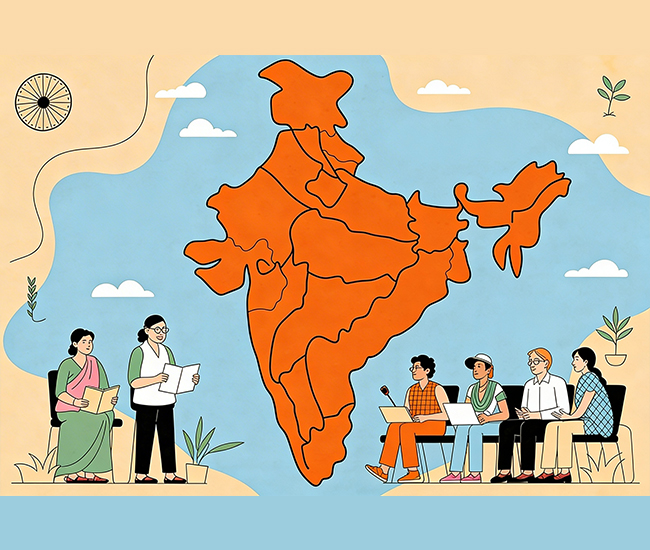
“Global Vision – Local Action – Lasting Impact.” Global frameworks adopted by the United Nations often set ambitious goals for peace, prosperity, human rights, and sustainability. Yet, their real impact depends on how effectively they are translated into local action. In India, Civil Society organizations (CSOs) play a pivotal role in bridging this global–local divide. They convert international commitments—such as the United Nations Sustainable Development Goals (SDGs), climate agreements, and human rights conventions—into tangible interventions that improve lives on the ground. From Global Vision to Local Context The adoption of the United Nations 2030 Agenda for Sustainable Development marked a turning point in global development cooperation. The 17 SDGs provide a universal framework addressing poverty, education, health, gender equality, climate

Read More »
CSR vs ESG

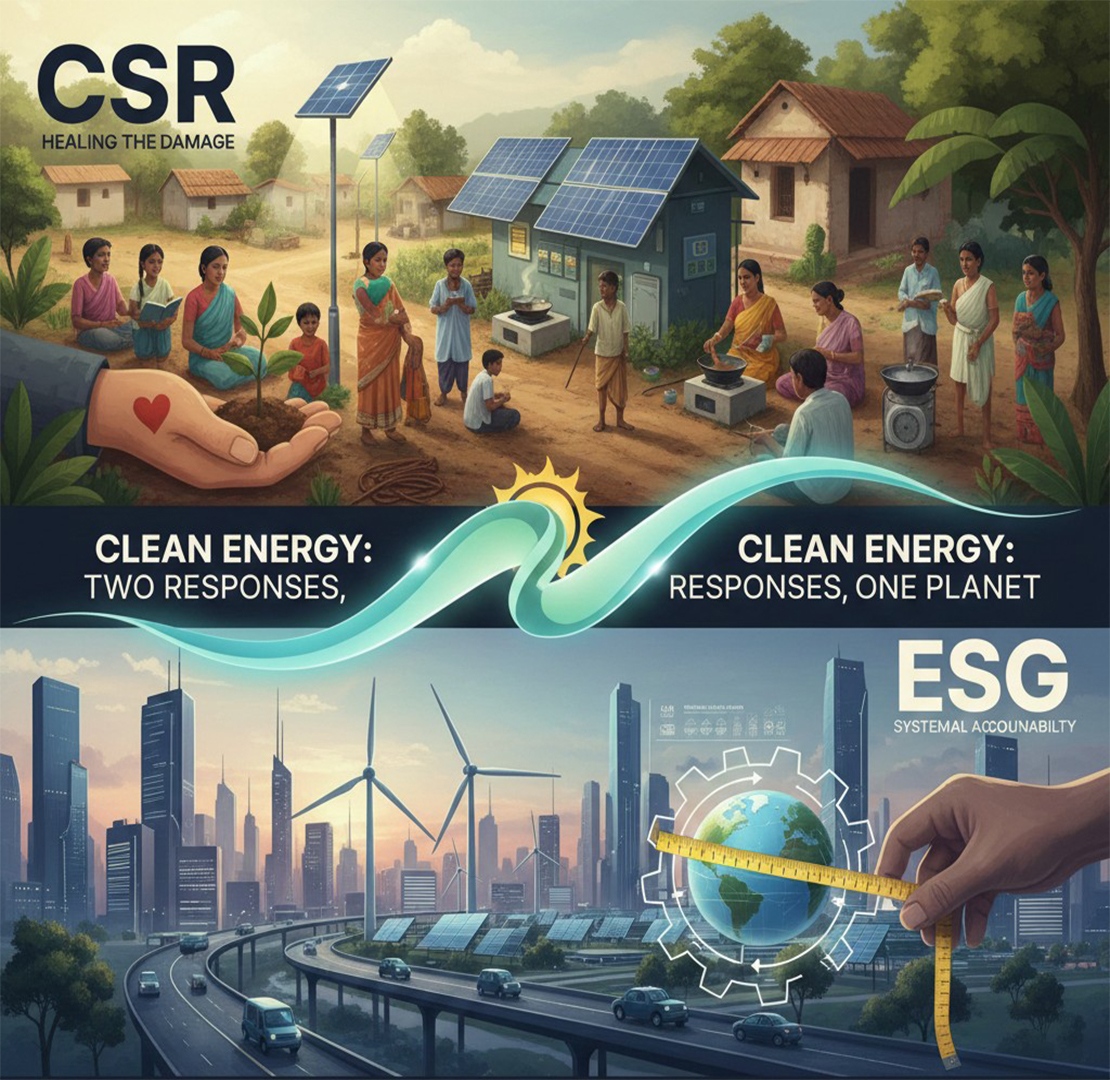
CSR vs ESG: Two Responses One Planet

Nature took thousands of years to establish balance. Mountains rose, rivers found their courses, forests evolved, and life flourished within carefully calibrated limits. Early human progress respected this equilibrium. Communities grew, agriculture expanded, trade evolved all largely within nature’s carrying capacity. Development and nature coexisted. The disruption began when development turned into domination. Industrialisation, fossil-fuel dependence, unchecked consumption, and the belief in infinite growth gradually disturbed this delicate balance. Carbon emissions rose relentlessly, ecosystems weakened, and the climate began to respond. Floods, cyclones, droughts, heatwaves, and rising sea levels became nature’s reminders that equilibrium was under threat. Today, humanity faces an uncomfortable truth: if everyone lived at the consumption levels of developed economies, we would need nearly three Earths. The

Read More »
Budget 2026 geopolitical security

Why Budget 2026 Must Be a Doctrine of Defence, Not Just a Statement of Accounts

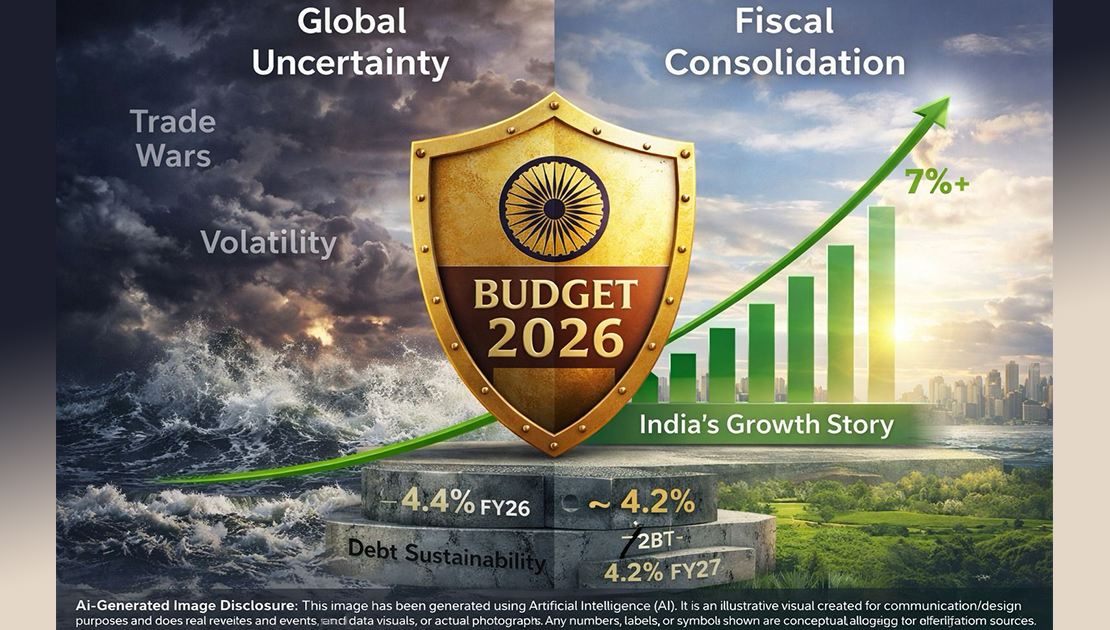
Walk through the textile lanes of Tirupur or the diamond polishing hubs of Surat, and observe how the abstract phrase “global uncertainty” suddenly looks very real. In Tirupur, factories that once hummed six days a week are cutting back to four, rattled by the threat of steep U.S. tariffs. In Surat, diamond units are shuttering as export orders dry up. This isn’t just market noise; it is the sound of a fractured global order knocking on our doors. As Finance Minister Nirmala Sitharaman prepares to present the Union Budget 2026-27, the stakes have shifted. We are no longer just managing a post-pandemic recovery; we are building a shield against a world weaponized by trade wars and protectionism. With the U.S. 

Read More »
Union Budget 2026

From Vision to Viability: How Budget 2026 Positions India’s Green Growth Story

India’s push toward a green economy is supported by key initiatives such as the National Action Plan on Climate Change (NAPCC), the National Solar Mission under PM Surya Ghar Yojana, the National Green Hydrogen Mission, electric mobility programs, and several state-level green energy projects. Together, these initiatives aim to balance economic growth with environmental protection, reduce climate-related risks, and build a more sustainable and resilient economy. However, translating this vision into on-ground outcomes requires sustained fiscal prioritization and clear implementation pathways. Budget 2026 highlights Carbon Capture Utilisation and Storage (CCUS) in line with the roadmap announced in 2025, committing an investment of ₹20,000 crore over the next five years, with a specific focus on five industrial sectors. While India has

Read More »
Corporate contribution to India

When India Took the Salute

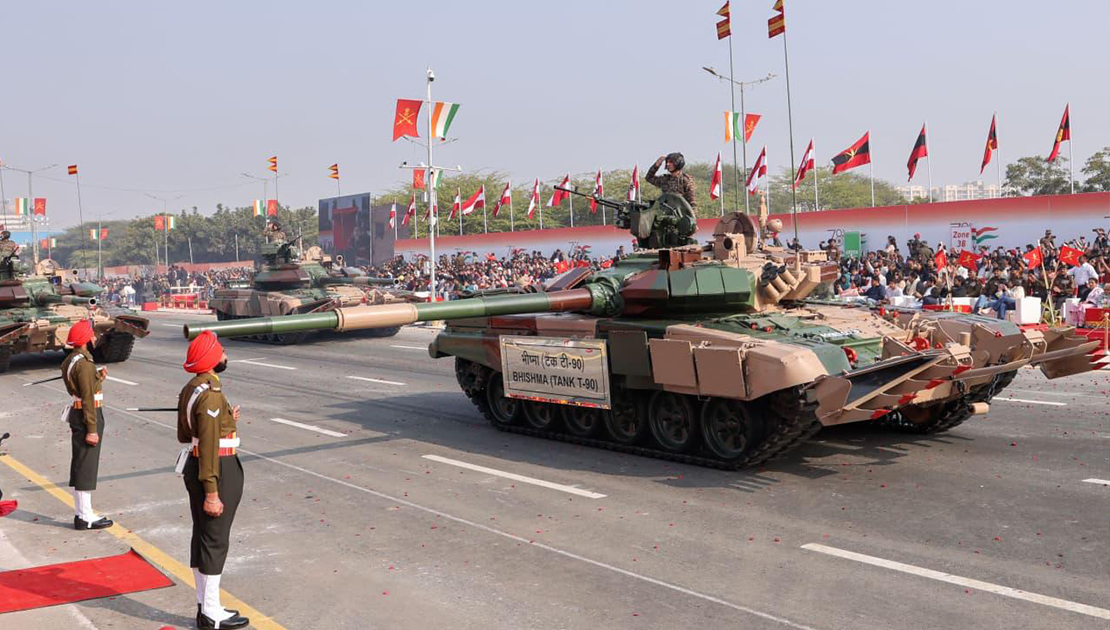
Army Day commemorates 15 January 1949, when General (later Field Marshal) K M Cariappa became the first Indian Commander in Chief, replacing the last British officer, General Francis Bucher. It symbolised India’s military independence after 1947 and marks a historic transition when India took full command of its own Army on 15 January 1949.  Indian Army conducts a grand parade every year on 15 January with military displays and acknowledges the selfless service and supreme sacrifices.  The day is dedicated to remembering and saluting soldiers who continue to protect India’s borders and maintain internal security. Status of Army on 15 August 1947 and Emerging Security Threats The Indian Army in 1947 was undergoing an emotionally charged transition in its history. The four Lakh British Indian Army

Read More »
Social influence

What Drives Sustainable Choices

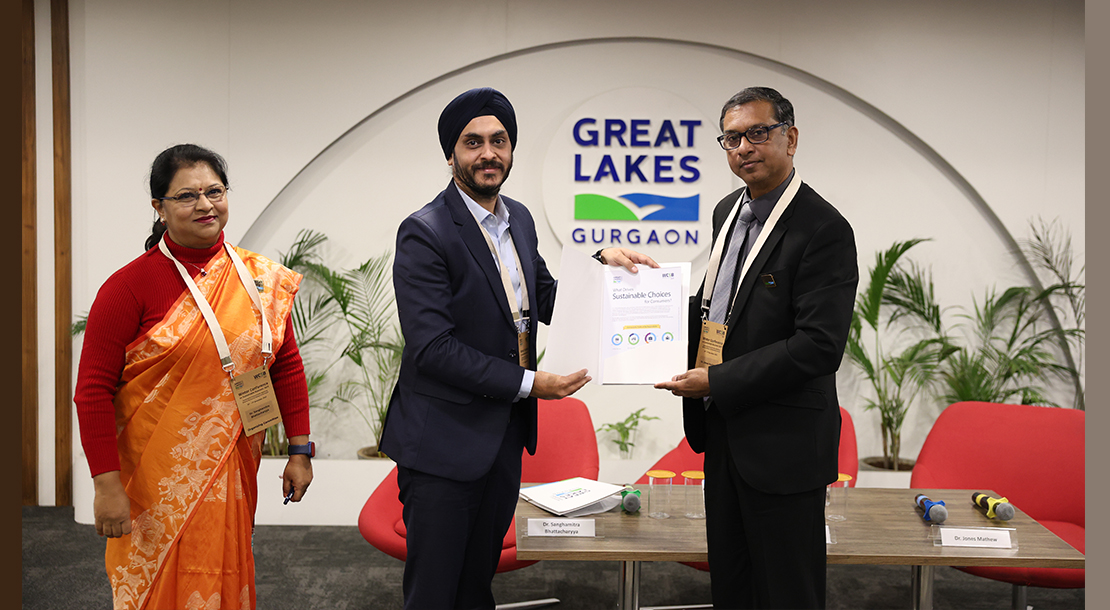
As sustainability becomes a key expectation rather than an added feature, India’s urban  hoppers are redefining what responsible consumption looks like. This study by Great Lakes Institute of Management, Gurgaon explores how modern consumers think about sustainability, what influences their purchase decisions, and the behaviours they practice in daily life. The findings offer businesses a deeper understanding of the conscious-but-practical Indian consumer who values environmental responsibility but expects brands to make sustainable choices affordable, accessible, and transparent. For this report, we surveyed over 100 urban consumers using a self-administered questionnaire designed to understand how they think about sustainability, what influences their purchase decisions, and the habits they practice in daily life. The key insights are as follows: The results highlight a

Read More »
Future of labour rights

NEW FRONTIERS IN LABOUR RIGHTS

The Quiet Revolution Redefining the Future of Work On Human Rights Day 2025, Vice President C.P. Radhakrishnan pledged “to work tirelessly towards a nation where human rights are truly our everyday essentials – positive in their impact, essential for dignified existence, and attainable for all without exception.” That pledge has become the moral centrepiece of India’s human-rights journey. In a nation where over 50 crore workers fuel the world’s fastest-growing major economy, this promise is not abstract. It is translating into a quiet yet seismic revolution: companies reimagining fair labour practices, ethical supply chains, ESG integration, and inclusive workplaces – not as compliance checkboxes, but as the moral foundation of sustainable enterprise.  Labour Codes: From Ink to Impact India’s four

Read More »
Women leadership and inclusion

Women’s Empowerment in India: A Human Rights Imperative

Women’s empowerment has evolved from being a mere social priority to becoming a human rights mandate that is intertwined with the nation’s progress, justice and equity. While the economic, political and educational landscapes have registered an upswing in women empowerment, the lived reality still falls short of the mark. Major roadblocks pose as impediments to progress and prohibit autonomy, dignity and equal opportunity. Empowerment has long been viewed as charity or developmental assistance and there is a strong need to shift focus and view it as the rightful fulfilment of fundamental human rights. The principle at the cornerstone of women’s empowerment is the right of every woman to live with freedom, safety, and respect. The basic rights of a woman

Read More »
Workplace HIV awareness

Ending AIDS Is Everyone’s Business: A Human Rights Call to Action for India

World AIDS Day, observed annually on 1 December, serves as a powerful reminder that the fight against HIV/AIDS is far from over and that progress cannot be sustained without placing human rights at the centre of the response. While scientific advancements have transformed HIV from a fatal illness into a manageable chronic condition, the persistence of stigma, discrimination and inequality continues to undermine prevention, treatment and care efforts. In this context, ending AIDS is not merely a public health objective; it is a shared social, economic and moral responsibility that demands collective action across sectors. HIV/AIDS has always exposed deep-rooted inequities within societies. People living with HIV and those most at risk often face denial of dignity, breaches of confidentiality,

Read More »

I/we Wish To...

Subscribe to
CSR TIMES Newsletter

It's Free. And, you can unsubscribe anytime.