
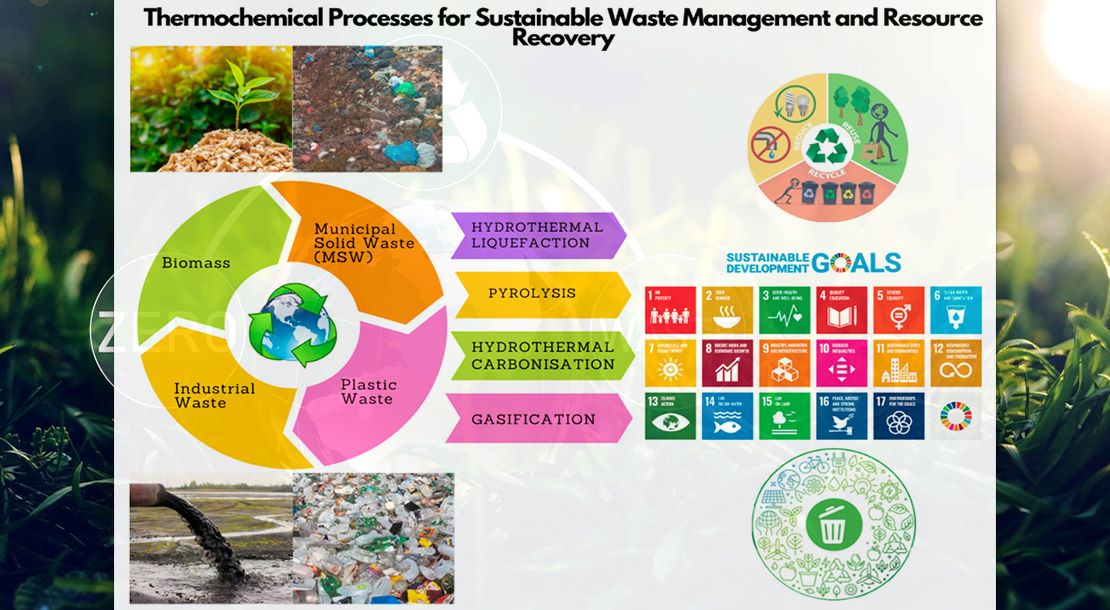
The issue of waste generation has emerged as a critical challenge in today’s society, necessitating a comprehensive understanding of its magnitude and the urgent need for sustainable waste management. With the increasing population, urbanisation, and industrialisation, the volume of waste generated has reached unprecedented levels, resulting in severe environmental, health, and socio-economic consequences. The world generates over 2 billion tonnes of municipal solid waste annually, most of which is not managed in an environmentally friendly manner. Overflowing landfills, polluted rivers, and plastic-choked oceans are daily reminders of humanity’s growing footprint and agonising depletion and pollution of resources. In India, almost 69 million tonnes of waste is created annually, out of which only approximately 14 tonnes of waste is treated. This is likely to increase to 165 million tonnes annually in the coming decade. Yet, amid this grim reality, a powerful idea of “Waste to Wealth, is emerging. Around the world, innovative minds are proving that sustainability can also mean profitability, environmental stewardship can drive economic growth, and garbage can be converted into huge wealth.
Landfills: The Eyesore and Environmental Challenge Across the Cities
Waste to Wealth: A New Economic Revolution
The “Waste to Wealth” approach is transforming cities and industries alike. Instead of viewing waste as an end, it treats it as the beginning of something new, a raw material, an opportunity, a resource. Governments, entrepreneurs, and communities are discovering that what we throw away can, in fact, become the cornerstone of a cleaner and more prosperous future. India offers some of the most compelling examples of this transformation. The city of Indore, repeatedly hailed as India’s cleanest, has turned waste management into an art and a business. Through strict segregation at source, composting of organic waste, and recycling of plastics, Indore now operates with near-zero landfill use. Organic waste becomes compost for farmers, while non-biodegradable waste is repurposed as fuel for cement factories. What once cost the city crores to manage now generates revenue, a shining example of how environmental vision can yield economic gain. With a multi-pronged approach of citizen participation, strict monitoring, and public policy, the IMC successfully manages in excess of 1000 metric tons of waste daily, with a 95% waste recovery rate. The IMC now generates revenue through products like bio-CNG from wet waste, and also sells the segregated dry waste and compost. Indore’s transformation through an integrated approach into a clean, sustainable city serves as an inspiration.
Indore Model of Waste Management: Image Credit EARTH5R
Meanwhile, rural India is also witnessing its own revolution through the Gobar-Dhan (Galvanising Organic Bio-Agro Resources Dhan) scheme. Villages across the country are converting cow dung and agricultural residue into biogas and organic manure. This clean energy fuels homes, enriches soil, and provides farmers with an additional income stream, a perfect marriage of ecology and economy. One of the most promising and unique initiatives in this regard is by the Sri Sri Rural Development Programme Trust of Art of Living, which is preparing bio paint out of cow dung. The paint has all the shine and quality of a chemical paint without the typical paint odour and toxicity. The trust has started making the Gaudhan Paint at the commercial level and produces an entire range of construction-related paints in a highly sustainable manner. This initiative has tremendous potential to change the rural economy and reduce carbon footprint.

Municipal Waste and Innovative Technologies
The biggest challenge the world faces today is the municipal waste, its transportation and huge landfills that contaminate the soil and groundwater. To manage this waste in an environmentally friendly manner is a new technology of thermal treatment through ‘Integrated Thermolyzing and Calcination’. In this process, the Municipal Solid Waste (MSW) is converted into RDF Fluff through a Thermolyzer without segregation at an elevated temperature of 151 degrees. This fluff is further either processed into charcoal through advanced calcination torrefaction at 700-800 degrees Celsius or into electricity by RDF gasification and steam-based turbine. The same electricity can be used to run the MSW plants. Since this plant can be put at the source itself, the transportation cost to landfill can be saved, and there would be no landfills if such treatment is put in place. Besides creating wealth, this will also fulfil the ever-increasing energy demand.
Many other thermochemical techniques are promising and sustainable for converting diverse waste materials into valuable products. These include Hydrothermal Liquefaction (HTL), which uses high temperature and high pressure to convert wet biomass like sewage sludge and agricultural residue into valuable energy-dense products. Another such technique is Hydrothermal Carbonisation (HTC), which converts organic waste into hydrochar. Pyrolysis is another technique that uses extremely high temperatures (400-800 degrees) to convert biomass and waste into bio-char, bio-oil and bio-gas.
The industrial sector is also discovering the hidden value in its by-products. Tata Steel, for instance, has pioneered the reuse of slag, a byproduct of steelmaking, to manufacture construction materials such as tiles and pavers. This innovation not only minimises waste but also reduces dependence on natural resources. Similarly, cement giants like ACC and UltraTech are using fly ash from thermal power plants to make blended cement, cutting emissions and costs at the same time.
The Plastic Paradox
Few materials illustrate the waste problem as vividly as plastic. Durable and cheap, yet devastating to ecosystems, plastics pose a global challenge. The accumulation of plastic waste in oceans has garnered significant attention due to its detrimental effects on marine life and ecosystems. The problem of waste generation extends beyond environmental concerns, impacting society and the economy.
In Tamil Nadu, Professor R. Vasudevan, affectionately known as India’s “Plastic Man,” developed an ingenious technique to use shredded plastic waste in road construction. His method not only strengthens roads but also reduces plastic pollution, turning a problem material into a national asset. Startups are joining this movement with cutting-edge technology. Banyan Nation, for example, uses data analytics and advanced sorting methods to produce high-quality recycled plastics, which major brands now use in their packaging. Such ventures are closing the loop on plastic use and proving that recycling can be both high-tech and high-impact.
A large number of NGOs are working in the field of getting the Earth rid of plastic pollution. One such NGO is ‘Healing Himalayas’, who undertake cleanliness drives through organised treks of volunteers to collect the garbage, mainly plastic, strewn by the trekkers and tourists all over the Himalayas. They have done over 1000 such drives and have collected over 1700 tonnes of waste. The collected waste is then stored in Material Recovery Facilities and recycled, which employs many. In Pune, the SWaCH Cooperative, a self-managed group of waste pickers, has redefined both dignity and sustainability. Thousands of women collect, sort, and recycle waste daily, earning a steady livelihood while keeping the city clean. Their work not only diverts thousands of tonnes of waste from landfills but also empowers some of the city’s most marginalised communities, proving that the “waste to wealth” journey can be both ecological and social.
Healing Himalayas’ Cleanliness Drive: Image Courtesy NDTV.Com
Global Lessons in Circular Innovation
The “Waste to Wealth” movement isn’t confined to India. Across the world, countries are redefining waste as opportunity. In Sweden, less than 1% of household waste ends up in landfills. The rest is recycled or used to generate energy. So successful is their model that Sweden actually imports waste from neighbouring countries to power its waste-to-energy plants, an almost paradoxical but inspiring reality. In Kenya, social entrepreneur Nzambi Matee and her company Gjenge Makers transform plastic waste into colourful, durable paving bricks. Her innovation not only reduces waste but also provides employment and affordable building materials, turning discarded plastic into a foundation, quite literally, for a better future.
The Road Ahead
“Waste to Wealth” is more than an environmental initiative; it’s a mindset, one that reimagines waste as potential, not pollution. It reminds us that in nature, nothing truly goes to waste; everything transforms, renews, and reinvents itself. Humanity, too, must learn to mirror that cycle. The journey from waste to wealth is not just about managing garbage; it’s about redesigning and redefining the future. If we can turn our waste into wealth, we can turn our challenges into change, and our dreams of sustainability into a living, breathing reality.
