
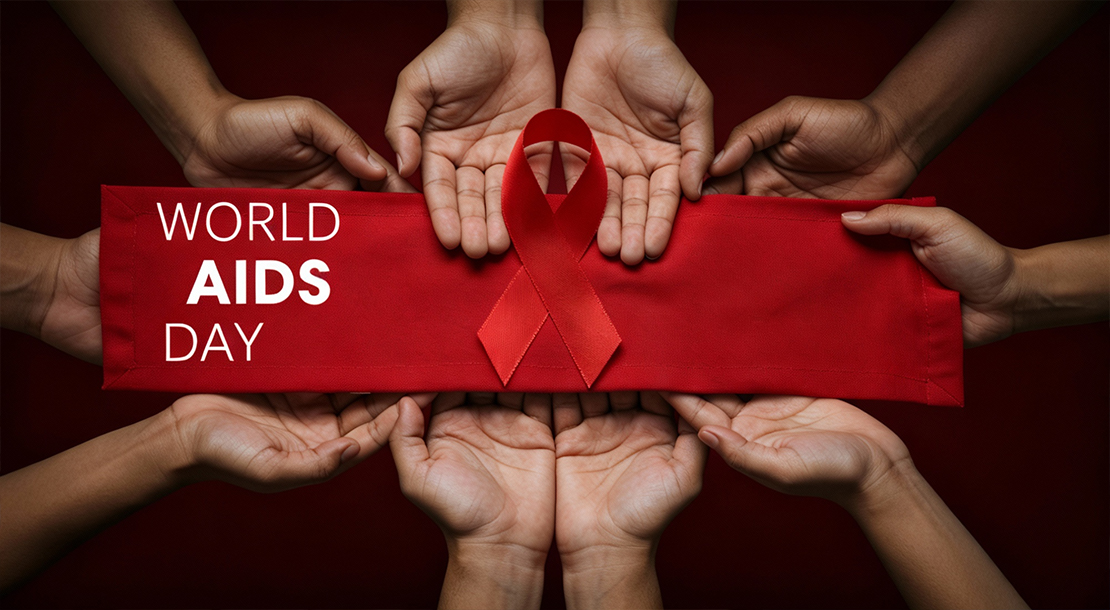
World AIDS Day, observed annually on 1 December, serves as a powerful reminder that the fight against HIV/AIDS is far from over and that progress cannot be sustained without placing human rights at the centre of the response. While scientific advancements have transformed HIV from a fatal illness into a manageable chronic condition, the persistence of stigma, discrimination and inequality continues to undermine prevention, treatment and care efforts. In this context, ending AIDS is not merely a public health objective; it is a shared social, economic and moral responsibility that demands collective action across sectors.
HIV/AIDS has always exposed deep-rooted inequities within societies. People living with HIV and those most at risk often face denial of dignity, breaches of confidentiality, exclusion from employment, unequal access to healthcare and social marginalisation. Such violations do not only harm individuals; they weaken health systems and delay national progress. Evidence consistently shows that when people fear discrimination, they avoid testing, delay treatment and remain disconnected from care. A human rights-based approach is therefore not an abstract ideal but a practical necessity for achieving sustainable HIV outcomes.
This understanding resonates strongly with the United Nations Global Compact’s mandate on human rights. Through its first two principles, the UN Global Compact calls on businesses and institutions to support and respect internationally proclaimed human rights and to ensure they are not complicit in human rights abuses. In the context of HIV/AIDS, this mandate extends beyond legal compliance to ethical leadership. It urges organisations to actively create environments where dignity, equality and inclusion are embedded in policies, workplace practices and community engagement.
India’s experience illustrates both the progress achieved and the challenges that remain. The country has made significant strides in reducing new HIV infections and AIDS-related deaths through sustained public health efforts and the National AIDS Control Programme. Expanded access to testing and antiretroviral treatment has saved millions of lives. Yet, stigma and misinformation persist, particularly among vulnerable populations such as women, migrants, adolescents, informal workers and key populations. Gender inequality, mobility, poverty and uneven access to quality healthcare continue to shape vulnerability, making it imperative that human rights considerations remain central to India’s HIV response.
From a national development perspective, protecting the rights of people affected by HIV aligns directly with India’s commitment to Universal Health Coverage and the Sustainable Development Goals. Health cannot be achieved in isolation from justice and equity. An AIDS-free India will only be possible when legal, social and institutional barriers are dismantled and when every individual, regardless of status or background, can access healthcare without fear or prejudice.
In this journey, the role of the private sector and business leadership is critical. Workplaces are powerful platforms for advancing awareness, prevention and inclusion. Responsible businesses can set the tone by adopting non-discriminatory employment policies, ensuring confidentiality, extending health benefits, supporting mental well-being and fostering open dialogue on HIV and related health issues. By aligning operations and supply chains with human rights principles, businesses can contribute meaningfully to national health priorities while strengthening trust and social legitimacy.
Healthcare institutions also carry a profound responsibility. Beyond clinical care, they must uphold compassion, confidentiality and respect, ensuring that services are accessible, stigma-free and patient-centred. Continuous sensitisation of healthcare professionals and integration of HIV services within broader health systems are essential to reduce exclusion and improve outcomes.
Civil society organisations, academia, media and development institutions play a vital role in shaping narratives and influencing attitudes. By amplifying evidence-based information, countering myths and advocating for rights-based policies, they help create an enabling environment where people feel empowered to seek care and support. Partnerships across sectors are especially important to reach underserved communities and address the social determinants that perpetuate risk.
World AIDS Day therefore calls for more than symbolic gestures. It calls for renewed commitment and coordinated action. Ending AIDS requires governments to align policies with human rights standards, businesses to lead with responsibility and integrity, healthcare systems to prioritise dignity and inclusion, and communities to reject stigma in all its forms. Each stakeholder has a role, and every action—no matter how small—contributes to a larger collective impact.
Ultimately, ending AIDS is everyone’s business because the values at stake extend beyond health alone. They speak to the kind of society we aspire to build—one rooted in equality, compassion and justice. When human rights are protected, lives are saved. When stigma is dismantled, hope is restored. And when all sectors act together with purpose and accountability, the vision of an AIDS-free India moves from aspiration to reality.

Dr. Somnath is an accomplished development leader and academic practitioner with over 24 years of impactful experience spanning Public Health, Sustainability (ESG), Gender Equality, Child and Youth Development, Business Integrity, Policy Advocacy, Public-Private Partnerships, and Stakeholder Engagement. His expertise extends to working with governmental bodies, private sectors, NGOs, and renowned UN organizations, where he has successfully delivered transformative results.