
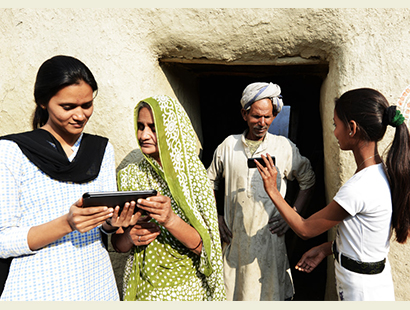
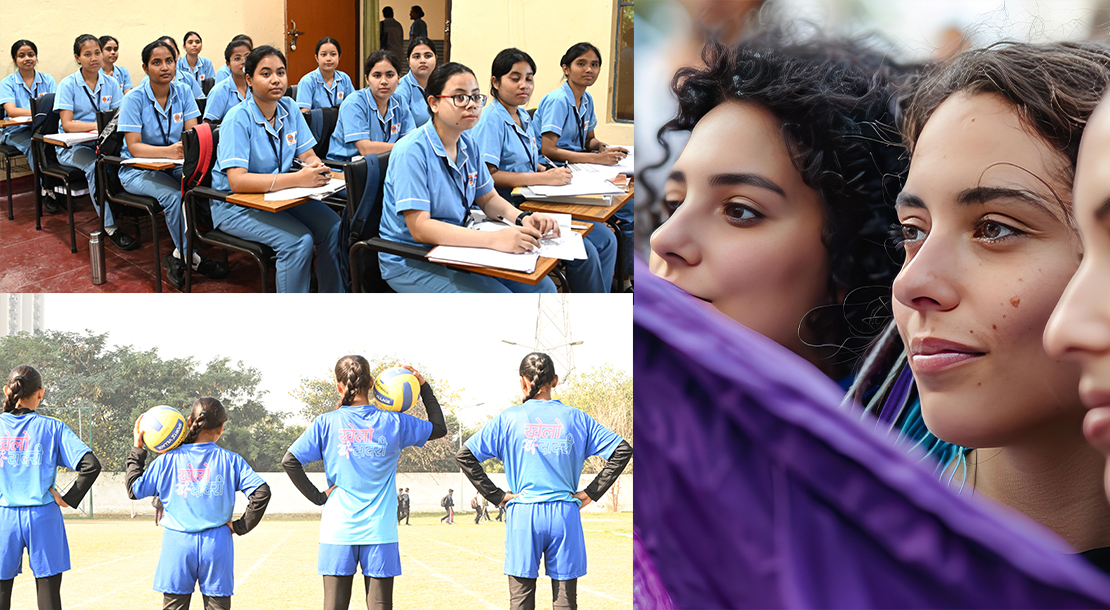
Women’s empowerment has evolved from being a mere social priority to becoming a human rights mandate that is intertwined with the nation’s progress, justice and equity. While the economic, political and educational landscapes have registered an upswing in women empowerment, the lived reality still falls short of the mark. Major roadblocks pose as impediments to progress and prohibit autonomy, dignity and equal opportunity. Empowerment has long been viewed as charity or developmental assistance and there is a strong need to shift focus and view it as the rightful fulfilment of fundamental human rights. The principle at the cornerstone of women’s empowerment is the right of every woman to live with freedom, safety, and respect.
The basic rights of a woman must include access to education, health, livelihood, representation and decision-making power. These are currently being threatened by gender-based discrimination that are deeply rooted in economic structures, cultural norms, and institutional biases. The major challenges that women encounter is denial of education, disparity in pay scales, when she is paid less than her male counterparts or when her mobility is restricted because of safety concerns. These register a violation of the human rights framework, and therefore these gaps need to be plugged by a rights-based approach that goes beyond a welfare based one.
Education undeniably remains one of the most powerful tools for empowerment. Although the past few years have recorded an increase in female enrolment in schools, the dropout rates particularly in secondary levels still remain a concern. This is largely attributed to early marriage, household responsibilities, or lack of a safe schooling environment. True empowerment would entail ensuring the completion of a girl’s education without any fear, breaks or discontinuity. This calls for an ecosystem that allows them to pursue higher studies, STEM subjects, vocational training and digital literacy – these are fields where women have since the past years been underrepresented. This reflects more on the state of economic justice than equality.
Another important pillar of human rights is economic empowerment. In India participation of women in the labor force is very low, even though they house an immense potential. Their opportunities are limited by structural barriers such as lack of childcare, informal work conditions, safety concerns and disparity in payment. India can unlock a demographic dividend by recognizing women’s right to work, earn and own property. Corporate India can play a significant role formulating CSR initiatives that offer vocational training, support to entrepreneurs, digital skilling and providing employment linked programmes that directly boost the autonomy of women.
One must appreciate that safety and dignity are nonnegotiable and form important facets of women’s empowerment. A woman must be able to move freely and work and study and participate in public life without the shadow of fear. As part of human rights, we must create safe homes, workplaces, campuses and public spaces where women feel safe and cannot be harassed. The introduction of laws such as the POSH Act have strengthened workplace rights yet an awareness has to be generated for its implementation and accountability. This needs to be prioritized. Safety is a prerequisite for empowerment.
Health forms a nucleus of human rights. For women to reach their full potential they need access to quality reproductive healthcare, menstrual hygiene support, mental health support and good nutrition amongst other facilities. There is a strong prevalence of gender bias that denies the right of leading healthy lives to women. Hope rests in CSR driven health interventions that may prioritize women’s unique needs with a special focus on rural and underserved areas and thereby transform outcomes significantly.
The crux of women empowerment is largely dependent on representation and leadership. Women need a presence and their voices must be heard in the decision-making platforms such as the parliament, corporate boards, community institutions and grassroots governance. Research and data show that women led policies are more inclusive, aiding the resilience of communities and facilitating communities to follow just practices. India has shown good examples of women in leadership positions, yet the larger system needs stronger frameworks that will encourage and support women to take on leadership roles.
A collaborative approach is needed between government policies, corporate responsibility, civil society interventions and community engagement to align and work together to create sustainable change.
CSR has a distinct advantage of accelerating transition by creating programmes that focus on women’s rights and have an inclusive approach. They can enhance digital literacy, provide livelihood training to increase financial inclusion, create mentorship opportunities, promote health and well-being and prepare them for leadership roles.
Empowerment needs sustained actions rather than isolated ones. It also needs a shift in mindsets, and collective awareness and understanding that gender equality is not a favour granted to women but a right that they deserve. The girl child deserves the opportunity for education, healthcare, jobs and a dignified safe life. Every woman too needs an environment that is safe and respects her choices and values her contributions.
When women in India are empowered, the nation will be empowered. When women empowerment is recognized and accepted as an essential right, India will continue to thrive and grow towards becoming economically strong, just, inclusive and compassionate.
