

India stands at a demographic crossroads. With nearly 65% of its population under the age of 35 and 26% in the 10–24 age group, the country has the world’s largest youth population (1). This demographic dividend offers an unprecedented opportunity—but only if people are quipped with employable skills. Today, only about 4.7% of India’s workforce has received formal vocational training, compared to 24% in China and 52% in the US (2). The challenge is even greater for women and Persons with Disabilities (PwDs), who face systemic barriers to education and employment—female labour force participation, though improving, still stands at around 41.7% (3). Bridging these gaps is critical to prevent the dividend from turning into a liability and to meet the demand for nearly 78.5 lakh non-farm jobs annually until 2030 (4).
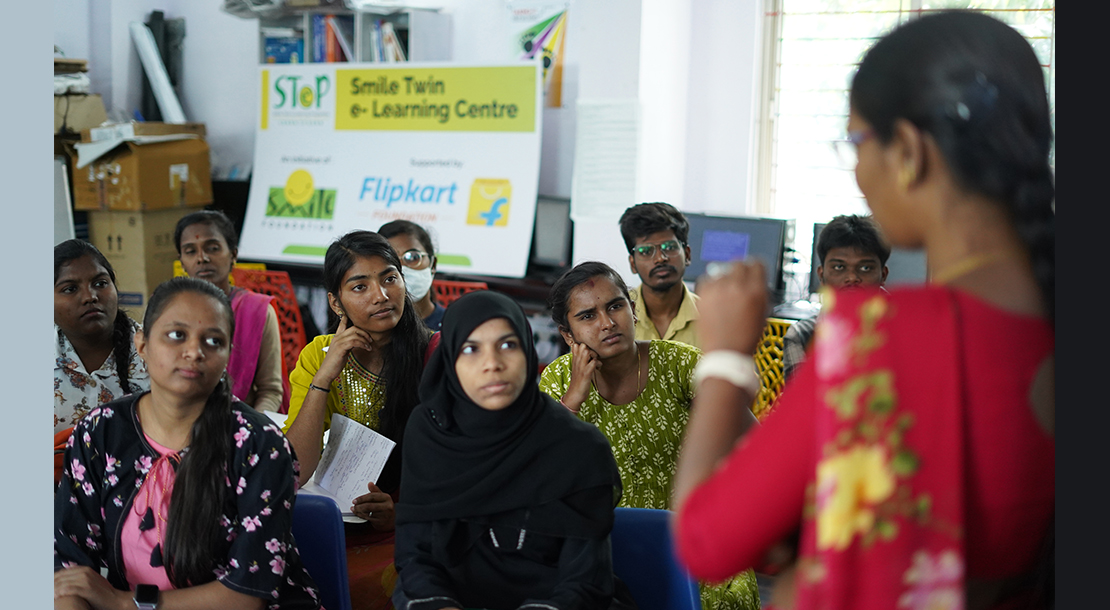
The Flipkart Foundation’s skill development initiative demonstrates how comprehensive and equity-driven skilling models can unlock opportunity for underserved youth, women, Persons with Disabilities (PwDs), and LGBTQIA+ individuals. Rooted in the belief that employable skills can transform lives, the programme focuses on market-relevant capabilities that build confidence, job-readiness, and sustainable income growth for first-generation workforce entrants.
Over the past three years, the initiative has supported nearly 9,000 direct beneficiaries and positively impacted over 27,000 family members across various states — including Delhi, Haryana, Karnataka, Maharashtra, Telangana, Uttar Pradesh, and West Bengal. Training spans digital literacy and 21st-century skills, banking, financial services and insurance, retail, IT-ITeS, hospitality, masonry, welding, stitching, assistant beautician courses, and other trades aligned to both local and emerging market demands.
The programme follows a structured milestone-based approach: community need assessment, employability-linked training, assessment and certification, pre-placement preparation, placement or entrepreneurship support, and post-placement tracking. This end-to-end model ensures that beneficiaries do not merely receive training but are supported until they can secure and sustain employment. With an average placement rate of ~57% and salary outcomes averaging ₹13,700 per month, the model has helped thousands transition into formal employment as first-generation earners — strengthening household resilience and enabling upward economic mobility.
Sustainability is embedded through capacity-building of local organisations, blended learning modules, community mobilisers, alumni networks, and industry partnerships that continue beyond programme cycles.
Above all, the skilling initiative demonstrates that meaningful impact is created when community voice and corporate intent move together. By designing with — not for — communities, and by centering inclusion, dignity, and long-term livelihood security, the model shows what is possible when skilling becomes more than employability training: it becomes a catalyst for personal agency, financial independence, and generational change.