TERI’s CEO Forum Sets the Strategic Tone for Catalysing Corporate Leadership for Transformative and Sustainable Growth
The World Sustainable Development Summit 2026 (WSDS 2026), organised by The Energy and Resources Institute (TERI), commemorates 25 years of sustained global dialogue and action that began in 2001 with the Delhi Sustainable Development Summit, a pioneering platform for the Global South that placed climate justice and equity at the centre of the international development agenda. The summit will convene global leaders, policymakers, industry pioneers, youth changemakers, and civil society representatives in New Delhi from February 25–27, 2026, marking the landmark Silver Jubilee Edition of the Summit.
Over the past two and a half decades, WSDS has evolved into a leading platform on sustainable development, shaping global conversations from Rio to Paris, convening Heads of State, Nobel Laureates, industry leaders, and youth changemakers, and translating dialogue into action. From transformative campaigns like Lighting a Billion Lives to advancing circular economy approaches, the Summit has consistently moved intent into implementation.
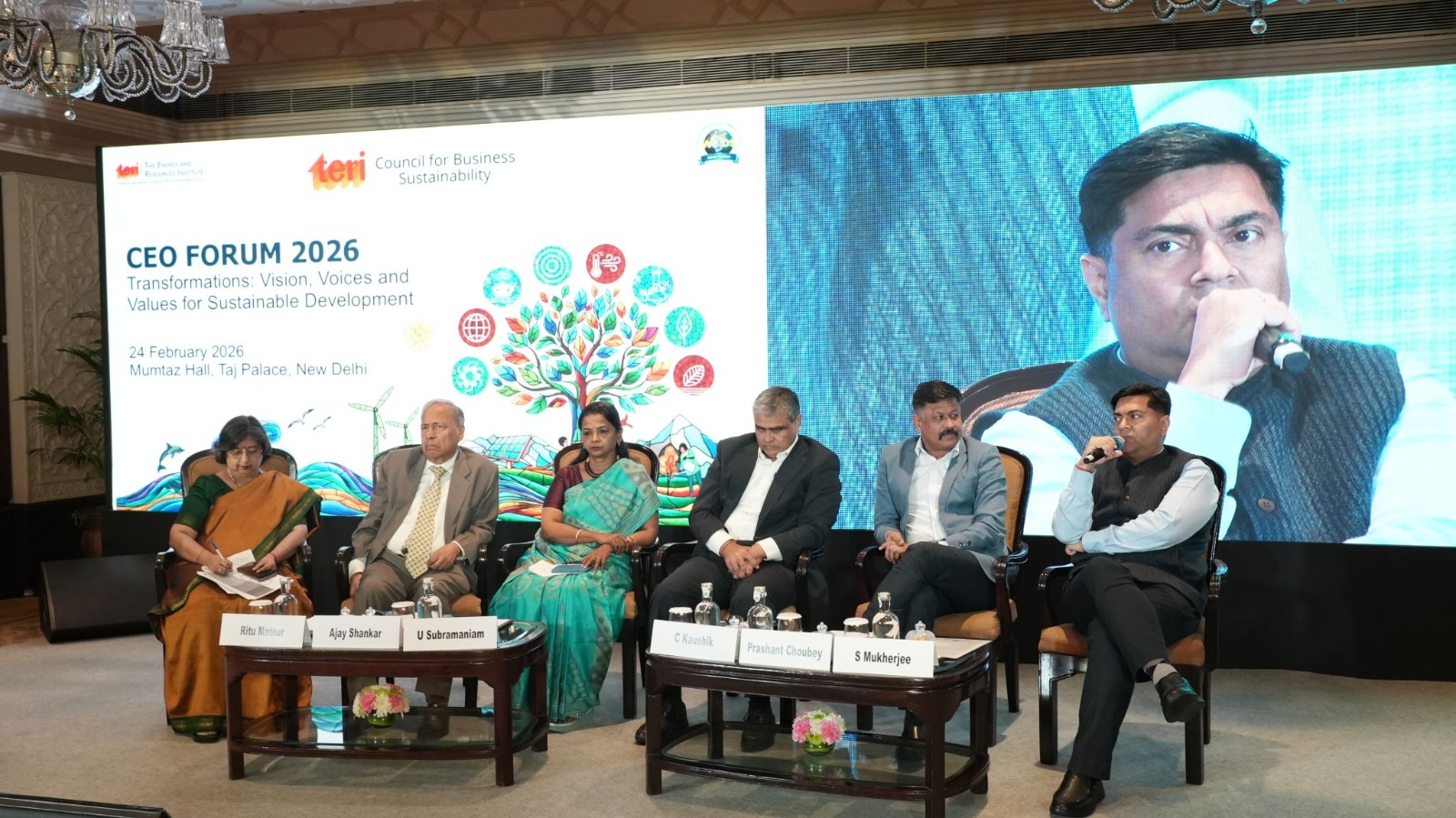
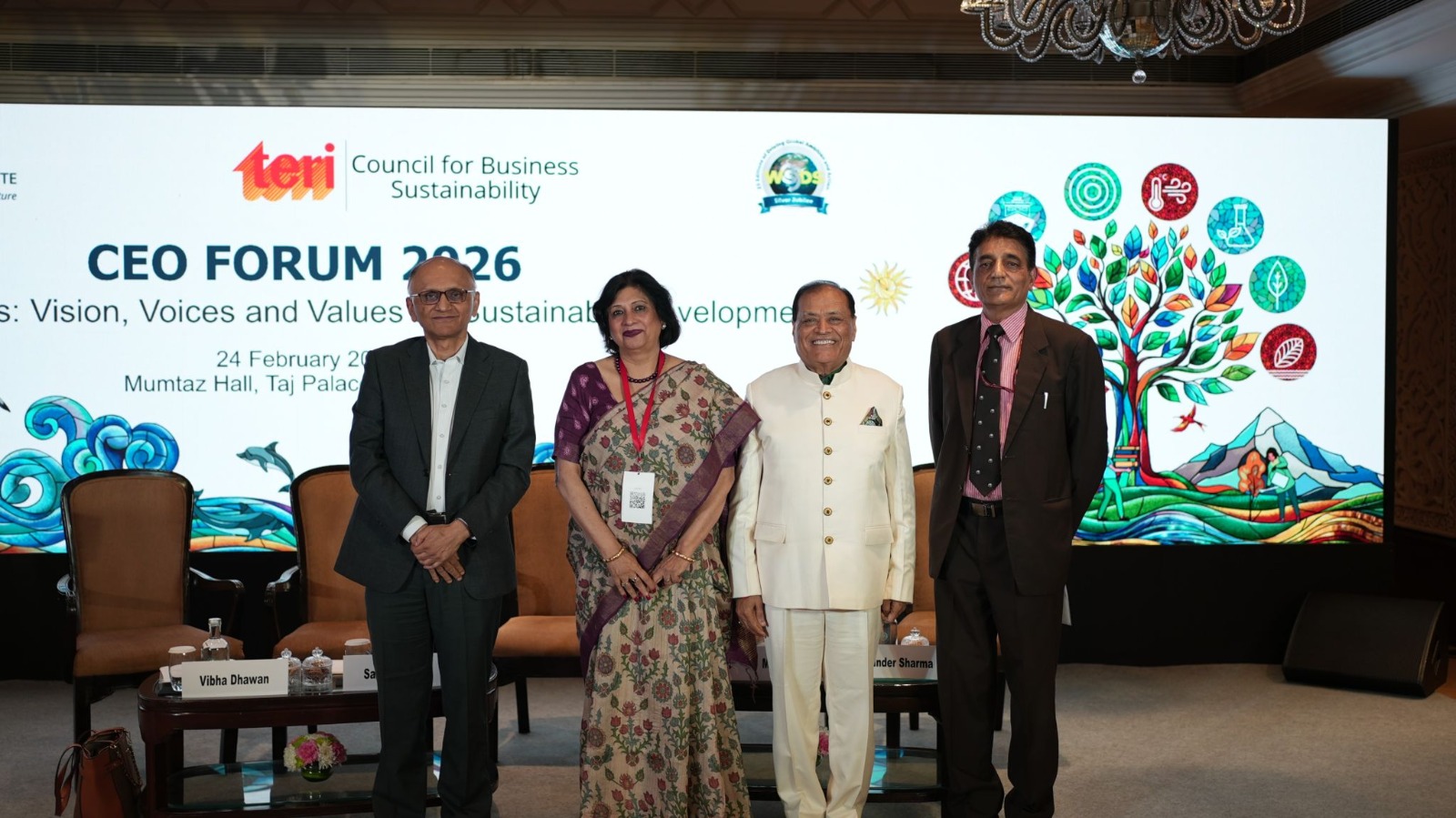
As a curtain-raiser to the World Sustainable Development Summit (WSDS) 2026, the CEO Forum was held on 24th February 2026 at The Taj Palace, New Delhi. TThe Forum brought together senior industry leaders to distill actionable insights for the broader global agenda the umbrella theme परिवर्तन | Transformations: Vision, Voices, and Values for Sustainable Development. Moving beyond incremental steps, the Forum sought to align corporate leadership with the systemic, resilient change required in an uncertain world.
The CEO Forum began with a welcome address by Dr Vibha Dhawan, Director General, TERI, who stated, “With two-thirds of our infrastructure yet to be built and a young workforce at our core, India stands at a pivotal juncture. Success lies in channelizing this potential to transform a rising nation into a global blueprint for growth; to achieve this, industry, government, and policymakers must come together.”
This was followed by Mr Mahendra Singhi, Distinguished Fellow, TERI, who noted, “The transition to a low-carbon economy is no longer just a corporate goal; it is a national mandate. Following Prime Minister Modi’s 2070 Net Zero commitment, we have witnessed a radical change in the thought processes of leaders and bureaucrats alike, manifesting in bold missions that turn climate ambition into systemic action.”
Mr Sanjay Kumar Singh, Director – Strategy & External Relations, Jindal Steel Ltd., added, “To reach the status of a developed economy, India must bridge the gap in per capita consumption. Tripling our current steel production to 500 million tons is not just an industrial target—it is the foundational requirement for the infrastructure, housing, and technology that will define a Viksit Bharat.”
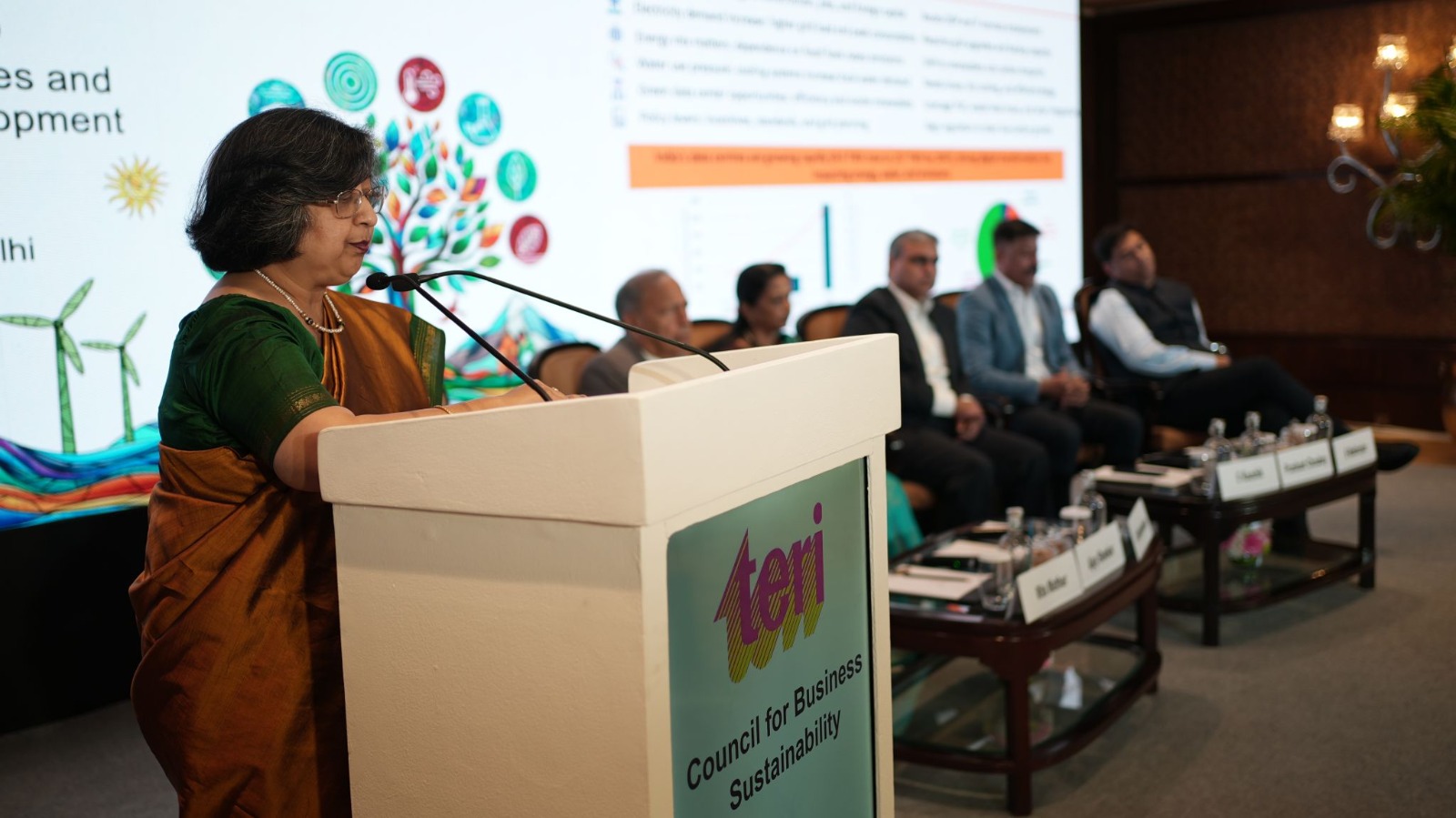
A key highlight of the Forum was the special session on the “Water-Energy Nexus in Infrastructure Investment Decisions,” which explored the interdependence between resource management and industrial growth. Ms Usha Subramaniam, Country President, GRUNDFOS, opened the discussion by addressing the visibility gap in sustainability, stating, “Energy gets the lion’s share of attention because its demand is visible and easily comprehended, but the true impact lies in the synergy between water and energy. As we zoom in on the choices that define our future, we must bring this ‘hidden area’ into focus.” Providing a framework for this digital and physical expansion, Dr Ritu Mathur, Director – Energy Assessment & Modelling, TERI elaborated on the exponential growth of India’s data centers with a presentation.
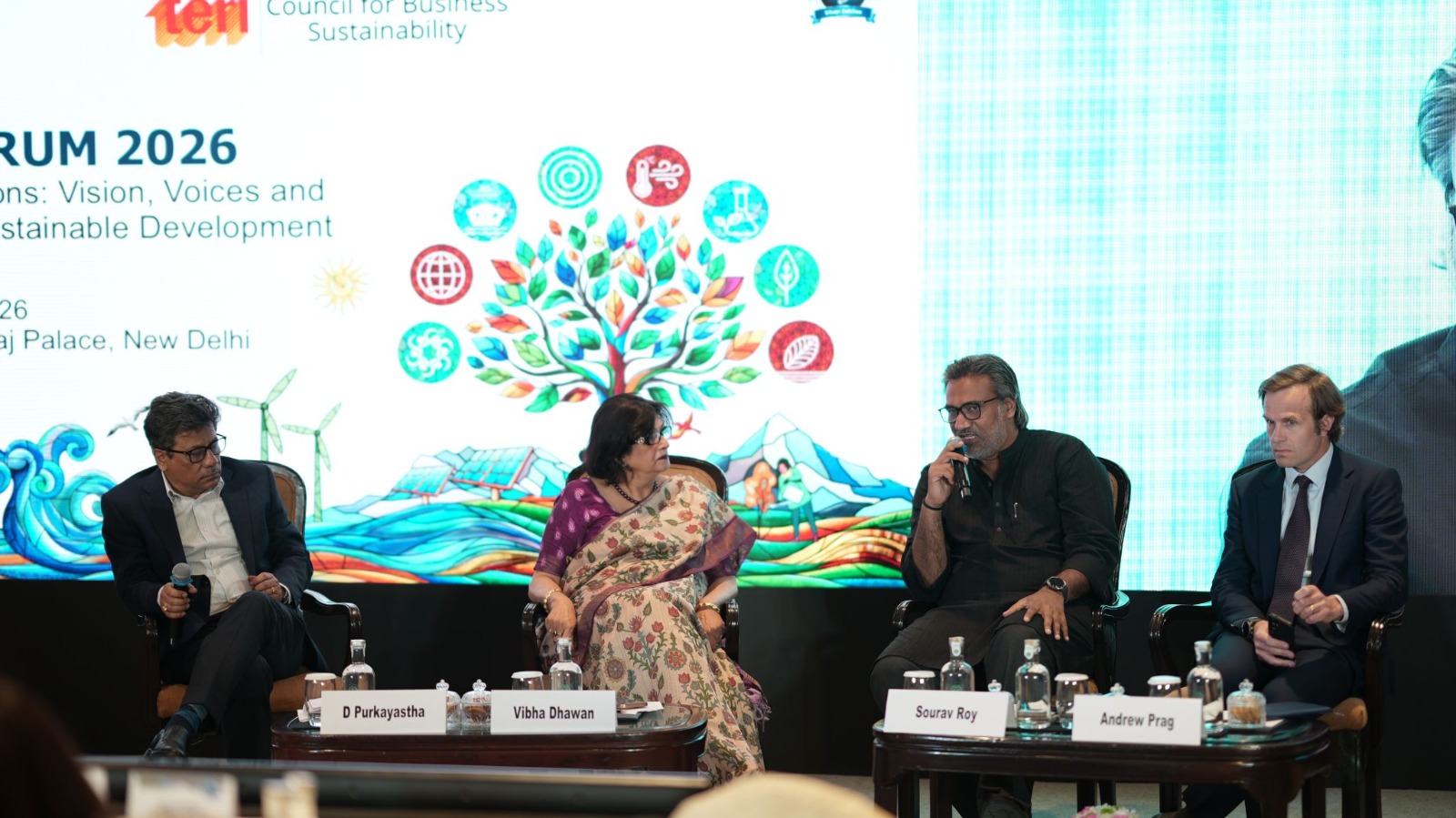
During the Fireside Chat titled ‘Transformations to balance sustainable development with economic growth – India and the Global South,’ moderated by Dr Dhawan, the conversation moved past incrementalism to address the systemic ‘transformations’ required in policy, finance, and corporate responsibility. During the chat Mr Sourav Roy, CEO, Tata Steel Foundation, challenged the audience to rethink the ‘public good’ within corporate structures. Mr Andrew Prag, Managing Director – Policy, We Mean Business Coalition, highlighted the shift from ‘burden sharing’ to ‘economic opportunity’. Dr Dhruba Purkayastha, PhD, Senior Fellow, Industrial Transition Accelerator, Mission Possible Partnerships, provided a sobering look at the financial architecture required for transition.
The session also featured a panel, moderated by Mr Ajay Shankar, Distinguished Fellow, TERI, and the conversation moved into the technical and operational imperatives of the nexus. Mr Chitranjan Kaushik, CEO, Ecofirst Services Ltd, detailed the inextricable link between the two sectors: “Water and energy are inextricably linked; every drop of water carries an iota of energy, and every unit of energy requires water.”
Mr Prashant Choubey, President, Avaada Energy Pvt Ltd, expanded on the environmental and economic consequences, stating, “We are currently trapped in a cycle where falling water tables demand higher energy intensity, leading to greater systemic strain. The only way forward is to address these as an integrated challenge.”
Finally, Mr Sourabh Mukherjee, Executive Vice President – Corporate Strategy & Sustainability, Tata Projects Ltd, grounded the dialogue in the reality of large-scale development, “The convergence of energy and water—the water-energy nexus—is no longer a theoretical debate; it is a construction and operational reality. As we build at scale for hyperscalers and data centers, we must acknowledge that energy efficiency is only half the battle.”
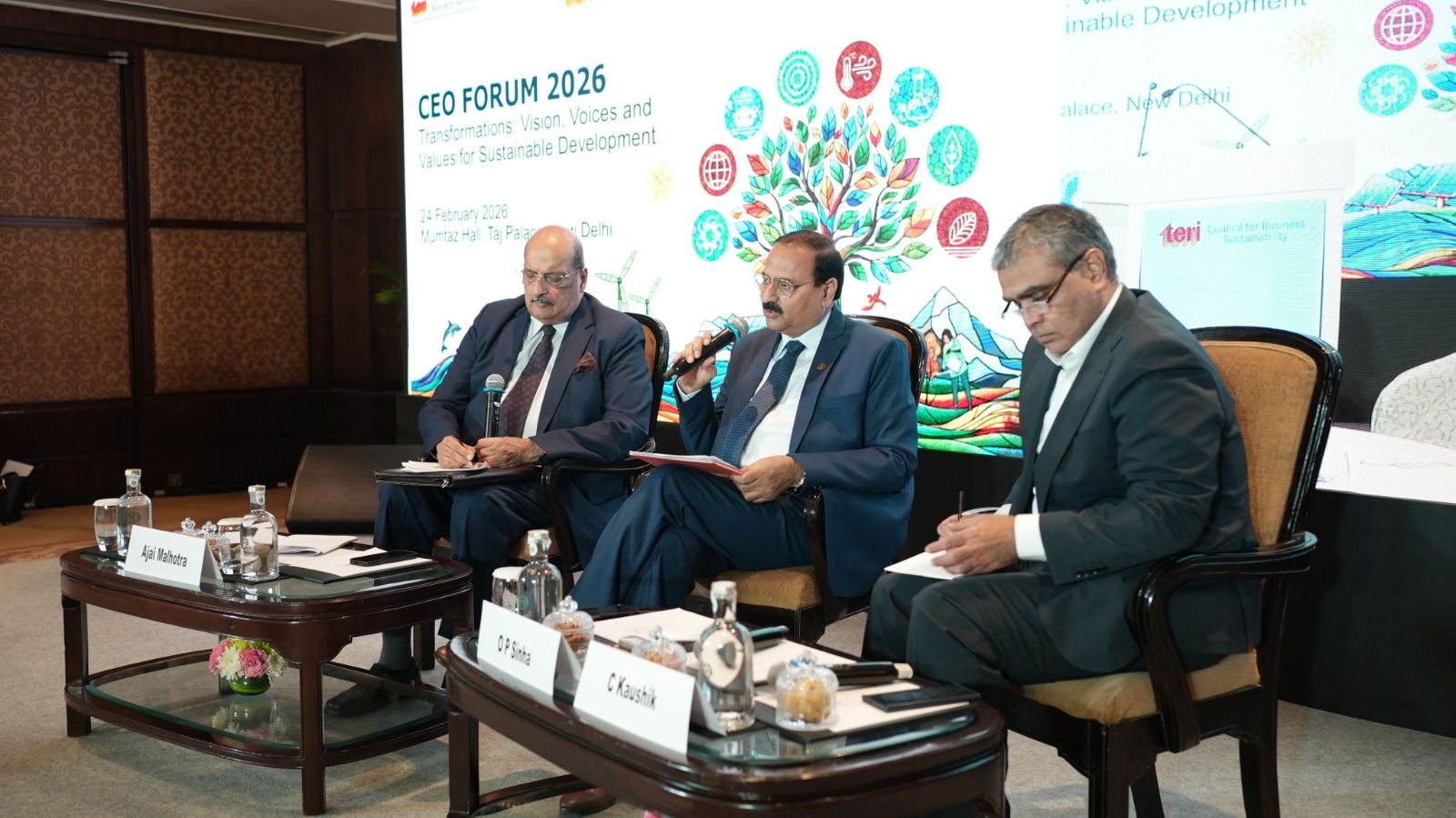
The CEO Forum 2026 concluded with a high-impact Fireside Chat, ‘Transformations Through Technology Adoption – Pathways for Energy Transitions,’ moderated by Amb Ajai Malhotra, Distinguished Fellow, TERI. Ambassador Malhotra opened the dialogue by emphasizing that energy transitions have shifted from being a policy choice to an existential imperative. He noted that driven by ambitious targets—including 500 gigawatts of non-fossil capacity by 2030 and a commitment to Net Zero by 2070—India stands at a critical juncture where technology adoption serves as the primary driver to unlock transformative pathways for inclusive growth. This was echoed by Mr O P Sinha, Chairperson, OTBL and Director (Exploration), Oil and Natural Gas Corporation Limited (ONGC), and Mr Chitranjan Kaushik, CEO, Ecofirst Services, who further observed that the market is not just ready for energy transformation but is ‘hungry’ for it.
The inaugural session concluded with an address by Dr. Virinder Sharma, Member (Technical), Commission for Air Quality Management, Government of India. “While climate change dominates the global discourse, local air quality often remains a silent crisis. Clean air transformation must be internalized by industry as a core pillar of their operations. If we are to maintain our economic momentum, we must bridge the gap between our technological ambitions and the environmental reality on the ground,” he added.
The Silver Jubilee Edition is both a celebration and a call to action. It offers a pivotal moment to reflect on the journey so far while continuously upgrading and accelerating the transformations towards a more sustainable and equitable future.