

27 September 2024: Ashoka University, India’s premier interdisciplinary higher education and research institution today successfully concluded its second edition of “Building Foundations for Inclusive Higher Education” conclave at the India Habitat Center (IHC). The event brought together experts from leading universities, institutions, and NGOs from across India to advance conversations on creating more inclusive higher education systems for students with disabilities. Organized by Ashoka University’s Office of Learning Support (OLS), the event was built on the discussions held from last year’s inaugural conclave to explore critical areas that need attention to ensure equal access to education for all.
A report titled “Access to Higher Education: An Unresolved Challenge for Students with Disabilities,” was unveiled by Ms. Reena Gupta, Director of the Office of Learning Support (OLS) at Ashoka University, and Ms. Neha Trivedi, Founder of Spandan. The report examines the barriers students with disabilities face and offers detailed recommendations to Higher Education Institutes (HEIs) on how to address these issues. The event brought together over 100 key stakeholders in government, academia, and industry, including – Dr. Pankaj Mittal, Secretary, Association of Indian University; Dr. Jagdish Arora, Advisor, National Board of Accreditation, and Dr. R.K. Chadha, Ex-Additional Secretary at Parliament of India, Lok Sabha, among others.
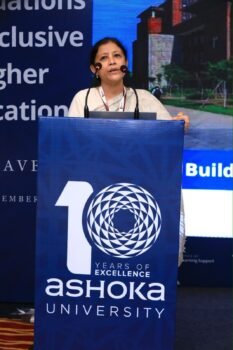
This year’s conclave builds on the foundations laid by the inaugural event in 2023 which featured conversations and a white paper on the “Future of Disability Inclusion in Higher Education.” The Conclave featured four dedicated Idea Labs that explored critical themes, including building support structures and reasonable accommodation frameworks at HEIs, strengthening accessible library systems and educational content accessibility, facilitating access to assistive technology for students in higher education, and empowering faculty as agents of inclusive teaching.
In his welcome address, Prof. Somak Raychaudhury, Vice-Chancellor of Ashoka University, reiterated the institution’s commitment to making higher education accessible and added, “At Ashoka University, we believe that true excellence in education can only be achieved when it is accessible to all. This initiative represents our dedication to fostering an inclusive environment where students with disabilities can thrive. Today’s discussions mark another step toward creating a truly democratic higher education system, which will play a critical role in India’s overall success.”
Dr. Pankaj Mittal, Secretary of the Association of Indian Universities addressed the concern of low participation of differently abled in India’s higher education system and said “The four key reasons for low participation are inadequate infrastructure in the higher education system, lack of support services like Ashoka’s Office of Learning Support (OLS), stigma attached to persons with disabilities and financial constraints. Out of which, the foremost reason is the stigma, and the mindset towards disability needs to be changed.”
Dr. R.K. Chadha, former Additional Secretary of the Parliament of India (Lok Sabha), offered recommendations to enhance the accessibility of persons with disabilities and integrate them more effectively into the mainstream. He proposed that 10-15% of the Corporate Social Responsibility (CSR) budget be allocated to initiatives supporting persons with disabilities, alongside the provision of disability pensions.
Ashoka University remains committed to working closely with its partners and stakeholders to turn these discussions into actionable strategies for inclusive education. The university has plans for future engagements, policy advocacy, and capacity-building initiatives aimed at fostering a more inclusive academic environment in India.