

India’s greatest strength has always been its people. From remote villages to crowded townships, classrooms across the country are filled with young minds that question, imagine, and dream with remarkable intensity. Spend time among these students and a striking truth becomes evident: ability is widespread, but opportunity is not. This imbalance lies at the heart of India’s education paradox.
Education is constitutionally recognised as a fundamental right, yet its true power extends far beyond policy. It is a force capable of altering life trajectories, uplifting families, and breaking cycles of generational disadvantage. When education works, as it should, it becomes society’s most reliable equaliser.
In practice, however, the pathway remains uneven. Education in India resembles a ladder that promises upward movement. At the base, access appears relatively open—schools exist, enrolment is high, and the right to education is assured. But with every step upward, the ladder narrows. As students move towards higher education and professional careers, the climb grows steeper, support systems thin out, and financial pressures intensify. Nowhere is this more visible than in pathways such as engineering and medicine, where examinations like JEE and NEET serve as gateways to life-changing opportunities—and formidable barriers for those without resources.
For first-generation learners, students from rural areas, and those from economically constrained families, these disparities are especially pronounced. Many carry early learning gaps, prepare for competitive examinations in isolation, and lack exposure to the academic ecosystems that others take for granted. Without sustained guidance and structured support, even the most capable students often struggle to convert potential into performance.
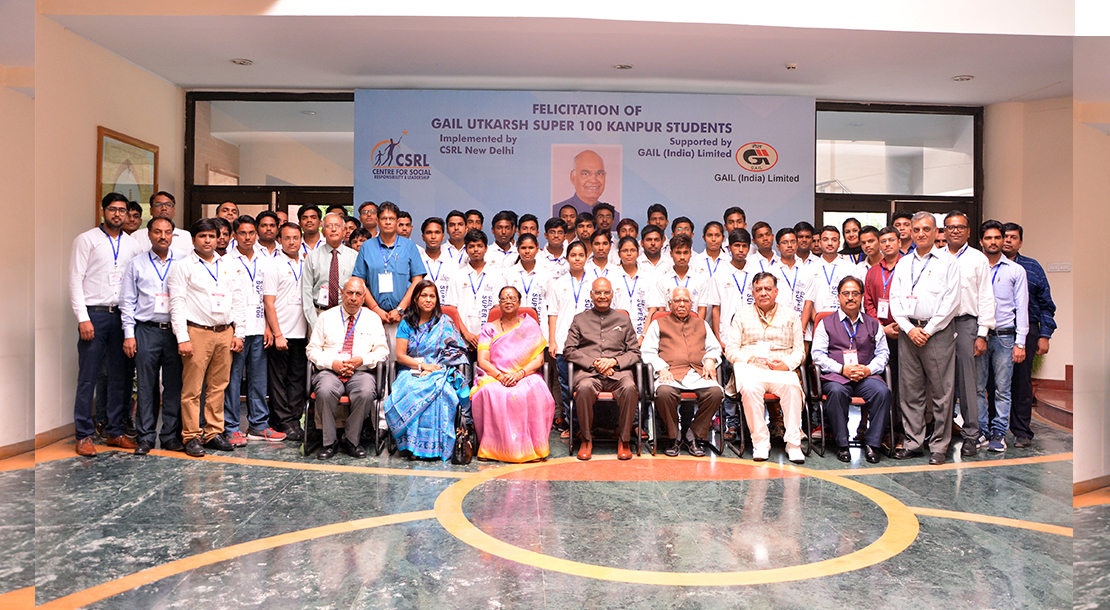
It was within this gap—between promise and possibility—that CSRL was founded. Through its Super 30 initiative, CSRL operates at the critical intersection of school education and higher education. The initiative identifies high-potential students from underserved backgrounds and provides intensive residential mentoring for JEE and NEET. This intervention goes far beyond examination preparation. Rigorous academics are paired with remedial support, close mentorship, and emotional care, recognising that confidence, stability, and belief are as essential to success as curriculum and coaching.
The outcomes are deeply affirming. When students are given a structured environment, consistent guidance, and the space to grow, trajectories change. Today, more than eight thousand CSRL alumni are studying in the nation’s premier institutions, while many others have moved into professional roles—supporting their families and redefining what is possible for the next generation. Each success story creates a quiet but powerful ripple of hope, dignity, and social mobility.
CSRL’s work has earned national and international recognition, including being studied as a case at Harvard Business School. Yet its truest measure of success lies much closer to home—in the lives transformed, the confidence restored, and the futures rewritten. It leaves us with a question worth sitting with: if talent is everywhere but opportunity is not, how do we, as a society, ensure that every child is given a ladder strong enough to climb as high as their dreams will take them irrespective of their circumstances?