


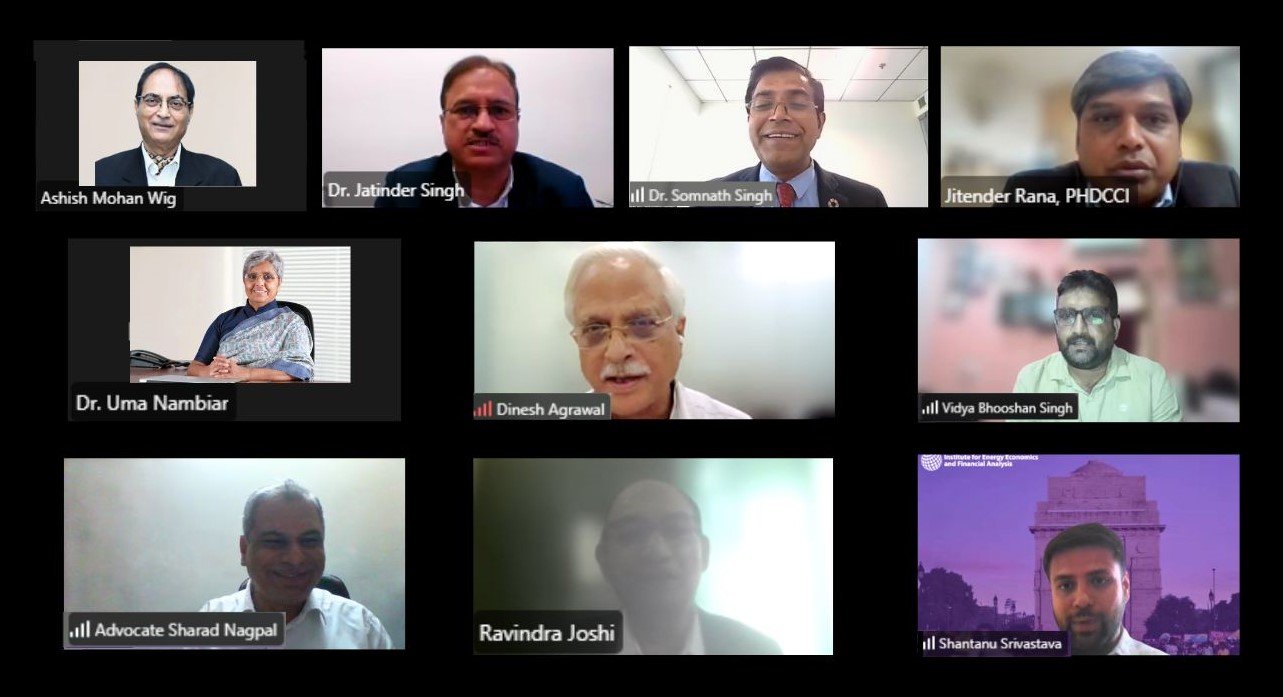
United Nations Global Compact Network India (UN GCNI), and PHD Chamber of Commerce and Industry (PHDCCI) organized a webinar on “ESG Integration: ESG Disclosures, Strategies, and Integrity” on Friday, 13th June 2025.
This was followed by a formal address by Mr. Ashish Mohan Wig, Chair, HR & IR Committee, PHDCCI. In his remarks, he emphasized the crucial role ESG plays in redefining corporate responsibility and long-term sustainability. He reiterated that responsible business is not just a regulatory requirement but a strategic imperative. Dr. Jatinder Singh, Deputy Secretary General, PHDCCI, delivered the keynote address, underlining how ESG has become an indispensable element of modern business strategy. He highlighted how stakeholders — from investors and regulators to customers and employees — are increasingly demanding transparency, accountability, and purpose-driven governance.
Dr. Somnath Singh, Deputy Director, UN GCNI, served as the session’s moderator and brought a sharp, policy-driven perspective to the discussions. He spoke about the broader context of ESG, not just from a compliance standpoint but also as a driver of innovation, risk management, and institutional trust. Dr. Somnath also pointed out the transformative potential of ESG across different sectors, particularly healthcare, education, and manufacturing, where sustainability and integrity can directly affect both performance and public credibility.
The technical panel session was a highlight of the webinar, with each expert presenting deep insights into sector-specific ESG challenges and opportunities.
Mr. Vidya Bhooshan Singh, Solid/Plastic Waste Specialist, IPE Global, focused on environmental stewardship and the current state of waste management systems in India. He elaborated on ESG reporting in environmental sectors, Extended Producer Responsibility (EPR) Compliance, and the operationalization of circular economy models. His presentation stressed the urgency for industries to take proactive roles in managing environmental performance and bridging compliance gaps.
Dr. Uma Nambiar, CEO, IISc Medical School Foundation, brought in a thought-provoking perspective from the healthcare and education sectors. She spoke about the role of leadership, ethics, and institutional governance in aligning ESG values with public welfare. Her remarks called attention to the need for these sectors to strengthen transparency, enhance data-backed disclosures, and institutionalize ESG principles within academic and healthcare operations.
Mr. Dinesh Agrawal, Principal Consultant, Consocia Advisory, addressed how corporations can move beyond ESG theory into practice. He outlined methods to integrate ESG objectives into strategic decision-making and highlighted the need for internal alignment across departments — particularly between compliance, strategy, finance, and operations — for effective execution. He also discussed the importance of tailoring ESG implementation strategies to the maturity and structure of the business, especially across Type A and Type B industries.
Mr. Shantanu Srivastava, Sustainable Finance & Climate Risk Lead, IEEFA, provided a financial lens to the conversation. He explained global ESG frameworks such as GRI (Global Reporting Initiative), TCFD (Task Force on Climate-related Financial Disclosures), and ISSB (International Sustainability Standards Board), and how they are increasingly being used by international investors to evaluate climate risk and sustainability disclosures. His talk underscored that ESG is no longer peripheral to financial performance — it is a core element in assessing risk, opportunity, and valuation.
Mr. Ravindra Joshi, Founder and CEO, Agile Consultancy Services, shifted the focus to mid-sized and smaller companies. He discussed how MSMEs face unique challenges — such as limited capacity, expertise, and resources — in implementing ESG frameworks. However, he also provided practical and scalable models for overcoming these hurdles and presented case studies demonstrating how smaller companies have successfully embraced ESG values, often with measurable benefits in market trust and efficiency.
Mr. Sharad Nagpal, Advocate, High Court of Delhi, closed the technical panel by examining the evolving regulatory and legal frameworks governing ESG disclosures in India. He spoke about SEBI’s Business Responsibility and Sustainability Report (BRSR), guidelines from the Ministry of Corporate Affairs, and the growing scrutiny around corporate integrity and anti-corruption compliance. He cautioned companies against green washing and stressed the importance of sincere, verifiable ESG reporting that holds up to regulatory and public scrutiny.
The session concluded with a formal vote of thanks by Dr. Somnath Singh, who acknowledged the valuable contributions of each speaker and appreciated the enthusiastic participation from the audience. He reiterated that ESG is no longer optional — it is a necessity for businesses seeking resilience, long-term viability, and meaningful impact.
The webinar served not only as a knowledge-sharing platform but also as a call to action for industries to take ownership of their ESG journeys.
With more than 100 participants from across sectors, the event witnessed active involvement from industry professionals, thought leaders, and subject matter experts — reinforcing the growing momentum behind Environmental, Social, and Governance (ESG) principles in India’s corporate ecosystem.