

Authors : Mr. Prashanta Kumar Swain, Fellow, Social Transformation and CSR & Dr. Amit Kumar Thakur, Associate Director and Head CSR
Introduction
India has set ambitious and globally significant clean energy targets—500 GW of non-fossil fuel capacity by 2030 and net-zero emissions by 2070. These targets reflect not only climate leadership but also a development imperative: powering growth, livelihoods, and resilience sustainably. In recent years, India has accelerated renewable capacity additions, reaching 267 GW of installed non-fossil capacity by 31st December 2025. Rooftop solar, agri-solar, and decentralised renewable energy (DRE) solutions have expanded rapidly. Solarisation of agriculture, schools, health centres, MSMEs, and other community infrastructure is gaining momentum, supported by policies such as PM Surya Ghar and PM-KUSUM, falling technology costs, and growing corporate participation through CSR and ESG commitments.
While utility-scale renewables remain essential, decentralised and community-centric renewable energy solutions are critical for reaching the last mile, improving energy access and productivity, and ensuring inclusive growth. This is where research institutions, implementation partners, and corporates can collaborate to translate national targets into tangible local outcomes.
TERI’s Role: From Policy to Practice
The Energy and Resources Institute (TERI) is a leading not-for-profit organisation driving India’s transition to a cleaner, more resilient future through research, innovation, and on-ground actions. Operating at the intersection of energy, environment, and development, TERI transforms policy and science into practical solutions that improve everyday life. Its work with last-mile communities focuses on enabling access to clean energy, strengthening public services, and enhancing livelihoods and income, especially for women and youths, so that sustainability becomes not just an aspiration, but a lived reality. Since 2007, TERI’s Lighting a Billion Lives (LaBL)© campaign has delivered decentralised solar solutions to over 15 million people across rural households, enterprises, schools, and health centres. Its success stems from modular and scalable technology; an enterprise-based delivery model; blended financing and subsidies; and a strong focus on training, capacity building, and local skilling, creating sustainable, community-owned energy access at scale.
Over the past five years, TERI has strengthened rural livelihoods by integrating decentralised hybrid solar systems directly into productive applications in different enterprise clusters such as power loom, toy, rope, pottery, and brass making units across Uttar Pradesh, women-led sewing units in Jharkhand, cold storage facilities in Assam, and the Northeast, etc. These interventions have combined with customised design, on-site installation, operator training, and the creation of women-led energy enterprises and green skilling programmes, ensuring reliable 24×7 power, higher productivity, income, lower emissions, and improved climate resilience.
LaBL 2.0: Leveraging Clean Energy for a Billion Livelihoods
Building on the Lighting a Billion Lives (LaBL) campaign, TERI will launch LaBL 2.0 – Leveraging Clean Energy for a Billion Livelihoods at the World Sustainable Development Summit (25–27 February 2026). LaBL 2.0 shifts from basic lighting to productive uses of clean energy, scaling decentralised solutions for enterprises, women-led businesses, and local value chains, linking emissions reduction with higher productivity, incomes, and climate resilience in line with India’s Net Zero 2070 vision.
Impacts on the Ground: What the Projects Show
Solarizing Power Loom Clusters- Enhancing Quality of Banarasi Saree
In Varanasi, hybrid solar charging systems have powered around 1200 power looms by installing 397 solar units 3kW systems that support a minimum 03 looms. operated by household-level micro entrepreneurs producing Banarasi Sarees.
Impacts: A TERI study found productivity increased by 30-40%, with 3-4 additional hours of loom operation daily. Solarisation replaced diesel fuel and eliminated quality issues caused by sudden power cuts. Annual emission reduction is estimated at 1427 tonnes of CO₂.
Solarising Sewing Clusters – Enhancing Women’s Productivity
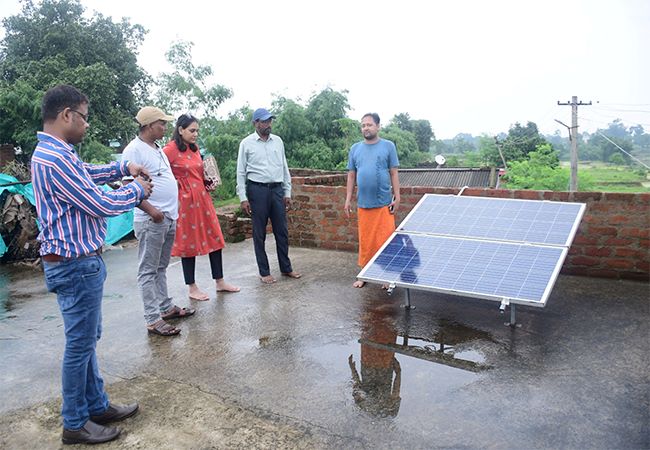
In the Jharkhand mining belt, TERI solarized 200 sewing machines operated by women entrepreneurs (each solar – 320W) with rooftop solar and battery backup for reliable power.
Impacts: Productivity rose by 30-40%, reducing idle time and adding 4 to 5 extra hours of operation daily. Annual income increased by ₹12,000–60,000 per enterprise, directly benefiting 200 women-led businesses. Estimated annual emission reduction – 64 tonnes of CO₂.
Promoting Clean Cooking – Facilitating Women-led Energy Entrepreneurships
In Bihar’s backward and flood-prone districts, TERI piloted and then scaled up Integrated Domestic Energy Systems – combining clean cooking and lighting – through women’s self-help networks under the JEEViKA Initiatives, a state-level livelihoods mission that works on a variety of themes for empowerment of women of the backward community of Bihar.
Impacts: Over 200 women trained as technicians and 35+ women-led solar marts established, extending clean energy access to 50,000+ Women SHG households.
Uttarakhand – Renewables in Fragile and Remote Geographies
The “Farming Sustainability for Livelihood Enhancement” project promoted eco-friendly practices in Uttarakhand’s hills to protect biodiversity and reduce environmental impact.
Techniques like poly-houses, integrated farming, and resource management improved productivity and climate resilience. Under TERI’s LaBL framework, technology solutions such as solar dryers, fencing, and food processing units enabled value addition and income generation. Combined with vermi-composting and training, these interventions improved yields and the local technical know-how.
Impacts: –Improved livelihoods of 100+ farmers, strengthened resilience, and advanced India’s net-zero vision through clean energy and climate-smart agriculture.
Case Study: Solarising Women-Led Sewing Machines
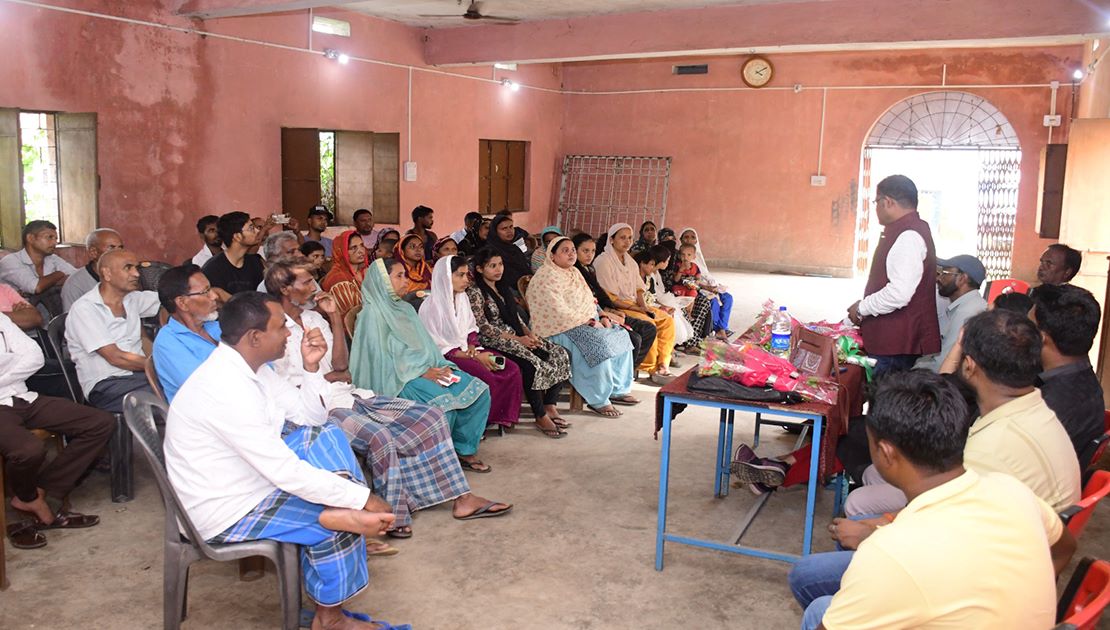
In Ramgarh, Jharkhand’s mining region, women sewing entrepreneurs regularly receive garment orders from vendors in Ranchi, Purulia, and Kolkata. Unreliable power supply made it difficult to meet the deadlines, especially during festival seasons. A CSR initiative introduced hybrid solar systems (320 W panel + Battery +Inverter + accessories) to power a sewing machine (50 W), a tubelight (40 W), and a ceiling fan (70 W) for 4-5 hours daily, eliminating idle time from power cuts and reducing physical strain from manual stitching. The project included awareness campaigns, training, and development of local technicians and energy enterprises to ensure sustainability.
Impact Stories:
- Shabnam (name changed) and her husband, both tailors, now work comfortably under reliable lighting and a fan, reducing eye strain and improving productivity.
- Syed (name changed) shifted from manual to solar-powered motorized sewing, reducing physical strain and meeting delivery timelines efficiently.
Reliable solar power has improved productivity, comfort, and income, demonstrating how CSR initiatives aligned with livelihood enhancement contribute to poverty reduction, resilience, and inclusive growth.
Why This Matters for CSR and Corporate India
Investing in decentralised renewable energy offers triple benefits —climate impact through emission reduction, social value by improving quality of life, resilience, and economic gains via lower costs and higher productivity. Partnerships with TERI and local stakeholders enable sustainable, community-owned solutions, moving e beyond one-time installations to long-term development
As India pursues 500 GW of non-fossil capacity and net-zero by 2070, success depends on translating ambition into local action. Through LaBL 2.0 and proven field models, – TERI ensures the energy transition is inclusive, resilient, and livelihood-focused.