Experts’ Corner

You're here Home » Experts' Corner » Page 2

Corporate contribution to India

When India Took the Salute

Army Day commemorates 15 January 1949, when General (later Field Marshal) K M Cariappa became the first Indian Commander in Chief, replacing the last British officer, General Francis Bucher. It symbolised India’s military independence after 1947 and marks a historic transition when India took full command of its own Army on 15 January 1949.  Indian Army conducts a grand parade every year on 15 January with military displays and acknowledges the selfless service and supreme sacrifices.  The day is dedicated to remembering and saluting soldiers who continue to protect India’s borders and maintain internal security. Status of Army on 15 August 1947 and Emerging Security Threats The Indian Army in 1947 was undergoing an emotionally charged transition in its history. The four Lakh British Indian Army

Read More »
Social influence

What Drives Sustainable Choices

As sustainability becomes a key expectation rather than an added feature, India’s urban  hoppers are redefining what responsible consumption looks like. This study by Great Lakes Institute of Management, Gurgaon explores how modern consumers think about sustainability, what influences their purchase decisions, and the behaviours they practice in daily life. The findings offer businesses a deeper understanding of the conscious-but-practical Indian consumer who values environmental responsibility but expects brands to make sustainable choices affordable, accessible, and transparent. For this report, we surveyed over 100 urban consumers using a self-administered questionnaire designed to understand how they think about sustainability, what influences their purchase decisions, and the habits they practice in daily life. The key insights are as follows: The results highlight a

Read More »
Future of labour rights

NEW FRONTIERS IN LABOUR RIGHTS

The Quiet Revolution Redefining the Future of Work On Human Rights Day 2025, Vice President C.P. Radhakrishnan pledged “to work tirelessly towards a nation where human rights are truly our everyday essentials – positive in their impact, essential for dignified existence, and attainable for all without exception.” That pledge has become the moral centrepiece of India’s human-rights journey. In a nation where over 50 crore workers fuel the world’s fastest-growing major economy, this promise is not abstract. It is translating into a quiet yet seismic revolution: companies reimagining fair labour practices, ethical supply chains, ESG integration, and inclusive workplaces – not as compliance checkboxes, but as the moral foundation of sustainable enterprise.  Labour Codes: From Ink to Impact India’s four

Read More »
Women leadership and inclusion

Women’s Empowerment in India: A Human Rights Imperative

Women’s empowerment has evolved from being a mere social priority to becoming a human rights mandate that is intertwined with the nation’s progress, justice and equity. While the economic, political and educational landscapes have registered an upswing in women empowerment, the lived reality still falls short of the mark. Major roadblocks pose as impediments to progress and prohibit autonomy, dignity and equal opportunity. Empowerment has long been viewed as charity or developmental assistance and there is a strong need to shift focus and view it as the rightful fulfilment of fundamental human rights. The principle at the cornerstone of women’s empowerment is the right of every woman to live with freedom, safety, and respect. The basic rights of a woman

Read More »
Workplace HIV awareness

Ending AIDS Is Everyone’s Business: A Human Rights Call to Action for India

World AIDS Day, observed annually on 1 December, serves as a powerful reminder that the fight against HIV/AIDS is far from over and that progress cannot be sustained without placing human rights at the centre of the response. While scientific advancements have transformed HIV from a fatal illness into a manageable chronic condition, the persistence of stigma, discrimination and inequality continues to undermine prevention, treatment and care efforts. In this context, ending AIDS is not merely a public health objective; it is a shared social, economic and moral responsibility that demands collective action across sectors. HIV/AIDS has always exposed deep-rooted inequities within societies. People living with HIV and those most at risk often face denial of dignity, breaches of confidentiality,

Read More »
Social justice advocacy

From Campus to Community: Human Rights as a Way of Life

Human rights in India are not confined to legislations, declarations, or courtrooms. They live in the everyday dignity people experience in classrooms, workplaces, and communities. As the world advances toward the promises of the SDGs, India’s constitutional values and the Panch Pran vision of Amrit Kaal a developed nation by 2047, freedom from colonial mind-sets, pride in heritage, unity in diversity, and a deep sense of duty remind us that rights are not bestowed; they are inherent. And among all the forces that democratize those rights, education remains the most powerful enabler, shaping citizens who not only demand their rights but also uphold the rights of others.   From Campus to Community: Where Rights Are First Practiced   Campuses are

Read More »
Sustainable business practices

Corporate Climate Commitment: Driving the Transition to a Sustainable Future

The global climate crisis has moved far beyond scientific projections and is now an undeniable reality affecting societies and economies across continents. Extreme weather events, rapid biodiversity loss, resource scarcity, and rising temperatures are reshaping how businesses operate and how communities survive. In this environment, the corporate sector finds itself at a defining moment. Companies are not only part of the climate challenge but also central to the solution. Corporate climate commitment has therefore evolved from being a voluntary gesture to a strategic necessity—one that influences investments, consumer expectations, supply chain stability, and long-term resilience. Forward-thinking organizations today understand that climate responsibility is not a financial burden but an opportunity to innovate and grow. Businesses that integrate sustainability into their

Read More »
sustainable waste management

Waste to Wealth: Redefining the Future of Sustainability

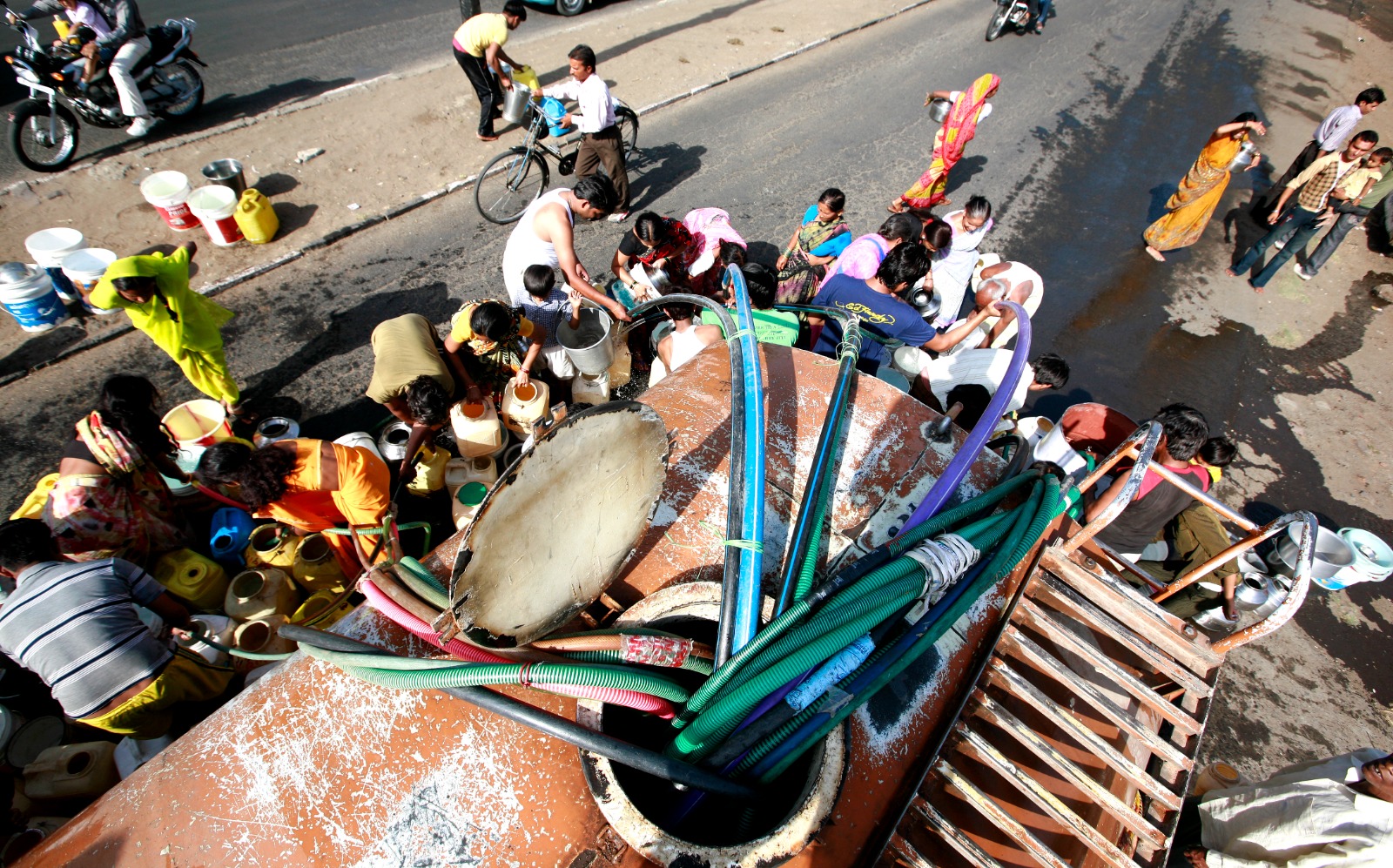
The issue of waste generation has emerged as a critical challenge in today’s society, necessitating a comprehensive understanding of its magnitude and the urgent need for sustainable waste management. With the increasing population, urbanisation, and industrialisation, the volume of waste generated has reached unprecedented levels, resulting in severe environmental, health, and socio-economic consequences. The world generates over 2 billion tonnes of municipal solid waste annually, most of which is not managed in an environmentally friendly manner. Overflowing landfills, polluted rivers, and plastic-choked oceans are daily reminders of humanity’s growing footprint and agonising depletion and pollution of resources. In India, almost 69 million tonnes of waste is created annually, out of which only approximately 14 tonnes of waste is treated. This

Read More »
CSR trends 2025

CSR’s Next Act (2025): From Compliance to Conscience to Collective Good

Corporate Social Responsibility (CSR) is like the proverbial elephant vast, multidimensional, and perceived differently by each observer. Environmentalists view it through the lens of climate action and planetary balance; social activists see it as a tool for justice and inclusion; policymakers interpret it in terms of governance, ethics, and accountability; international institutions associate it with peace, cooperation, and global solidarity; while businesses relate it to prosperity and inclusive growth. Each perspective is partial, yet together they reveal the true essence of CSR; a collective commitment to create value for people, planet, and society. No single view is absolute; it is in the convergence of these perspectives that the spirit of responsible business truly emerges. A decade of CSR spending in

Read More »
ShakthiSat moon orbit launch

THE HISTORIC ALL-WOMEN SATELLITE TO THE MOON’S ORBIT — MISSION SHAKTHISAT

Building a Global Pipeline of Space-Ready Students Through Vision, Mentorship & Corporate Partnership In a rapidly evolving world where space exploration is becoming a defining marker of national strength, one truth stands above all: the power of any space-faring nation ultimately lies in its people, not just its technology. Mission ShakthiSAT—a historic initiative led by SpaceKidz India—embodies this truth by placing girls at the centre of global space transformation. Among the key figures shaping this mission in India is Wg Cdr Jaya Tare (Retd, IAF)— India’s first woman IAF Pilot-Analog Astronaut , CEO of Newrizon Space, and Indian Ambassador for Mission ShakthiSAT. Her leadership and mentorship bring credibility, clarity, and global momentum to this unprecedented global endeavour. Mission ShakthiSAT is

Read More »
Corporate contribution to India

When India Took the Salute

Army Day commemorates 15 January 1949, when General (later Field Marshal) K M Cariappa became the first Indian Commander in Chief, replacing the last British officer, General Francis Bucher. It symbolised India’s military independence after 1947 and marks a historic transition when India took full command of its own Army on 15 January 1949.  Indian Army conducts a grand parade every year on 15 January with military displays and acknowledges the selfless service and supreme sacrifices.  The day is dedicated to remembering and saluting soldiers who continue to protect India’s borders and maintain internal security. Status of Army on 15 August 1947 and Emerging Security Threats The Indian Army in 1947 was undergoing an emotionally charged transition in its history. The four Lakh British Indian Army

Read More »
Social influence

What Drives Sustainable Choices

As sustainability becomes a key expectation rather than an added feature, India’s urban  hoppers are redefining what responsible consumption looks like. This study by Great Lakes Institute of Management, Gurgaon explores how modern consumers think about sustainability, what influences their purchase decisions, and the behaviours they practice in daily life. The findings offer businesses a deeper understanding of the conscious-but-practical Indian consumer who values environmental responsibility but expects brands to make sustainable choices affordable, accessible, and transparent. For this report, we surveyed over 100 urban consumers using a self-administered questionnaire designed to understand how they think about sustainability, what influences their purchase decisions, and the habits they practice in daily life. The key insights are as follows: The results highlight a

Read More »
Future of labour rights

NEW FRONTIERS IN LABOUR RIGHTS

The Quiet Revolution Redefining the Future of Work On Human Rights Day 2025, Vice President C.P. Radhakrishnan pledged “to work tirelessly towards a nation where human rights are truly our everyday essentials – positive in their impact, essential for dignified existence, and attainable for all without exception.” That pledge has become the moral centrepiece of India’s human-rights journey. In a nation where over 50 crore workers fuel the world’s fastest-growing major economy, this promise is not abstract. It is translating into a quiet yet seismic revolution: companies reimagining fair labour practices, ethical supply chains, ESG integration, and inclusive workplaces – not as compliance checkboxes, but as the moral foundation of sustainable enterprise.  Labour Codes: From Ink to Impact India’s four

Read More »
Women leadership and inclusion

Women’s Empowerment in India: A Human Rights Imperative

Women’s empowerment has evolved from being a mere social priority to becoming a human rights mandate that is intertwined with the nation’s progress, justice and equity. While the economic, political and educational landscapes have registered an upswing in women empowerment, the lived reality still falls short of the mark. Major roadblocks pose as impediments to progress and prohibit autonomy, dignity and equal opportunity. Empowerment has long been viewed as charity or developmental assistance and there is a strong need to shift focus and view it as the rightful fulfilment of fundamental human rights. The principle at the cornerstone of women’s empowerment is the right of every woman to live with freedom, safety, and respect. The basic rights of a woman

Read More »
Workplace HIV awareness

Ending AIDS Is Everyone’s Business: A Human Rights Call to Action for India

World AIDS Day, observed annually on 1 December, serves as a powerful reminder that the fight against HIV/AIDS is far from over and that progress cannot be sustained without placing human rights at the centre of the response. While scientific advancements have transformed HIV from a fatal illness into a manageable chronic condition, the persistence of stigma, discrimination and inequality continues to undermine prevention, treatment and care efforts. In this context, ending AIDS is not merely a public health objective; it is a shared social, economic and moral responsibility that demands collective action across sectors. HIV/AIDS has always exposed deep-rooted inequities within societies. People living with HIV and those most at risk often face denial of dignity, breaches of confidentiality,

Read More »
Social justice advocacy

From Campus to Community: Human Rights as a Way of Life

Human rights in India are not confined to legislations, declarations, or courtrooms. They live in the everyday dignity people experience in classrooms, workplaces, and communities. As the world advances toward the promises of the SDGs, India’s constitutional values and the Panch Pran vision of Amrit Kaal a developed nation by 2047, freedom from colonial mind-sets, pride in heritage, unity in diversity, and a deep sense of duty remind us that rights are not bestowed; they are inherent. And among all the forces that democratize those rights, education remains the most powerful enabler, shaping citizens who not only demand their rights but also uphold the rights of others.   From Campus to Community: Where Rights Are First Practiced   Campuses are

Read More »
Sustainable business practices

Corporate Climate Commitment: Driving the Transition to a Sustainable Future

The global climate crisis has moved far beyond scientific projections and is now an undeniable reality affecting societies and economies across continents. Extreme weather events, rapid biodiversity loss, resource scarcity, and rising temperatures are reshaping how businesses operate and how communities survive. In this environment, the corporate sector finds itself at a defining moment. Companies are not only part of the climate challenge but also central to the solution. Corporate climate commitment has therefore evolved from being a voluntary gesture to a strategic necessity—one that influences investments, consumer expectations, supply chain stability, and long-term resilience. Forward-thinking organizations today understand that climate responsibility is not a financial burden but an opportunity to innovate and grow. Businesses that integrate sustainability into their

Read More »
sustainable waste management

Waste to Wealth: Redefining the Future of Sustainability

The issue of waste generation has emerged as a critical challenge in today’s society, necessitating a comprehensive understanding of its magnitude and the urgent need for sustainable waste management. With the increasing population, urbanisation, and industrialisation, the volume of waste generated has reached unprecedented levels, resulting in severe environmental, health, and socio-economic consequences. The world generates over 2 billion tonnes of municipal solid waste annually, most of which is not managed in an environmentally friendly manner. Overflowing landfills, polluted rivers, and plastic-choked oceans are daily reminders of humanity’s growing footprint and agonising depletion and pollution of resources. In India, almost 69 million tonnes of waste is created annually, out of which only approximately 14 tonnes of waste is treated. This

Read More »
CSR trends 2025

CSR’s Next Act (2025): From Compliance to Conscience to Collective Good

Corporate Social Responsibility (CSR) is like the proverbial elephant vast, multidimensional, and perceived differently by each observer. Environmentalists view it through the lens of climate action and planetary balance; social activists see it as a tool for justice and inclusion; policymakers interpret it in terms of governance, ethics, and accountability; international institutions associate it with peace, cooperation, and global solidarity; while businesses relate it to prosperity and inclusive growth. Each perspective is partial, yet together they reveal the true essence of CSR; a collective commitment to create value for people, planet, and society. No single view is absolute; it is in the convergence of these perspectives that the spirit of responsible business truly emerges. A decade of CSR spending in

Read More »
ShakthiSat moon orbit launch

THE HISTORIC ALL-WOMEN SATELLITE TO THE MOON’S ORBIT — MISSION SHAKTHISAT

Building a Global Pipeline of Space-Ready Students Through Vision, Mentorship & Corporate Partnership In a rapidly evolving world where space exploration is becoming a defining marker of national strength, one truth stands above all: the power of any space-faring nation ultimately lies in its people, not just its technology. Mission ShakthiSAT—a historic initiative led by SpaceKidz India—embodies this truth by placing girls at the centre of global space transformation. Among the key figures shaping this mission in India is Wg Cdr Jaya Tare (Retd, IAF)— India’s first woman IAF Pilot-Analog Astronaut , CEO of Newrizon Space, and Indian Ambassador for Mission ShakthiSAT. Her leadership and mentorship bring credibility, clarity, and global momentum to this unprecedented global endeavour. Mission ShakthiSAT is

Read More »

I/we Wish To...

Sustainability breeds its constant ongoing need for regularity, credibility, and a strong, collaborative ecosystem. Since 2014, CSR Times has been at the forefront in curating powerful stories, spotlighting transformative initiatives, and amplifying the voices of diverse organizations and individuals who are shaping India’s responsible growth narrative. Through its magazines and flagship events, CSR Times has built a trusted platform that bridges corporate vision with grassroots impact. And now the CSR TIMES Newsletter emerges as a timely and purposeful initiative designed to inform, inspire, and connect stakeholders across the corporate social responsibility ecosystem, designed to meet a different and more immediate need. 

The CSR TIMES Newsletter is your front-row pass to our magazine’s most loved moments: audience-favorite clips, our most popular features, powerful quotes, and the most important stories crafted for a fast-paced digital experience. Designed for today’s four-screen world, it delivers high-impact content straight to your inbox, allowing you to stay updated anytime, anywhere, and absolutely free of cost, so you never miss the conversations shaping the future of sustainability and responsible leadership. Ultimately, CSR TIMES Newsletter is about building an informed and inspired community of leaders who are committed to driving positive social and environmental change.

Subscribe to
CSR TIMES Newsletter

It's Free. And, you can unsubscribe anytime.