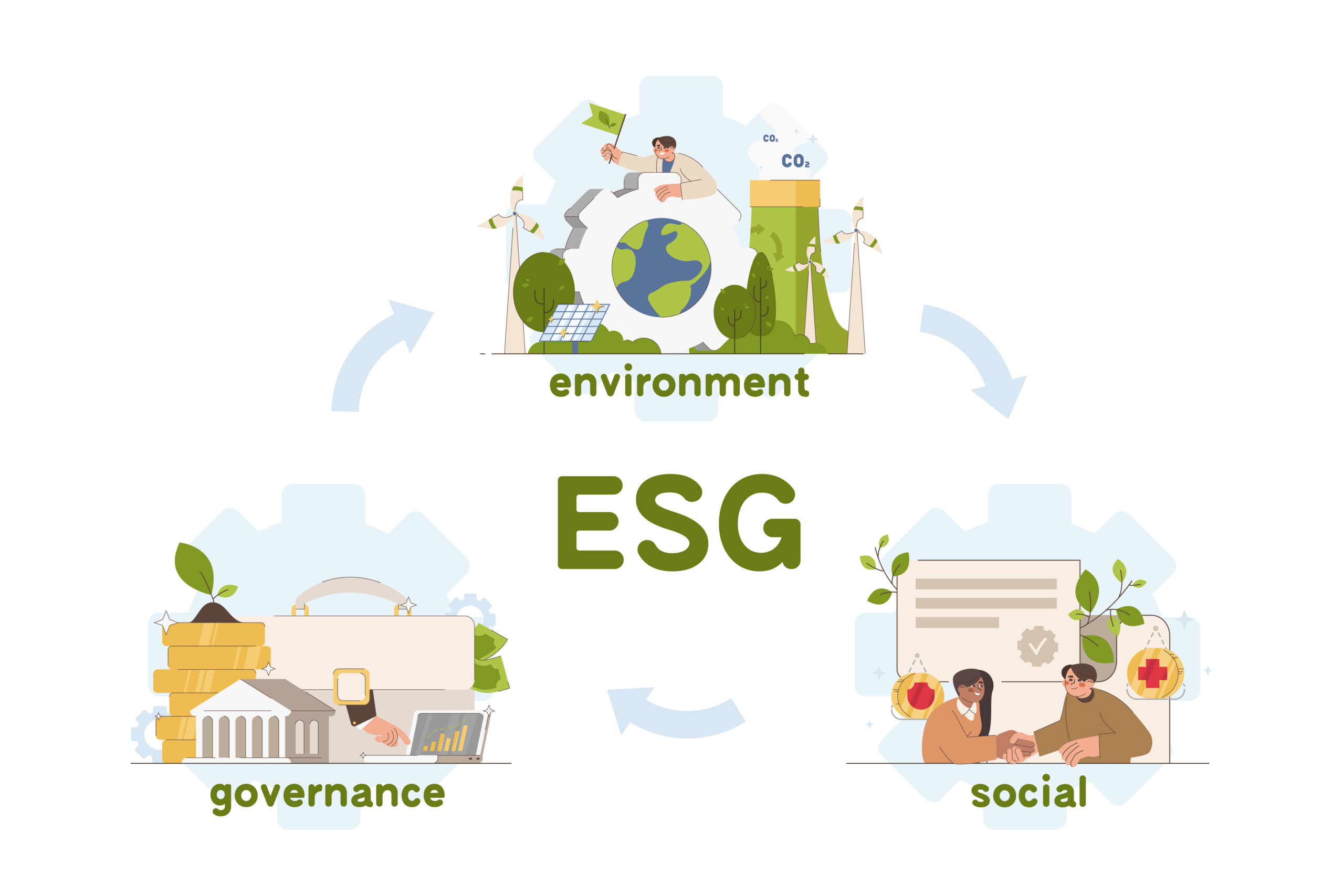
Each pillar is distinct, yet deeply interconnected. A company with strong environmental policies but poor labour practices, for instance, may face reputational backlash that undermines the very sustainability credentials it worked to build. True ESG leadership requires coherence across all three dimensions.
ESG Metrics & Targets
Under Environmental metrics, we have
Greenhouse Gas Emissions which measures the amount of greenhouse gases, such as carbon dioxide and methane, that a company emits into the atmosphere. Companies that emit large amounts face potential regulatory, reputational and financial risks. KPIs on emissions include:
- Scope 1, 2, and 3 emissions
Scope 1 – Direct Emissions: Emissions directly from operations owned or controlled by the company.
Scope 2 – Indirect Emissions (Purchased Energy): Indirect emissions from the generation of purchased electricity, steam, heating, or cooling.
Scope 3 – Indirect Emissions (Value Chain): All other indirect emissions that occur in a company’s value chain, including upstream (before production) and downstream (after product sale) activities. - Emissions intensity per unit of revenue or production.
- Year-over-year emissions increase or reduction percentage.
- Progress toward net-zero emissions targets.
Energy usage measures the amount of energy a company uses to produce goods and services, power its data centers and run other operations. Companies that use renewable energy sources, such as solar or wind, might have a lower environmental impact than those that rely on fossil fuels. KPIs include:
- Total energy consumption measured in megawatt-hours (MWh)
- Percentage of energy derived from renewable sources
- Energy usage per unit of production output
- Year-on-year improvements in energy efficiency
Water usage measures how efficiently and responsibly a company manages its water resources, in terms of consumption, conservation, and impact. KPIs include:
- Total volume of water consumed (in cubic meters)
- Water usage per unit of production output
- Proportion of water that is recycled or reused
- Assessment of water stress risks across operational sites
Waste management includes metrics on waste generation and programs for managing waste. KPIs include:
- Total waste generated, usually measured in tons or metric tons.
- Waste diversion rate from landfills.
- Percentage of waste recycled, reused or composted.
- Volume of hazardous waste produced and its safe, compliant disposal.
Recently Mandatory Scope 3 (indirect value chain emissions) moves from “optional” to a regulatory requirement for thousands of companies under the EU Corporate Sustainability Reporting Directive (CSRD) and California’s SB 253.
Starting January 1, 2026, Carbon Border Adjustment Mechanism (CBAM) becomes fully operational, imposing costs on imports of carbon-intensive goods (steel, cement, aluminum, etc.), forcing companies to report embedded carbon intensity.
Under Social metrics, we have

 Environmental
 Social
 Governance