You're here Home » ESG Corner

What is ESG?

Once dismissed as corporate window-dressing, (ESG) Environmental, Social, and Governance principles have evolved into a defining lens through which investors, regulators, and consumers now judge the world’s companies.

In boardrooms across the globe, a quiet transformation has been underway. Companies that once measured success solely by quarterly earnings are now being scrutinised through a far broader lens, one that asks how they treat the planet, their people, and the principles that govern their operations. This framework is ESG: Environmental, Social, and Governance.

What began as a niche concept in socially responsible investing circles has grown into a structural force reshaping capital allocation, corporate strategy, and regulatory policy. Understanding ESG is essential for any business, investor, or citizen trying to make sense of the modern economy.

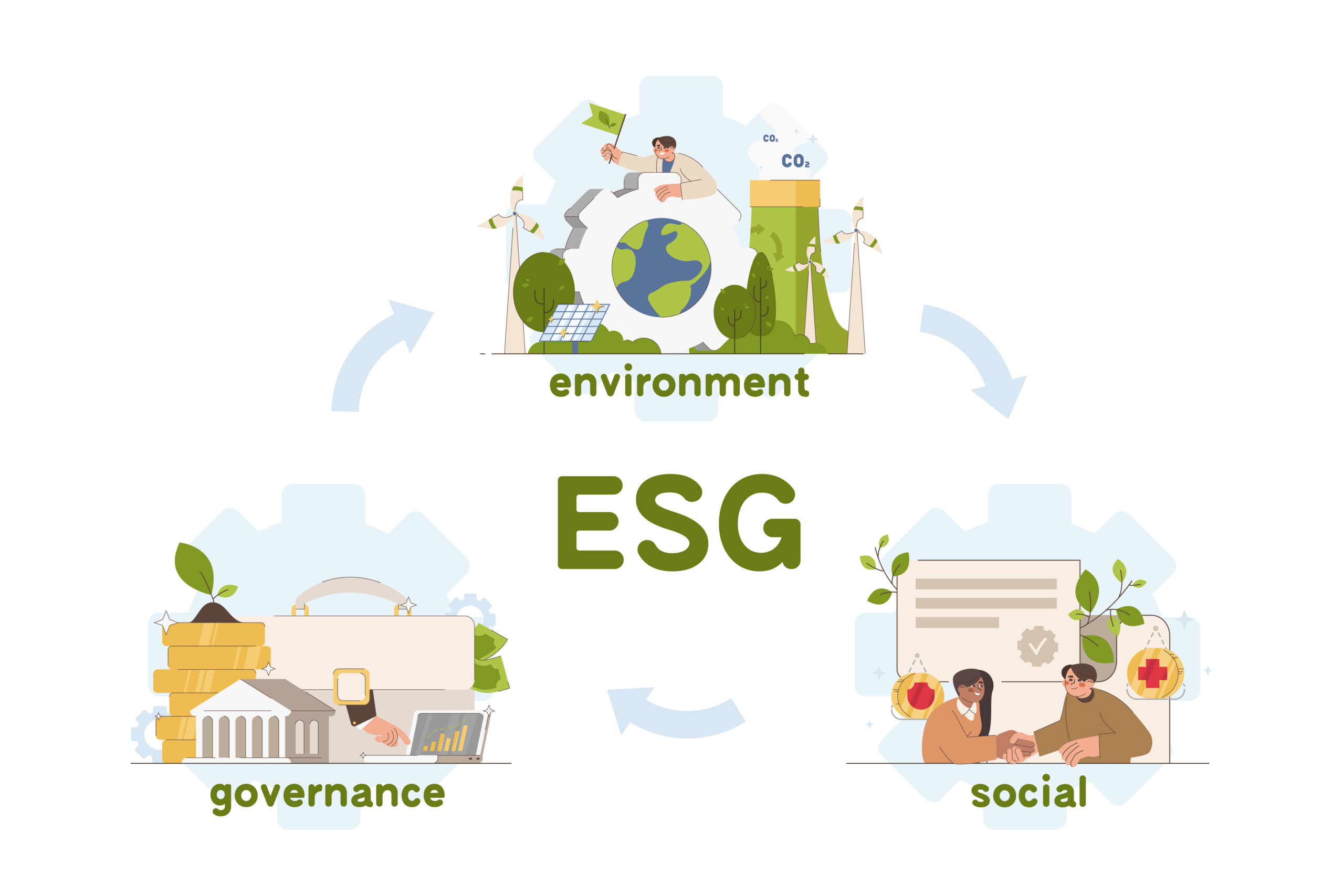
The Three Pillars of ESG

🌿Environmental
How a company interacts with the natural world including carbon emissions, energy use, water stewardship, waste, biodiversity, and climate risk exposure.

🤝Social
How a company manages relationships with employees, suppliers, communities, and customers  covering labour practices, diversity, human rights, and data privacy.

⚖️Governance
How a company is led and controlled including board composition, executive compensation, shareholder rights, transparency, audit quality, and anti-corruption measures.


Each pillar is distinct, yet deeply interconnected. A company with strong environmental policies but poor labour practices, for instance, may face reputational backlash that undermines the very sustainability credentials it worked to build. True ESG leadership requires coherence across all three dimensions.

ESG Metrics & Targets

Under Environmental metrics, we have

Greenhouse Gas Emissions which measures the amount of greenhouse gases, such as carbon dioxide and methane, that a company emits into the atmosphere. Companies that emit large amounts face potential regulatory, reputational and financial risks. KPIs on emissions include:

  • Scope 1, 2, and 3 emissions
    Scope 1 – Direct Emissions: Emissions directly from operations owned or controlled by the company.
    Scope 2 – Indirect Emissions (Purchased Energy): Indirect emissions from the generation of purchased electricity, steam, heating, or cooling.
    Scope 3 – Indirect Emissions (Value Chain): All other indirect emissions that occur in a company’s value chain, including upstream (before production) and downstream (after product sale) activities.
  • Emissions intensity per unit of revenue or production.
  • Year-over-year emissions increase or reduction percentage.
  • Progress toward net-zero emissions targets.


Energy usage
measures the amount of energy a company uses to produce goods and services, power its data centers and run other operations. Companies that use renewable energy sources, such as solar or wind, might have a lower environmental impact than those that rely on fossil fuels. KPIs include:

  • Total energy consumption measured in megawatt-hours (MWh)
  • Percentage of energy derived from renewable sources
  • Energy usage per unit of production output
  • Year-on-year improvements in energy efficiency


Water usage
measures how efficiently and responsibly a company manages its water resources, in terms of consumption, conservation, and impact. KPIs include:

  • Total volume of water consumed (in cubic meters)
  • Water usage per unit of production output
  • Proportion of water that is recycled or reused
  • Assessment of water stress risks across operational sites

Waste management includes metrics on waste generation and programs for managing waste.  KPIs include:

  • Total waste generated, usually measured in tons or metric tons.
  • Waste diversion rate from landfills.
  • Percentage of waste recycled, reused or composted.
  • Volume of hazardous waste produced and its safe, compliant disposal. 


Recently Mandatory Scope 3 (indirect value chain emissions) moves from “optional” to a regulatory requirement for thousands of companies under the EU Corporate Sustainability Reporting Directive (CSRD) and California’s SB 253.

Starting January 1, 2026, Carbon Border Adjustment Mechanism (CBAM) becomes fully operational, imposing costs on imports of carbon-intensive goods (steel, cement, aluminum, etc.), forcing companies to report embedded carbon intensity.

Under Social metrics, we have

 

Share:

Disclaimer: The opinions expressed in this section and articles contributed are those of the respective authors, who have submitted it as their original work. They do not reflect the opinions or views of CSR Times, or its employees, management and group publications. The accuracy and reliability of information presented has not been verified by CSR Times. CSR Times will not be held responsible in any way for the content of this article.

I/we Wish To...

Sustainability breeds its constant ongoing need for regularity, credibility, and a strong, collaborative ecosystem. Since 2014, CSR Times has been at the forefront in curating powerful stories, spotlighting transformative initiatives, and amplifying the voices of diverse organizations and individuals who are shaping India’s responsible growth narrative. Through its magazines and flagship events, CSR Times has built a trusted platform that bridges corporate vision with grassroots impact. And now the CSR TIMES Newsletter emerges as a timely and purposeful initiative designed to inform, inspire, and connect stakeholders across the corporate social responsibility ecosystem, designed to meet a different and more immediate need. 

The CSR TIMES Newsletter is your front-row pass to our magazine’s most loved moments: audience-favorite clips, our most popular features, powerful quotes, and the most important stories crafted for a fast-paced digital experience. Designed for today’s four-screen world, it delivers high-impact content straight to your inbox, allowing you to stay updated anytime, anywhere, and absolutely free of cost, so you never miss the conversations shaping the future of sustainability and responsible leadership. Ultimately, CSR TIMES Newsletter is about building an informed and inspired community of leaders who are committed to driving positive social and environmental change.

Subscribe to
CSR TIMES Newsletter

It's Free. And, you can unsubscribe anytime.