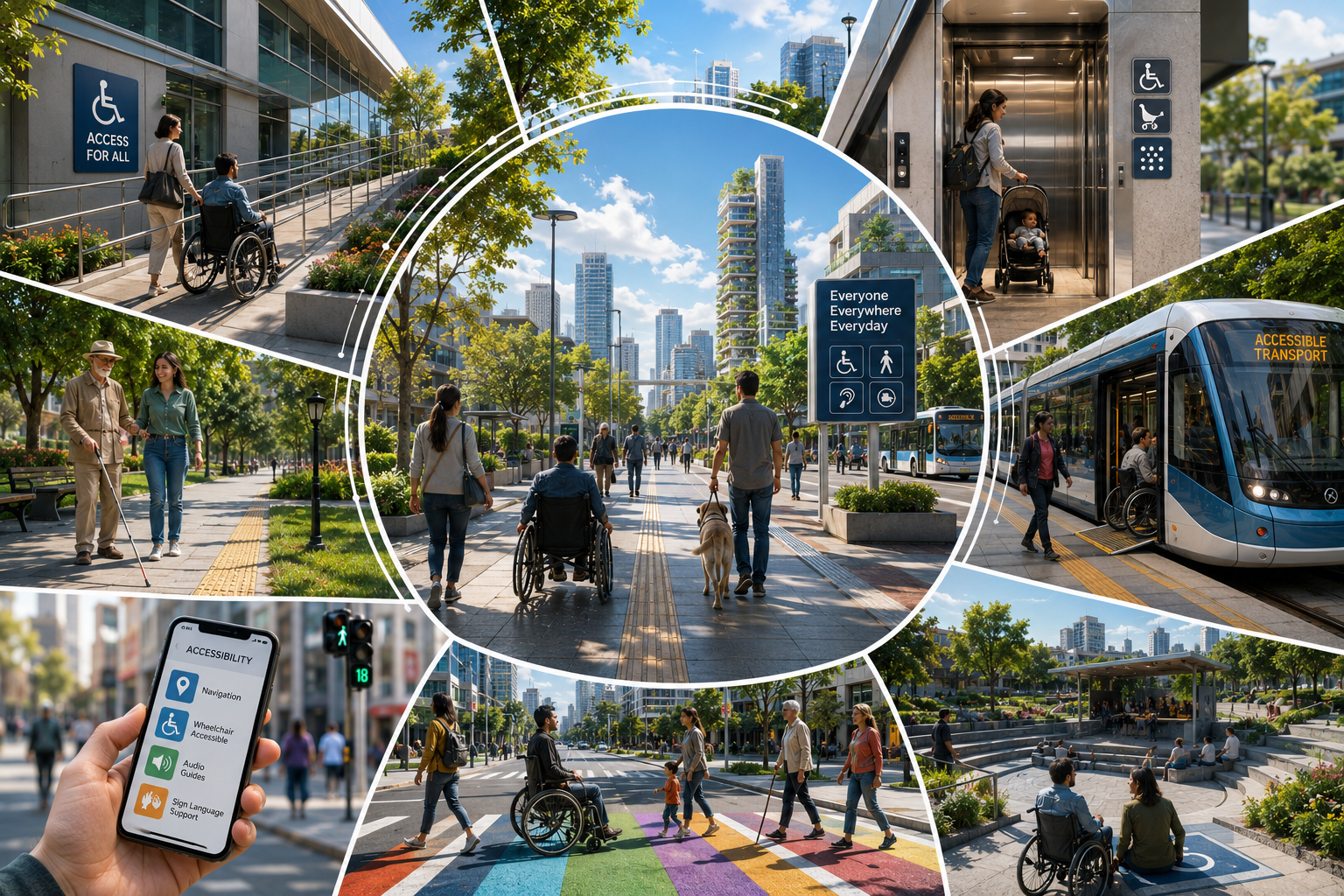
Cities are meant to belong to everyone. They are centers of education, employment, healthcare, culture, and social life. However, for millions of people with disabilities, cities still remain difficult to navigate. Uneven footpaths, inaccessible transport systems, poor signage, and buildings without proper facilities create daily barriers that affect independence and dignity. From the perspective of persons with disabilities, an accessible city is not only about infrastructure—it is about equality, inclusion, and the right to participate fully in society.
According to the 2011 Census of India, the country has over 2.68 crore persons with disabilities, around 2.21% of the population. Experts believe the actual number is much higher due to underreporting and lack of awareness. By 2027, India may officially have more than 3 crore persons with disabilities, making accessibility an urgent urban requirement rather than a specialized concern.
Disability itself is diverse and includes physical disabilities, visual impairment, hearing impairment, intellectual disabilities, autism spectrum disorders, neurological conditions, and age-related mobility challenges. Accessibility should therefore not focus only on wheelchair users. Elderly citizens, injured individuals, pregnant women, and people with temporary mobility limitations also benefit from inclusive infrastructure. A truly accessible city recognizes this diversity and designs spaces that can be comfortably used by everyone.
India has started making progress toward accessibility. Metro systems such as Delhi Metro now provide elevators, tactile flooring, wheelchair access, and audio announcements. Airports and many government buildings are gradually improving under initiatives like the Accessible India Campaign and the Rights of Persons with Disabilities Act, 2016. These developments reflect growing awareness about inclusive urban planning.
An accessible city should follow the principle of universal design. Universal design means creating environments that can be used by all people, regardless of age, ability, or physical condition, without requiring special adaptation. For example, ramps are useful not only for wheelchair users but also for elderly people, parents with strollers, delivery workers, and travelers with luggage. Similarly, clear signage, safer pedestrian crossings, tactile pathways, and accessible transport systems benefit everyone. Accessibility should therefore not be viewed as a favor for a minority group; it is a smarter and more inclusive way of building cities.
Employment and education are also closely linked to accessibility. A talented student may be unable to attend classes because educational institutions lack proper infrastructure. A skilled professional may lose job opportunities because offices and transport systems are inaccessible. When cities restrict the movement and participation of persons with disabilities, they indirectly limit their contribution to economic growth and social development.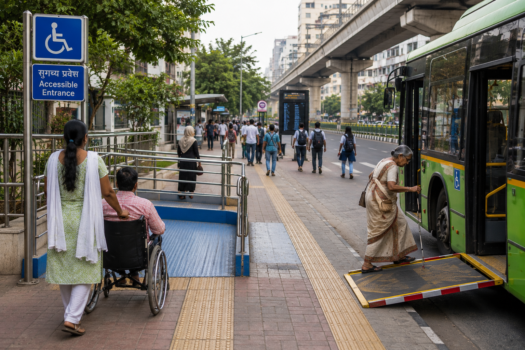
From a construction and engineering perspective, accessibility must begin at the planning and design stage itself. Whether developing hotels, schools, industries, hospitals, or commercial buildings, inclusive infrastructure should be integrated from the very beginning instead of being added later. In schools, accessible campuses create equal learning opportunities. In hotels and commercial spaces, inclusive design improves customer experience. In industries and workplaces, barrier-free infrastructure enables people with disabilities to participate more actively in employment and professional life.
India has already started incorporating basic accessibility measures into modern construction projects. Today, in most school buildings, office spaces, and commercial developments, ramps and accessible washrooms are mandatory requirements for obtaining approvals and Occupancy Certificates (OC). Elevators commonly include Braille buttons and audio systems. These steps reflect positive progress toward inclusive infrastructure.
However, in many projects, accessibility still tends to remain focused on achieving minimum statutory compliance. While essential provisions are increasingly being incorporated in modern developments, true accessibility requires a deeper design approach that prioritizes independent movement, user comfort, intuitive navigation, and inclusive spatial planning throughout the built environment. Creating genuinely accessible spaces is not only about meeting regulations, but about understanding how differently abled individuals experience and interact with the environment on a daily basis.
At Manomav Engineers, while working as Construction Project Management experts, we ensure that accessibility-related details are properly discussed during the design phase itself through structured accessibility compliance reviews. We believe accessibility should not remain only a statutory requirement but should become an essential part of responsible and future-ready construction practices.
These improvements can become a reality only when the design community, architects, urban planners, engineers, and interior designers consciously focus on accessibility during the planning stage itself. Inclusive cities are not created only through policies, but through thoughtful design decisions that consider the daily experiences of every individual.
Most importantly, society must change its mindset toward disability and inclusion. People with disabilities do not seek sympathy or special treatment—they seek equal opportunity, independence, and dignity. Accessibility is not charity; it is a basic right.
So, are accessible cities a dream or a reality? The answer is that they are still a work in progress. India has made important improvements, but true accessibility has not yet been fully achieved. A truly developed city is one where every individual, regardless of physical or cognitive ability, can move freely, study confidently, work independently, and participate equally in public life. Only then will accessible cities become not just a dream, but a reality.