
 As organizations become increasingly dependent on technology, managing end-of-life IT assets has evolved from a disposal exercise into a strategic business function. Every year, businesses retire thousands of laptops, desktops, servers, storage devices, mobile phones, batteries, and networking equipment. While these assets may have reached the end of their operational lifecycle, they still contain something of immense value, data.
Today, digital waste management is no longer just about recycling. It is about protecting information, maintaining compliance, recovering resources, reducing environmental impact, and providing complete visibility throughout the asset lifecycle.
At E Waste Recyclers India (EWRI), data security is the foundation of everything we do. Sustainability remains a key objective, but our first priority is ensuring that our customers never have to worry about the security of their information.
According to IBM’s Cost of a Data Breach Report, the average cost of a global data breach exceeds USD 4 million. As organizations store increasing amounts of sensitive information across thousands of devices, secure handling of retired technology assets has become a business-critical requirement.
This is why EWRI has built a security-first approach to IT asset disposition and recycling. Every asset is managed through documented chain-of-custody procedures, secure transportation protocols, and certified data destruction processes. Whether a project requires software-based sanitization, physical shredding, degaussing, or on-site destruction, our objective remains the same: complete protection of customer data.
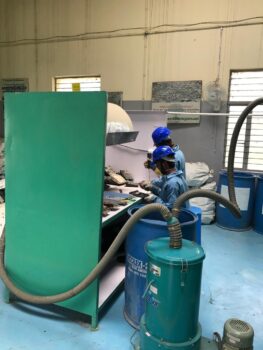
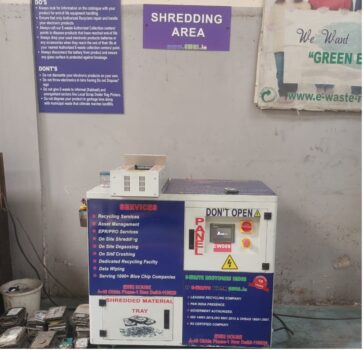
To support this commitment, EWRI operates multiple mobile shredding systems and degaussing units that can be deployed directly at customer locations. This enables organizations to witness destruction activities firsthand while ensuring maximum security and compliance. For many customers, this eliminates concerns around transporting sensitive media and provides confidence that data-bearing assets have been permanently destroyed before leaving the site.
 While security is the starting point, digital waste management today requires much more than secure disposal. Organizations increasingly expect real-time visibility, accurate reporting, and measurable sustainability outcomes.
At EWRI, digitalization is a core part of how we manage waste operations. Through digital asset tracking, centralized reporting systems, barcode-based inventory management, and electronic chain-of-custody documentation, customers receive visibility throughout the entire asset lifecycle. From collection and inventory creation to data destruction, refurbishment, recycling, and final reporting, every stage can be tracked and documented.
The adoption of digital workflows has improved operational efficiency by reducing manual documentation, improving reporting accuracy, and enabling faster project closures. Customers receive structured reports, destruction certificates, and sustainability documentation that support both compliance and ESG reporting requirements.
Technology is also transforming logistics within the waste management sector. Through route optimization, centralized scheduling, and digital coordination, collection activities can be planned more efficiently, reducing unnecessary travel and improving resource utilization.
Looking ahead, technologies such as Artificial Intelligence (AI), IoT-enabled monitoring, Digital Product Passports, and predictive analytics are expected to further improve traceability and sustainability reporting across the industry.
Beyond technology, sustainability remains at the heart of digital waste management. Global e-waste generation now exceeds 60 million tonnes annually, making it one of the
fastest-growing waste streams in the world. Yet a significant portion of this material never enters formal recycling systems.
Electronic devices contain valuable resources including copper, aluminum, steel, plastics, gold, silver, and rare earth elements. Recovering these materials through responsible recycling and refurbishment reduces dependence on virgin resource extraction and supports the transition toward a circular economy.
Every month, EWRI decommissions more than 100 tonnes of technology assets through secure and environmentally responsible processes. Supporting these operations is a nationwide network of more than 100 collection centers and an in-house logistics fleet of over 15 vehicles, enabling efficient and secure asset movement across India.
Our infrastructure includes dedicated facilities for e-waste recycling, battery recycling, plastic recycling, and IT asset refurbishment. This integrated approach ensures that each waste stream is managed through specialized processes while maximizing recovery and reuse opportunities.
 The growth of India’s recycling ecosystem has also been supported by initiatives of the Government of India, including Digital India, Swachh Bharat Mission, E-Waste Management Rules, and Extended Producer Responsibility (EPR) frameworks. These initiatives have helped strengthen formal recycling channels, improve compliance, and encourage organizations to adopt more responsible approaches to end-of-life asset management.
EWRI is proud to operate two R2v3-certified facilities that adhere to internationally recognized standards for responsible electronics management, environmental protection, worker safety, and data security. We are also a WeConnect-certified Women-Owned Business, reflecting our commitment to responsible and inclusive growth.
Over the years, EWRI has supported many of the world’s largest organizations, including numerous Fortune 500 companies and leading technology enterprises operating in India. These partnerships have reinforced the importance of trust, transparency, security, and sustainability in managing digital waste.
As digital transformation continues to accelerate, organizations will increasingly seek partners capable of delivering both environmental responsibility and data security. At EWRI, we see digital waste management as an opportunity to create value beyond compliance. protecting information, preserving resources, reducing environmental impact, and helping build a truly circular economy.
For us, the future of waste management is digital, transparent, secure, and sustainable, and we are proud to be helping shape that future.