
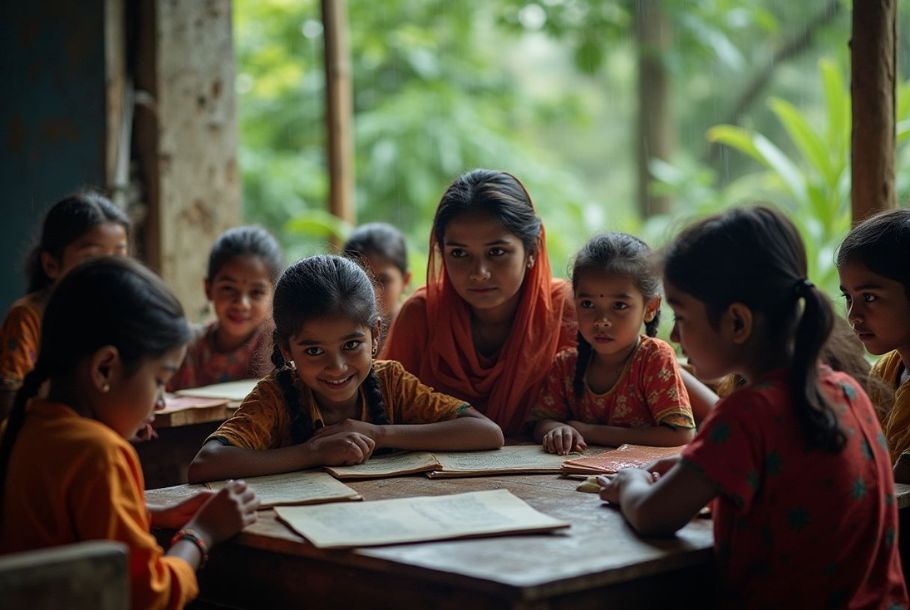
Since India’s independence in 1947, the dream of inclusive education has slowly but steadily reached the tribal belts—regions often tucked away in forests, hills, and remote corners of the country. These communities, rich in culture and tradition, were historically left out of mainstream development. But over the decades, a combination of government schemes, philanthropic efforts, and grassroots initiatives has helped bring the light of education to millions of tribal children.
In the early years post-independence, tribal education was largely driven by government-run Ashram schools—residential schools set up in tribal areas to provide basic education. While these schools laid the foundation, challenges like language barriers, lack of trained teachers, and cultural disconnect made learning difficult.
Many tribal children dropped out early or never enrolled at all. One of the turning points came with the launch of the Sarva Shiksha Abhiyan (SSA) in 2001, a nationwide mission to achieve universal elementary education. SSA focused on building schools in remote areas, training teachers, and providing free textbooks and uniforms. For tribal belts, this meant more accessible education and a push toward inclusion. But government efforts alone weren’t enough. Philanthropists and civil society organizations stepped in to bridge the gaps.
Take the story of Padma Shri awardee Shantilal Muttha, who founded the Bharatiya Jain Sanghatana (BJS). His organization set up schools in tribal regions of Maharashtra and Madhya Pradesh, focusing not just on academics but also on life skills and values. BJS introduced mobile schools—vans equipped with teaching materials—that traveled to remote villages where children couldn’t reach formal schools.
In Odisha, the Kalinga Institute of Social Sciences (KISS), founded by Dr. Achyuta Samanta, became a beacon of hope. Starting with just 125 tribal children in 1993, KISS now educates over 30,000 tribal students free of cost, offering food, accommodation, healthcare, and education from kindergarten to postgraduate levels. Many of its alumni have gone on to become doctors, engineers, and civil servants.
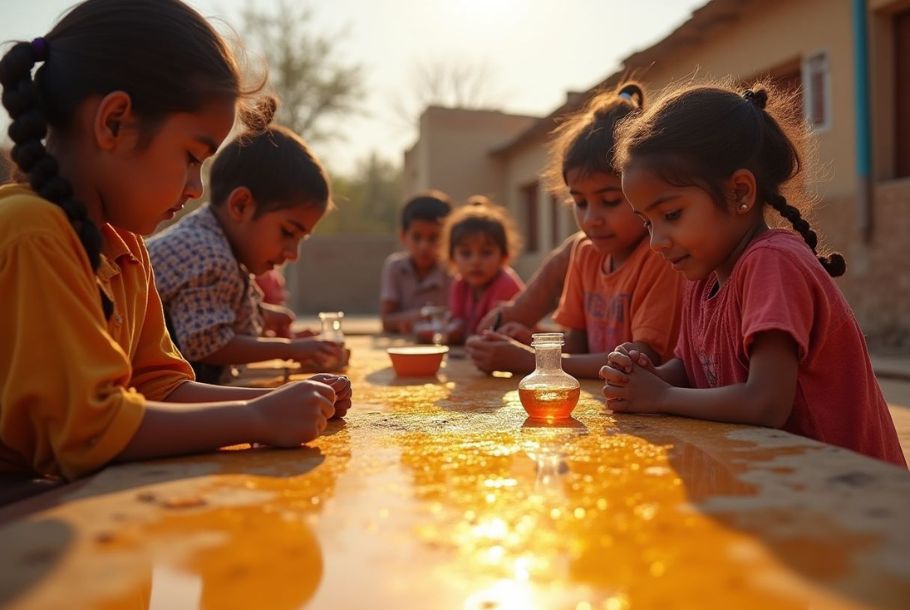
Another inspiring example is the Eklavya Model Residential Schools (EMRS), launched by the Ministry of Tribal Affairs. These schools aim to provide quality education to tribal children from Class VI to XII in a residential setting. As of 2025, over 479 EMRS are operational across India, educating more than 1.38 lakh tribal students.
NGOs like Pratham and Educate Girls have also made significant contributions. Pratham’s “Read India” campaign helped improve reading and arithmetic skills among tribal children in states like Jharkhand and Chhattisgarh. Educate Girls, working in tribal pockets of Rajasthan and Madhya Pradesh, uses community volunteers to enroll girls in school and support their learning journey.
Anecdotes from the field show the real impact. In a small village in Bastar, Chhattisgarh, a tribal girl named Meena walked 5 kilometers daily to attend school. With support from a local NGO, she received a bicycle and tutoring. Today, Meena is pursuing a degree in social work and dreams of returning to her village as a teacher.
Despite progress, challenges remain. Many tribal children still face poverty, malnutrition, and social exclusion. Language continues to be a barrier, as most tribal communities speak dialects not used in mainstream education. However, recent efforts to develop bilingual textbooks and train teachers in tribal languages are helping bridge this gap.
The road ahead calls for deeper collaboration. Philanthropists, corporates under CSR mandates, and local communities must work together to ensure that every tribal child not only attends school but thrives in it.
Education must be culturally sensitive, emotionally supportive, and practically relevant. Inclusive education in tribal belts is not just about literacy—it’s about dignity, opportunity, and empowerment.
As India moves toward its Vision 2047 goals, the stories of Meena, KISS, and EMRS remind us that when education reaches the margins, the entire nation rises.