 Overview
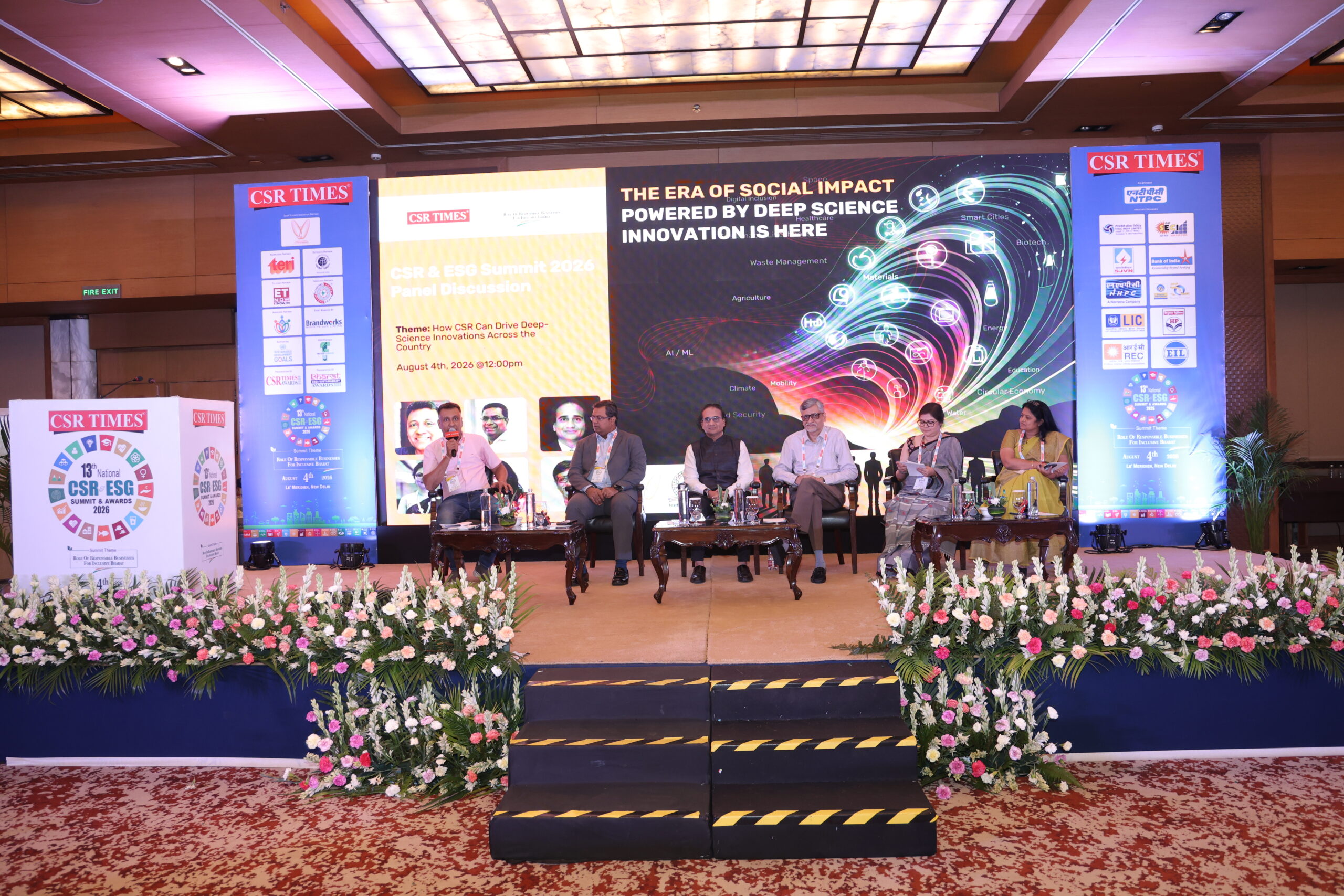
The panel discussion “How CSR Can Drive Deep Science Innovations Across the Country,” hosted by FSID, brought together senior leaders from the technology, engineering, and CSR fraternity to deliberate on the growing role of Corporate Social Responsibility (CSR) in enabling deep science and deep-tech innovation in India.
The session examined how CSR funding can move beyond conventional social-development interventions and support scientific research, innovation, academia-industry collaboration, technology commercialisation and long-term solutions to complex societal challenges. The discussion also highlighted the need for a stronger ecosystem connecting research institutions, innovators, corporates, CSR foundations, entrepreneurs and end-users, particularly to bridge the gap between scientific discovery and real-world application.
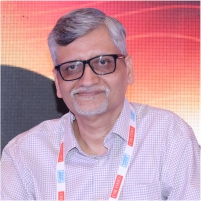
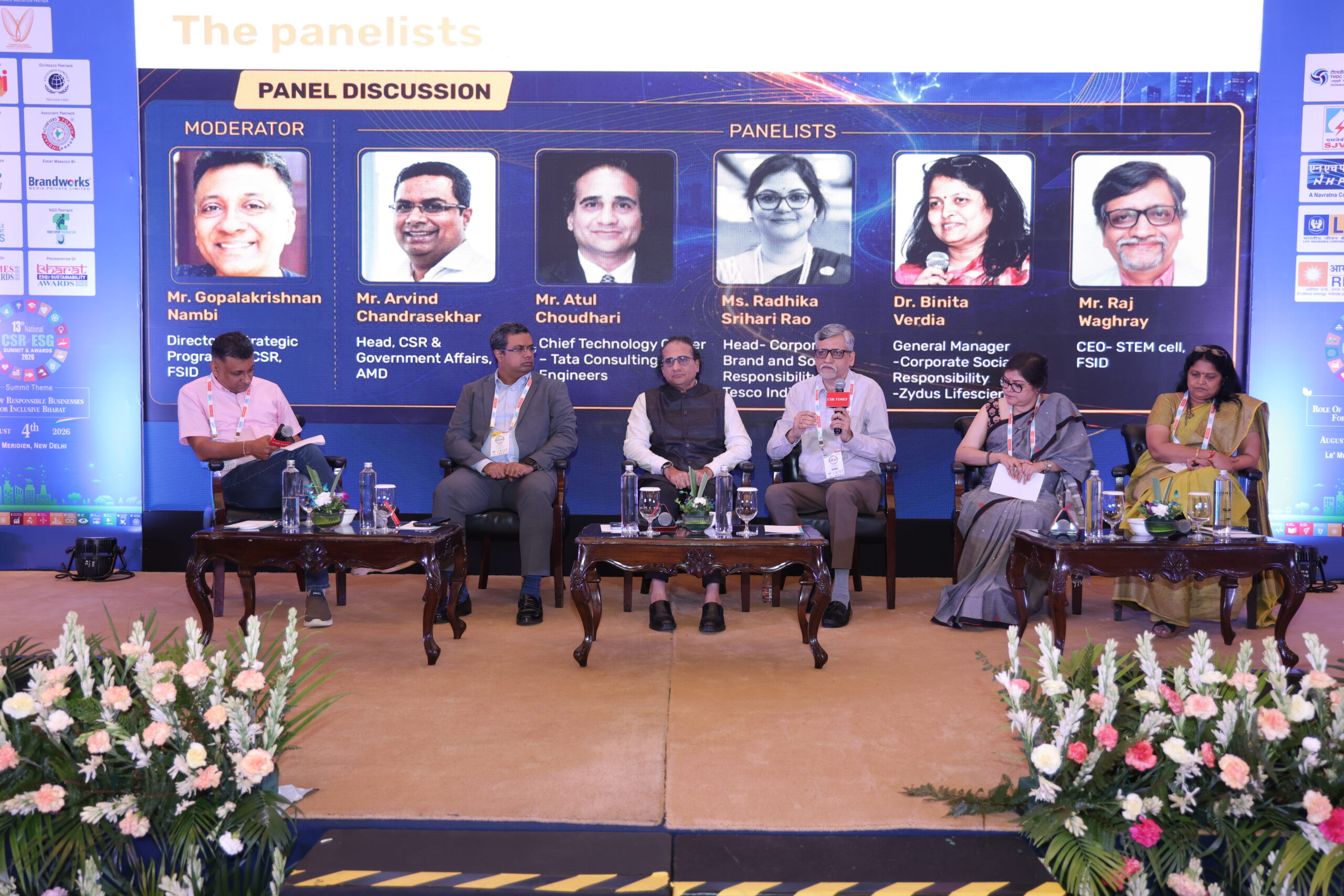
The session was moderated by Mr. Gopalakrishnan Nambi, Head – Outreach, Foundation for Science, Innovation and Development (FSID).
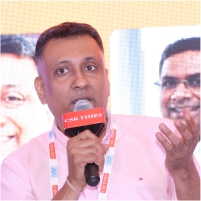
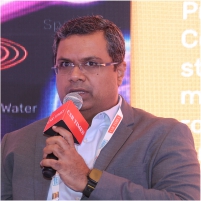
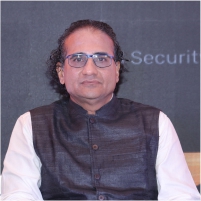
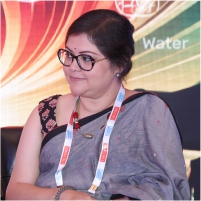
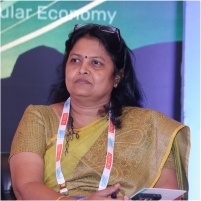
Joining the discussion were Mr. Arvind Chandrasekhar – Head, CSR & Government Affairs, AMD, Mr. Atul Choudhari – Chief Technology Officer – Tata Consulting Engineers, Mr. Raj Waghray, CEO – STEM Cell, FSID, Ms. Radhika S Rao, Head of Corporate Brand and CSR,Tesco Bengaluru, and Dr Binita Verdia, Head-CSR, Zydus Lifesciences.
During the event, the anchor/host also made a dedicated announcement encouraging attendees to visit the FSID stall, creating an additional opportunity for delegates to learn about FSID’s initiatives and engage with the team.
Key Discussion Highlights
Mr. Raj Waghray, CEO – STEM Cell, FSID: “Deep-tech start-ups must be built on genuinely novel innovations backed by scientific validation. Our role is to identify promising ideas within research institutions, provide incubation support and help transform them into commercially viable products.”
Mr. Arvind Chandrasekhar – Head, CSR & Government Affairs, AMD: “India has tremendous scientific and engineering talent, but one of the biggest limitations in the deep-tech ecosystem is the availability of capital for research and innovation. If we want to retain India’s brilliant human capital and engineering talent, we need to create opportunities that allow researchers and innovators to take their intellectual capital from the laboratory to the market. CSR can play an important role in bridging the gap between intellectual capital and market opportunities by enabling promising deep-tech ideas to move towards real-world applications.”
Mr. Atul Choudhari – Chief Technology Officer – Tata Consulting Engineers: “Research based outcome is a patient process. Deep tech is for future problems to solve, because the ecosystem needs patient and sustained support rather than expecting immediate results. CSR can strengthen collaboration between academia and industry by supporting researchers, innovators, students and faculty members who are developing technologies with the potential to be commercialised. India’s technological future will depend on our ability to develop indigenous solutions, strengthen our innovation ecosystem and build capabilities across supply chains and networks.”
He also cited examples of innovative deep-tech solutions, including a first-of-its-kind project globally that uses 100% construction and demolition waste as the material for 3D printing, reducing the need for fresh cement and promoting a more circular approach to construction. And innovations using supercritical carbon dioxide (CO₂) cycles for applications such as power generation and refrigeration, demonstrating how advanced technologies can create more efficient and sustainable solutions across industries.
Ms. Radhika S Rao, Head of Corporate Brand and CSR,Tesco Bengaluru: “Deep science does not always fit into an immediate-impact framework. It requires commitment, patience and a forward-looking approach from CSR organisations. The question is not only whether we can fund a breakthrough, but whether we can bridge the gap between that innovation and the last mile. Ultimately, we have to ask whether the end-user is benefiting from it. Scientific solutions become truly impactful when they are translated into practical applications that reach communities, including end-users such as farmers.” She shared the example of bringing science-led solutions directly to farmers, demonstrating how research and technology can be converted into practical, accessible interventions that address real-world challenges.
Dr Binita Verdia, Head-CSR, Zydus Lifesciences: “Supporting innovation has to begin at the grassroots. We need to create an environment where young people are encouraged to ask questions, experiment and develop scientific curiosity. Zydus’ focus is moving beyond conventional STEM and science laboratories to nurture scientific curiosity among students from Classes 5 to 12 and strengthen the wider scientific community. Building a stronger scientific ecosystem requires us to invest in young minds today so that India can contribute meaningfully to the global science community tomorrow.”
The panel also touched upon the potential for pooling CSR resources across corporates to support larger and more complex innovation projects. Mr. Atul Choudhari highlighted the potential of bringing multiple stakeholders together through CSR funding, creating shared responsibility around large-scale scientific initiatives. The discussion concluded raising several open-ended possibilities, including joint CSR initiatives, multi-corporate funding models, stronger academia–industry partnerships, dedicated research grants, incubation partnerships, and policies to support organization by providing subsidies, tax benefits or other incentives that fund beyond the conventional 2% CSR allocation.
Outcomes
The panel provided a valuable opportunity to strengthen relationships with CSR leaders, corporate representatives, NGO professionals and other key stakeholders within the social-impact ecosystem. The discussion also created a platform for knowledge sharing and awareness-building around deep-science and deep-tech funding, with the objective of encouraging more organisations to explore scientific innovation as part of their CSR and social-impact portfolios. Through interactions with participating corporates and foundations, potential funders and collaborators were identified for future engagement with deep-science initiatives, particularly those interested in research, innovation, technology development and long-term social impact.