India in the Fast Lane: Driving the Electric Revolution

You're here Home » Experts' Corner

Image_2
India is changing. And perhaps the most interesting thing about this change is that it is not happening in one sector alone. It is happening in our economy, our cities, our energy systems, our technology, and, most importantly, in the aspirations of ordinary Indians. I see this change around me every day.

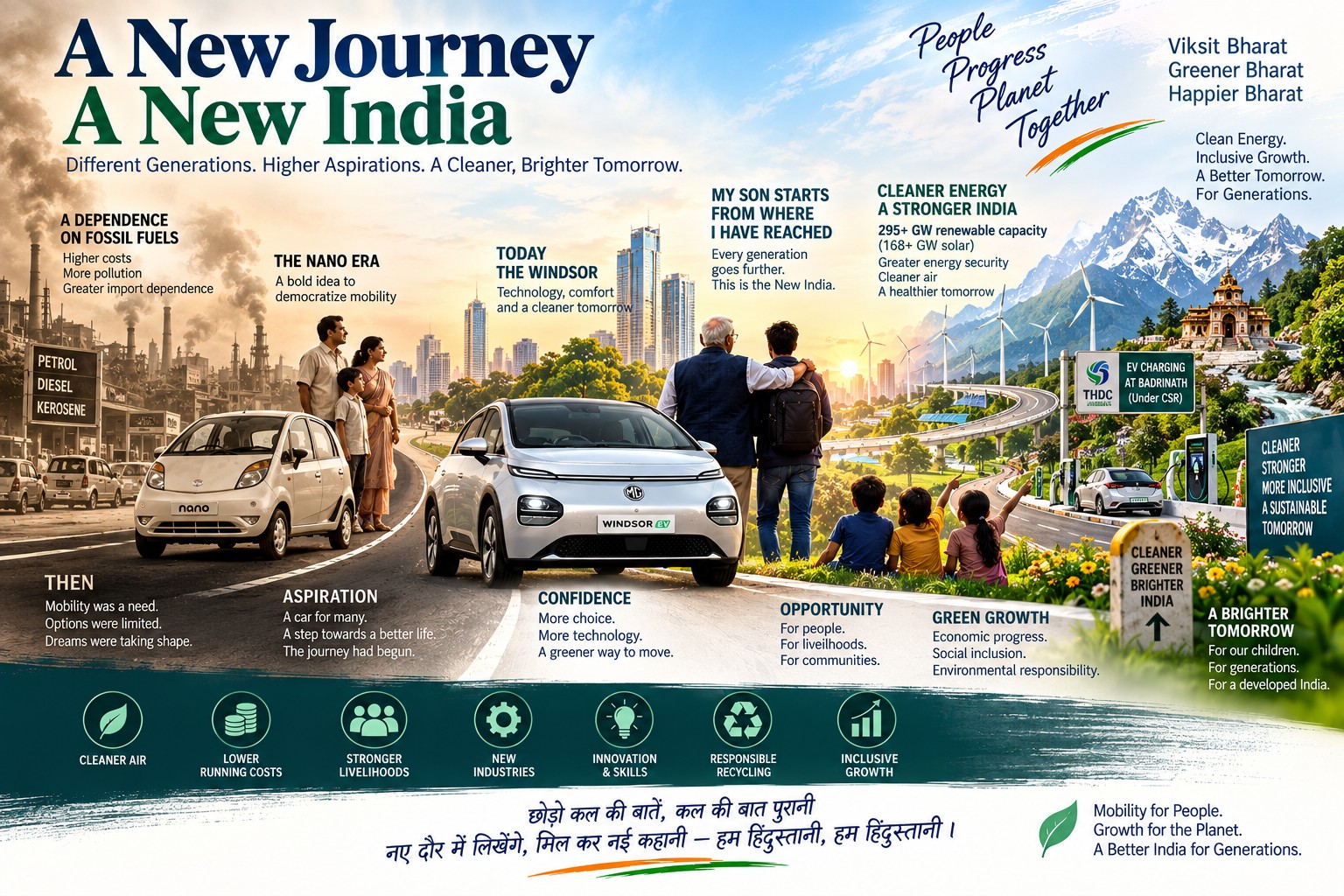
India is moving from an economy heavily dependent on fossil fuels towards one increasingly powered by renewable energy. By August 2026, India’s installed renewable-energy capacity had reached about 295.5 GW, including more than 168 GW of solar power. Uttar Pradesh, too, has seen a remarkable expansion in its economic base, with rising incomes, improving infrastructure and greater economic opportunity.

India’s changing confidence is visible beyond our borders too. New Delhi is increasingly becoming a meeting place for the world, reflecting India’s growing economic and diplomatic stature.

Things are changing. And so are affordability and aspirations.

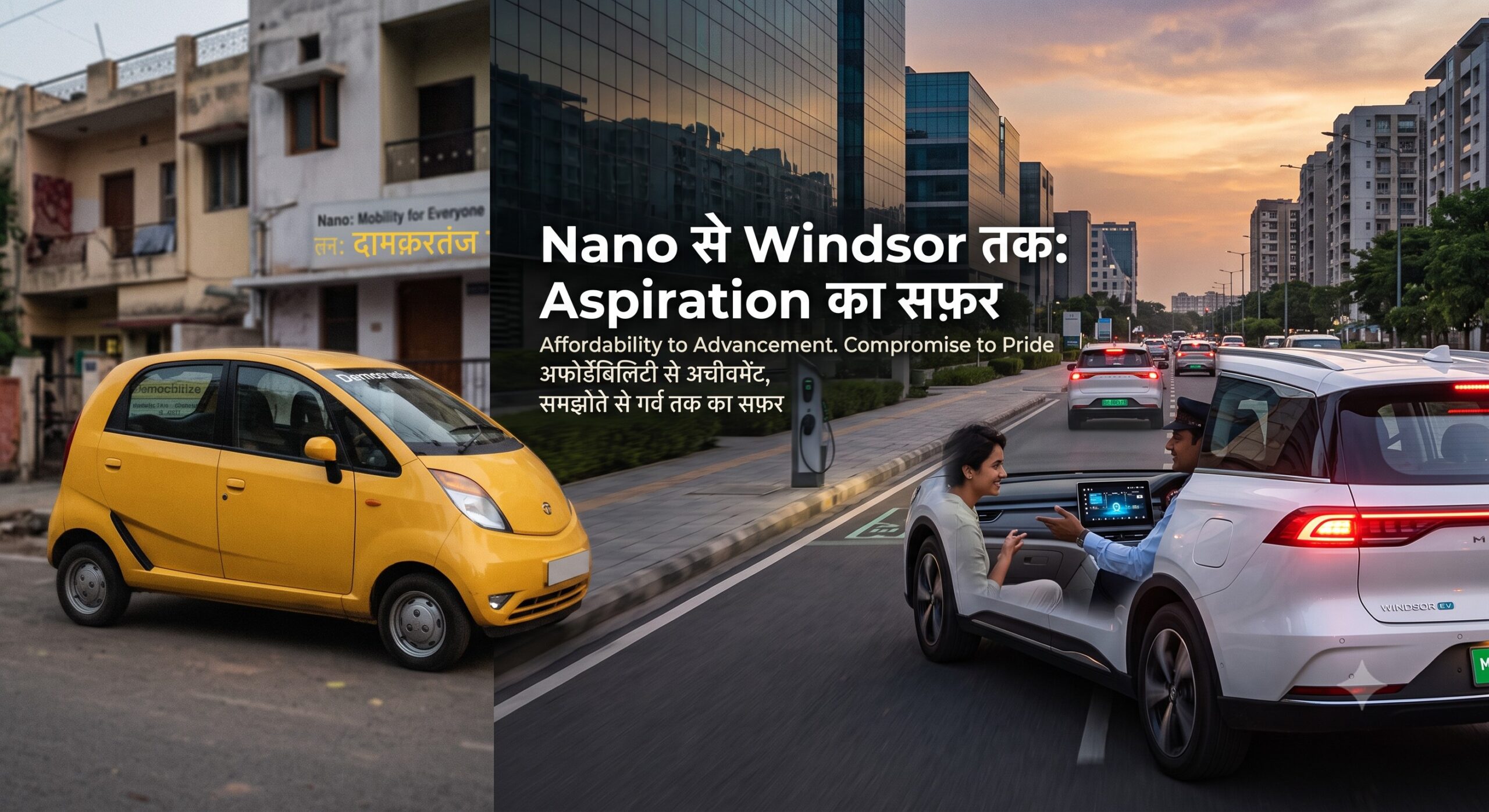
From Nano to Windsor

For me, there is a very personal way of understanding this transformation. The Tata Nano was an audacious attempt to democratise four-wheel mobility. It sought to make car ownership accessible to millions of Indian families. But the positioning of the Nano as the “cheapest car” created an unintended perception: affordability began to sound like compromise. That was perhaps a lesson in understanding the Indian consumer. In India, a car is rarely just a car. It is an aspiration on wheels. It represents achievement, dignity, convenience and the feeling that one’s family is moving ahead.

Fast forward to today.

My MG Windsor is my small window into this new India. Six months into ownership, I still discover features that surprise me. At times, even my driver points out something I had not noticed. It reminds me that technology today is not something we simply purchase; it is something we continue to experience. And then there is another little pleasure: seeing more Windsors on the road.

Yes, there is some personal satisfaction in seeing others make the same choice. But I see something much bigger in it. The electric car is increasingly becoming aspirational mainstream mobility. It is not necessarily a compromise chosen merely to save on fuel. It can represent technology, comfort, environmental consciousness and pride.
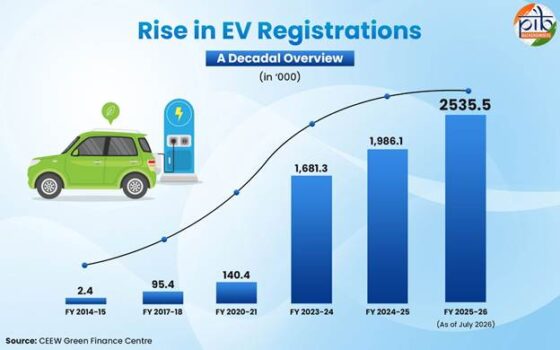
image010AQI0From “cheap” to “smart”; from compromise to confidence.

That is a significant change in the Indian mobility story.

And there is another thought that makes this journey even more meaningful to me:

My son starts from where I have reached.

That, perhaps, is the simplest definition of progress.

Every generation should begin a little further ahead than the previous one. What was an aspiration for my generation should become the starting point for the next? This is the New India. And this is precisely where the electric vehicle fits into the larger story.

From fossil fuel to Green Growth

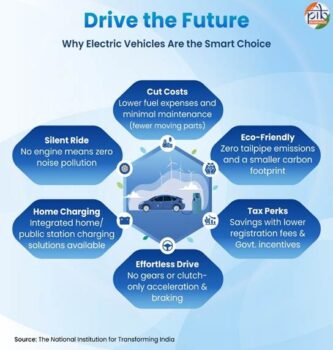
The EV revolution is not simply about replacing a petrol or diesel engine with an electric motor. It is part of a much larger transition; from fossil fuel dependence towards cleaner energy, technology and domestic capability.

Transport is closely connected with India’s energy security, urban air quality and climate ambitions. Electrification can reduce dependence on imported fossil fuels while creating demand for batteries, charging infrastructure, power electronics, software, manufacturing, skills and recycling.

The Government’s PM E-DRIVE initiative recognises this ecosystem. Originally launched with an outlay of ₹10,900 crores, the scheme has been extended to March 2028 and supports electric two-wheelers, three-wheelers, buses, ambulances, trucks and charging infrastructure.

The numbers are already telling a story. The PM E-DRIVE dashboard records millions of electric vehicles across its supported categories, along with significant reported fuel savings and reductions in carbon emissions.

But the real story goes beyond numbers.
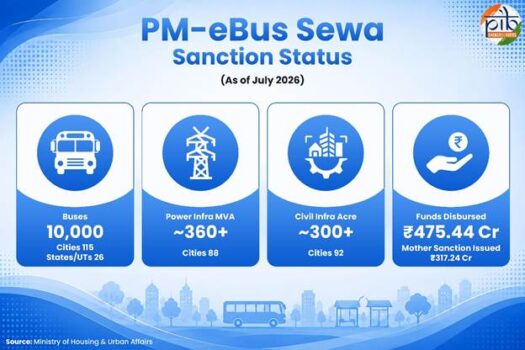
image016QIZ8
image00521BS

Mobility with awareness, dignity and facility

India’s EV opportunity is uniquely inclusive. The most transformative changes may not come only from premium electric cars. They are also taking place in two-wheelers and three-wheelers; the vehicles used every day for commuting, deliveries, small businesses and livelihoods.

 For a delivery worker, lower running costs matter.

 For an e-rickshaw driver, the economics of daily mobility matter.

 For a woman entrepreneur, reliable and affordable mobility can expand opportunity.

 For a city, an electric bus can mean cleaner public transport.

This is where Green Growth meets social impact.

And this is where CSR can become a practical bridge between sustainability and everyday life. Companies can support EV-related skills and training, charging infrastructure, livelihood-based EV adoption, women entrepreneurs, awareness programmes, battery recycling and inclusive mobility. I have seen an example of this through one of my clients, THDC India Limited, which has supported the provision of EV charging stations at Badrinath under its CSR initiatives.

It is a small but significant example of how CSR can help create the infrastructure for a cleaner mobility ecosystem—even in places where the terrain, tourism and local livelihoods make sustainable mobility particularly important. Such interventions remind us that CSR need not remain confined to traditional categories of social development. It can also help communities participate in India’s transition towards a greener economy.

The question, therefore, should not only be: How many EVs have we sold?We should also ask: How many livelihoods have we strengthened? How much pollution have we avoided? How many people have gained access to cleaner, safer and more affordable mobility?

The electric revolution can thus become more than an automobile revolution. It can become a bridge between economic growth, environmental responsibility and social dignity. India does not want to go backwards. We want to move forward; and we want to move faster. The road from Nano to Windsor is not merely a journey between two cars. It is a journey from affordability to aspiration, from compromise to confidence, and from one generation’s dreams to the next generation’s starting point.

The journey from fossil fuels to renewable energy is similarly not merely about changing the source of power. It is about building a more resilient, self-reliant and sustainable India. And perhaps that is why the electric vehicle matters.

It is technology.
It is mobility.
It is cleaner energy.
It is affordability.
It is awareness.
It is dignity.
It is facility.

But above all, it is a symbol of a country that believes its future can be better than its past. As the familiar words remind us:

“छोड़ो कल की बातें,
कल की बात पुरानी।
नए दौर में लिखेंगे,
मिलकर नई कहानी—
हम हिंदुस्तानी,
हम हिंदुस्तानी।”

Because the future of India is not something that will simply happen to us. We will write the new story together.

Picture of Dr K K Upadhayay Director, Global Council on CSR, ESG, and Sustainaibility by CSR Times

Dr K K Upadhayay Director, Global Council on CSR, ESG, and Sustainaibility by CSR Times

Prof. (Dr.) K.K. Upadhyay is a strategic advisor, CSR and sustainability expert, and thought leader with extensive experience in corporate social responsibility, ESG and inclusive development. He continues to engage with businesses, institutions and the wider CSR ecosystem to advance responsible and sustainable growth in India.

Share:

Disclaimer: The opinions expressed in this section and articles contributed are those of the respective authors, who have submitted it as their original work. They do not reflect the opinions or views of CSR Times, or its employees, management and group publications. The accuracy and reliability of information presented has not been verified by CSR Times. CSR Times will not be held responsible in any way for the content of this article.

I/we Wish To...

Sustainability breeds its constant ongoing need for regularity, credibility, and a strong, collaborative ecosystem. Since 2014, CSR Times has been at the forefront in curating powerful stories, spotlighting transformative initiatives, and amplifying the voices of diverse organizations and individuals who are shaping India’s responsible growth narrative. Through its magazines and flagship events, CSR Times has built a trusted platform that bridges corporate vision with grassroots impact. And now the CSR TIMES Newsletter emerges as a timely and purposeful initiative designed to inform, inspire, and connect stakeholders across the corporate social responsibility ecosystem, designed to meet a different and more immediate need. 

The CSR TIMES Newsletter is your front-row pass to our magazine’s most loved moments: audience-favorite clips, our most popular features, powerful quotes, and the most important stories crafted for a fast-paced digital experience. Designed for today’s four-screen world, it delivers high-impact content straight to your inbox, allowing you to stay updated anytime, anywhere, and absolutely free of cost, so you never miss the conversations shaping the future of sustainability and responsible leadership. Ultimately, CSR TIMES Newsletter is about building an informed and inspired community of leaders who are committed to driving positive social and environmental change.

Subscribe to
CSR TIMES Newsletter

It's Free. And, you can unsubscribe anytime.