 बाप बड़ा ना भैया, सबसे बड़ा रुपैया
“Baap bada na bhaiya, sabse bada rupaiya.” Forget father, forget brother; money matters most!
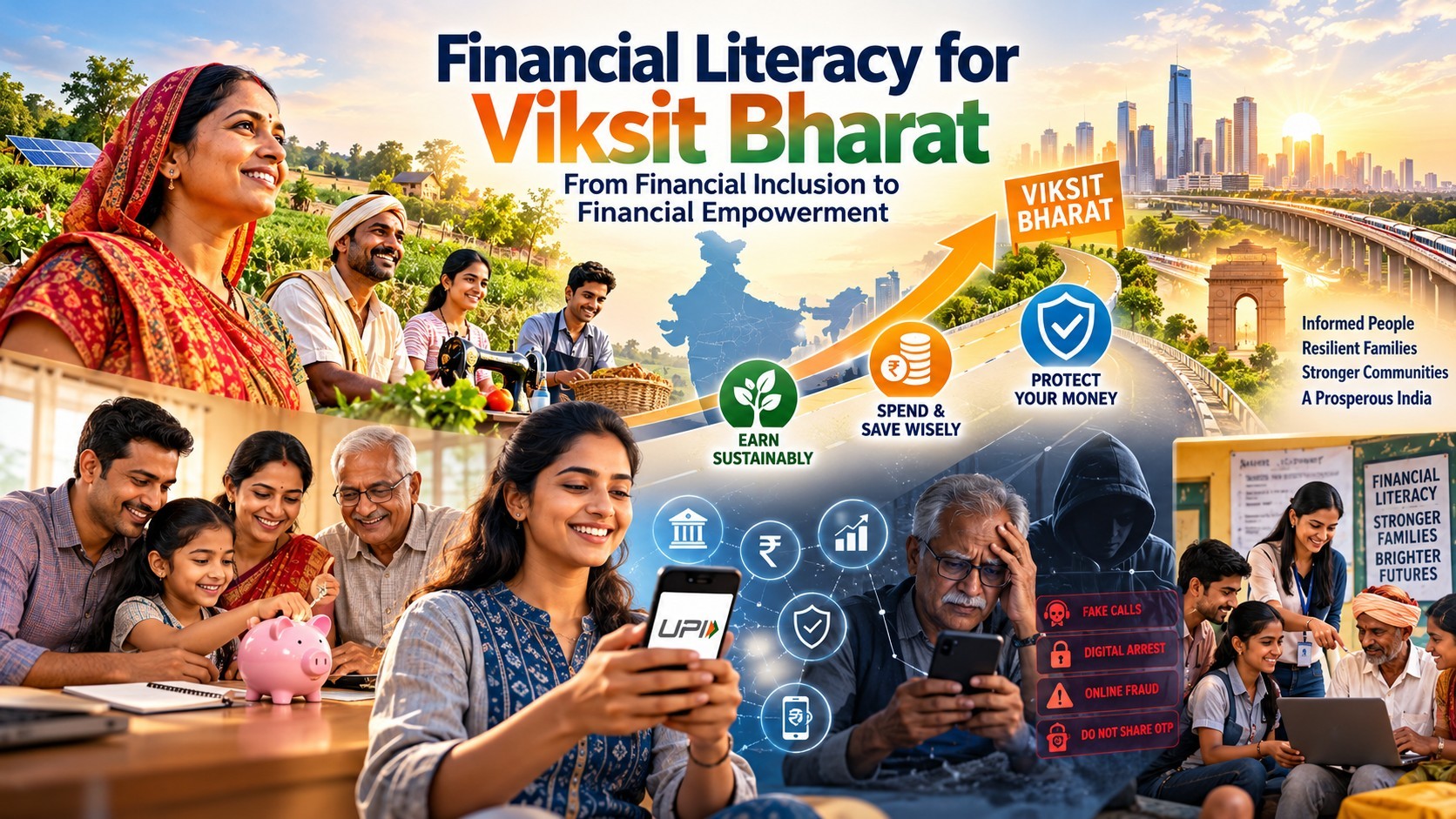
This familiar Hindi saying captures, with a touch of humour, the enormous influence money exerts on our lives. Money provides security, expands choices and opens doors to opportunity. Yet, earning money and knowing how to manage and protect it are two very different things. A family may earn regularly but struggle to save; an entrepreneur may obtain credit without fully understanding its cost; and a digital banking user may lose hard-earned savings to fraud. The challenge, therefore, is not simply to bring people into the financial system, but to equip them with the knowledge and confidence to navigate it. This is where financial literacy becomes more than an educational intervention: it becomes a social investment.
Growth must translate into financial security
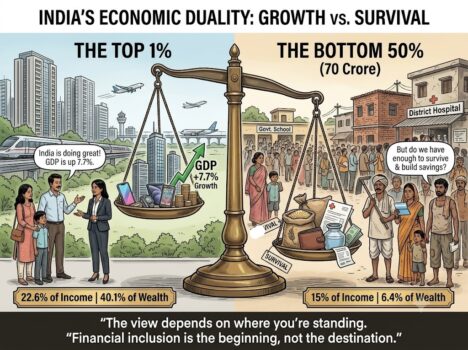
India’s economic growth is significant, but growth and equitable distribution of its benefits are not the same. GDP measures economic output; it does not, by itself, reveal how income and wealth are distributed or whether households have the financial security to withstand a crisis.
The World Inequality Report 2026 highlights the disparity: India’s top 1% receive 22.6% of national income and hold 40.1% of its wealth, while the bottom 50% receive just 15% of income and own approximately 6% of wealth. This bottom half represents roughly 70 crore people. For many, financial security is not simply about managing money wisely; it is also about having enough income to meet essential needs, build savings and acquire assets.
Financial literacy cannot eliminate structural inequality or compensate for inadequate incomes. However, it can help people make informed choices, avoid preventable losses and use available opportunities more effectively. For Viksit Bharat to become a genuinely inclusive aspiration, economic progress must go hand in hand with greater financial capability and security.
From knowing to doing: The importance of financial capability
Knowing about a financial product does not necessarily mean knowing when, why or whether to use it. Financial literacy becomes meaningful when knowledge translates into informed decisions and sound everyday practices.
Consider the reported case of a Mumbai businessman who lost ₹58 crores in a digital-arrest scam in 2025. Fraudsters allegedly impersonated law-enforcement officials and used threats and intimidation to induce financial transfers. The case exposes an uncomfortable reality: wealth, education and professional experience do not automatically guarantee financial safety. Criminals exploit not only gaps in knowledge but also fear, urgency and the authority of institutions.
Fraudsters do not target ignorance alone; they target human emotions.
Financial vulnerability takes different forms across society. An affluent individual may lose a fortune to fraud; a middle-class household may struggle with debt, medical expenses or job loss; a low-income family may find even a modest financial shock devastating. Financial capability must therefore extend beyond budgeting, saving and investing to include recognising scams, understanding borrowing costs, protecting digital credentials and knowing when to seek help.
The needs of women, young earners, farmers, informal workers, small entrepreneurs and older citizens differ. Financial education must be practical, locally relevant and sustained beyond one-off awareness sessions. Ultimately, the test is not what people remember after training, but whether they can make informed decisions and protect their financial well-being when it matters.
 CSR: Investing in financial well-being
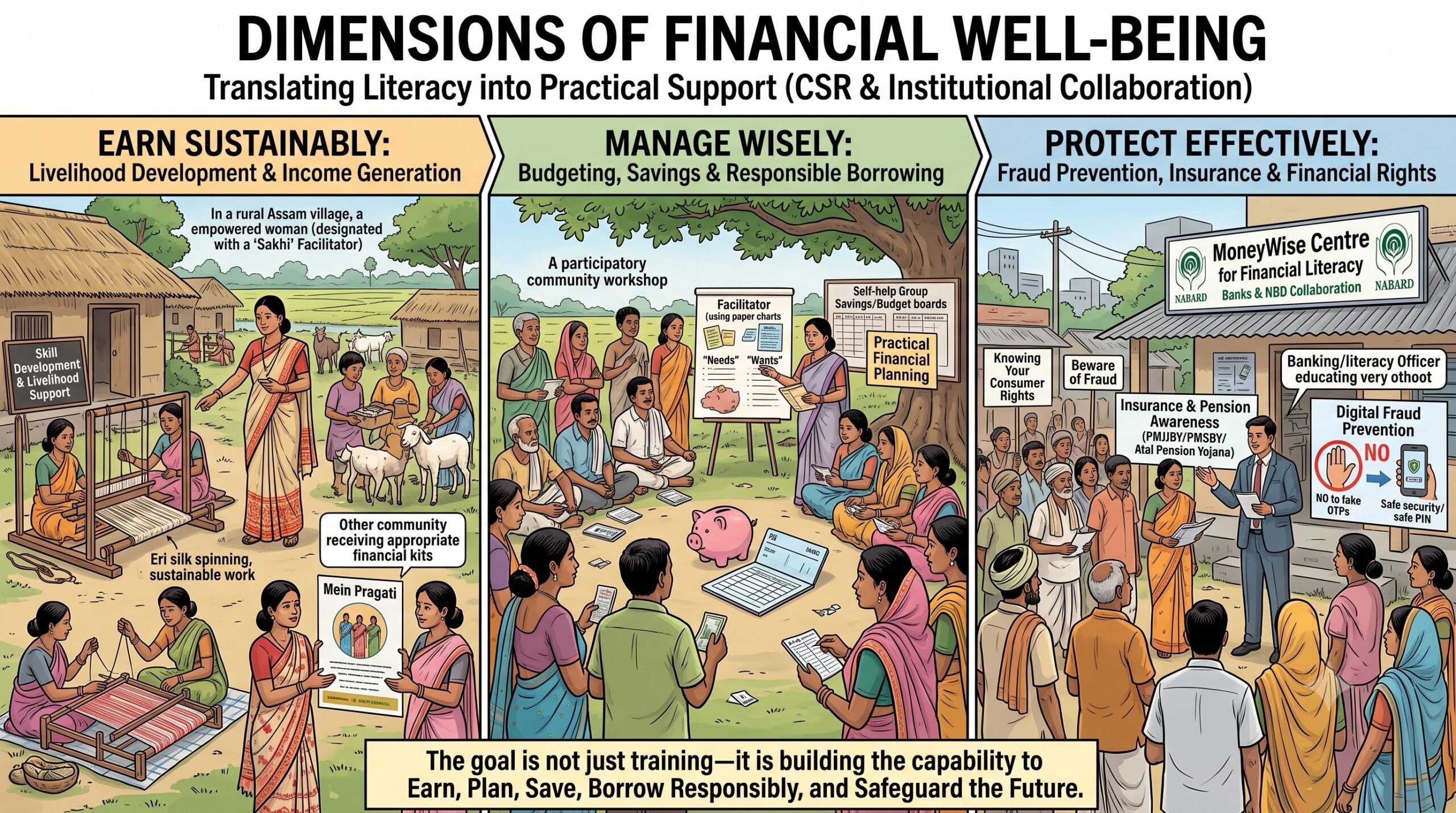
Corporate social responsibility can help bridge the gap between financial knowledge and financial capability. Its contribution can be understood through three interconnected priorities: helping people earn sustainably, manage money wisely and protect what they have earned.
First, enabling sustainable livelihoods. Financial security begins with the capacity to earn. Skill development, entrepreneurship, market linkages and appropriate financial services can help households build more sustainable incomes. CRISIL Foundation’s Mein Pragati programme illustrates how financial capability building and community-based engagement, including the involvement of women Sakhis, can support informed financial decisions and women’s empowerment.
Second, helping people spend and save wisely. Budgeting, regular saving, distinguishing needs from wants and understanding the cost of borrowing can make a meaningful difference to household finances. CRISIL Foundation’s work has included practical financial planning and budgeting, demonstrating how financial education can help people make better use of limited resources.
Third, protecting money and financial security. Savings can be eroded by fraud, unsuitable borrowing or inadequate understanding of insurance and pensions. CRISIL Foundation’s MoneyWise Centres for Financial Literacy, developed through institutional collaboration involving public-sector banks and NABARD under an RBI initiative, illustrate how financial education can reach underserved communities. Ujjivan Small Finance Bank also reports financial education initiatives addressing money management, digital fraud prevention, loan management and entrepreneurship.
These efforts demonstrate the potential of collaboration among companies, banks, NGOs, educational institutions and community organisations. The next step is to measure more than the number of people trained. Did participants understand financial risks better? Did their budgeting and saving practices improve? Could they recognise fraudulent approaches? Did women gain greater confidence in financial decisions? Baseline assessments, follow-up support and independent evaluation can help establish whether these programmes produce lasting change.
Investing in people, not merely money
The way forward requires financial literacy to become a sustained component of inclusive development. Programmes must respond to local realities, strengthen digital and consumer awareness, connect financial knowledge with livelihood opportunities, and provide people with accessible channels for guidance and grievance redressal. Above all, CSR initiatives must move from counting activities to demonstrating meaningful outcomes.
We began with the familiar belief that sabse bada rupaiya. Yet money’s true value lies not merely in possessing it, but in understanding how to earn it, manage it and protect it. Financial inclusion opens the door; financial capability helps people walk through it with confidence.
For Viksit Bharat, financial literacy is therefore not merely an investment in money. It is an investment in people’s dignity, resilience and agency. When knowledge accompanies opportunity, households become more secure, communities become stronger and economic growth has a better chance of translating into inclusive progress. The ultimate measure of success is not simply how much money a nation generates, but how effectively its people are empowered to use it to build better lives.