
CSR Against Exploitation”, highlighting efforts around supply chain transparency, ethical sourcing, and child protection initiatives.
An Enduring Mission of Bal Raksha Bharat
Subhiti, a ten-year-old girl from Samadhanpur village near Lucknow, once spent her childhood working in agricultural fields instead of attending school. Poverty had convinced her that education was beyond her reach. Her life changed when she enrolled in an education support programme of Bal Raksha Bharat (Save the Children India), where academic guidance, mentoring, and peer learning rebuilt her confidence. Today, she participates actively in school, performs well academically, and looks towards the future with optimism. Her story illustrates the transformative power of timely support and opportunity.
India’s vision of becoming a developed nation by 2047 extends beyond economic growth and technological advancement. It requires investing in children, ensuring they are healthy, educated, protected, and empowered to contribute to the country’s future. For nearly two decades, Bal Raksha Bharat has worked across 26 states and union territories through 68 projects, collaborating with governments, businesses, communities, and institutions to place children at the centre of sustainable development.
A key area of focus is protecting children from exploitation within supply chains. In many rural communities, children working alongside their families is often regarded as a cultural or economic necessity. Yet irregular school attendance frequently leads to dropout, child labour, early marriage, violence, and lifelong economic vulnerability, particularly for girls. To address these challenges, Bal Raksha Bharat has implemented Child Rights and Business Principles (CRBP) programmes across tea, cotton, readymade garments, spices, and stone supply chains. These initiatives promote ethical sourcing while strengthening child protection systems, expanding access to education, improving livelihoods, linking families to social protection schemes, and building awareness among employers, workers, and communities.
These interventions have reduced children’s engagement in several supply chains, improved school enrolment in cotton-growing regions, and enhanced household resilience. However, sustaining girls’ education and preventing child marriage remain pressing challenges. Ensuring that business growth goes hand in hand with child rights requires long-term collaboration between industry, government, and communities.
Breaking the cycle of child exploitation also demands addressing its root cause—poverty. Bal Raksha Bharat supports vulnerable families through market-linked vocational training, entrepreneurship development, and employment opportunities. More than 800 young people have secured decent work or self-employment, while over 1,000 families have been connected to government social protection schemes. Stable livelihoods help reduce children’s vulnerability to labour and enable them to remain in school.
In urban areas, the organisation operates Multi-Activity Centres in cities including Delhi, Mumbai, Kolkata, Bengaluru, and Chennai. These centres provide bridge education, life-skills training, libraries, clean drinking water, and psychosocial support to children living in vulnerable communities. More than 500 children have benefited from mainstream education through these centres, demonstrating how integrated community support can break the intergenerational cycle of poverty.
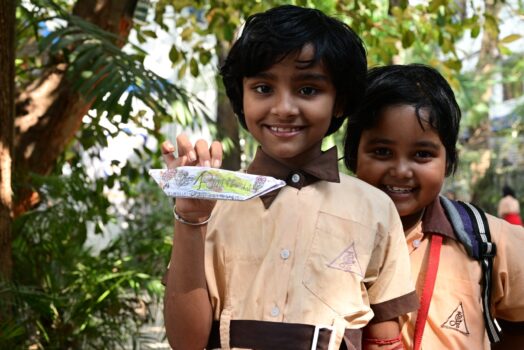
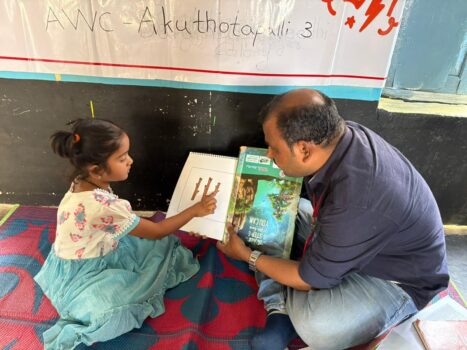
Education remains at the heart of Bal Raksha Bharat’s work. Across 53 districts in 24 states, more than 86,000 children have been reached through 23 education projects focused on improving learning outcomes, particularly for girls. Schools have been strengthened through teacher capacity building, foundational literacy and numeracy initiatives, participatory teaching methods, SMART classrooms, and STEAM education, enabling children to develop the knowledge and critical thinking skills needed for the future.
Recognising that learning begins long before formal schooling, the organisation also works with government systems to strengthen Anganwadi Centres as child-friendly early learning spaces. More than 6,500 children aged three to five have been enrolled in early childhood education programmes, while over 8,400 children receive structured early learning support, creating a strong foundation for lifelong learning.
Health and nutrition are equally important to children’s development. Through the Eat Right School Programme, implemented with FSSAI across 200 schools in five states, children learn about healthy eating, food safety, hygiene, and nutrition while becoming advocates for healthier practices within their families and communities.
As children’s lives become increasingly digital, online safety has emerged as another priority. Bal Raksha Bharat has established more than 150 Cyber Safety Clubs, trained nearly 3,000 child ambassadors, oriented 1,800 teachers and 4,000 parents, and reached over 27,000 children with digital safety education. Child-friendly police stations, trained law enforcement personnel, and community child protection committees further strengthen protective environments both online and offline.
The organisation also believes that children should be recognised not merely as beneficiaries but as leaders of change. Across ten states, children and youth are leading community initiatives through democratically elected Children and Youth Councils. Child-led micro-projects on education, climate action, child protection, online safety, and preventing child marriage are enabling young people to influence decisions that affect their lives. Sixteen-year-old Insha Manzoor from Jammu and Kashmir, who mobilised her community to restore degraded ecosystems by planting thousands of saplings, demonstrates the impact of empowering young leaders.
With over 440 million children, India’s demographic strength will ultimately determine the success of Viksit Bharat 2047. While significant progress has been made in improving education, health, nutrition, and child protection, sustained investment is needed to address emerging challenges such as climate change, digital risks, and persistent inequalities affecting girls, children with disabilities, and marginalised communities.
A truly developed India will be defined not only by economic prosperity but by whether every child is protected, educated, healthy, and empowered to fulfil their potential. By investing in children today, India builds the foundations of a more inclusive, resilient, and prosperous future for generations to come.