By K.Ganesh, Director, Sustainability and Corporate Affairs, Bisleri International
Rapid industrialisation and urban expansion have long stressed natural resources and polluted ecosystems. We experience climate change in ecosystems, fading biodiversity, and lives disrupted by extreme weather, health, and economic crises. As food and water security erode and communities grow more vulnerable, we must ask ourselves how we can give back to the environment more than we take from it. The answer to that question will determine whether people can sufficiently restore the planet to sustain themselves.
Linear consumption models, where resources are extracted, used and discarded, place a growing burden on the environment and on communities. They increase dependence on virgin resources, add pressure on stressed water systems, and generate waste that often ends up in landfills, water bodies and fragile ecosystems. The consequences are evident in water shortages, air pollution, plastic leakage, overflowing landfills and long-term public health risks. Bisleri’s Greener Promise thus began with the mission to create a greener future for all by moving away from linear consumption models towards circular ones.
Delivering the Greener Promise
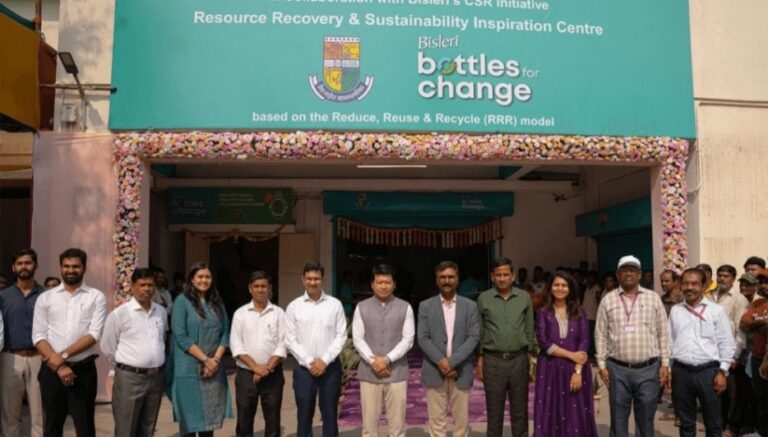
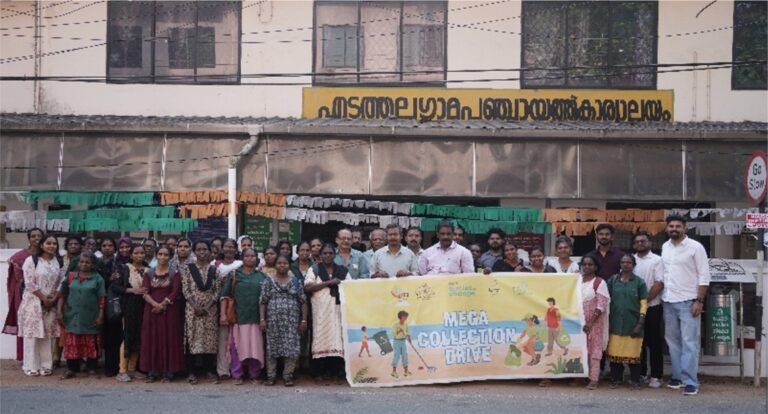
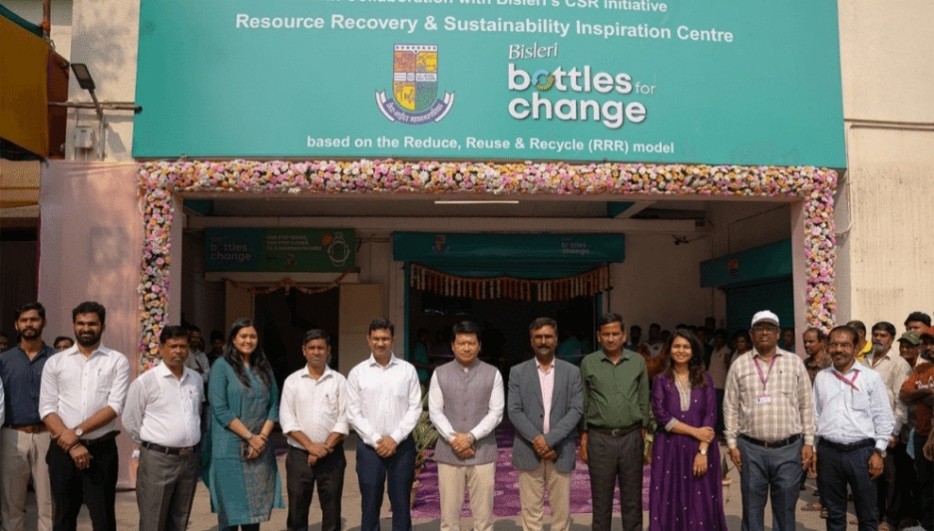
As a beverage company, the challenge is ensuring water availability for communities and sending used plastics for recycling rather than going to landfills and oceans. Project Nayi Umeed and Bottles for Change are the two initiatives through which Greener Promise is delivered.
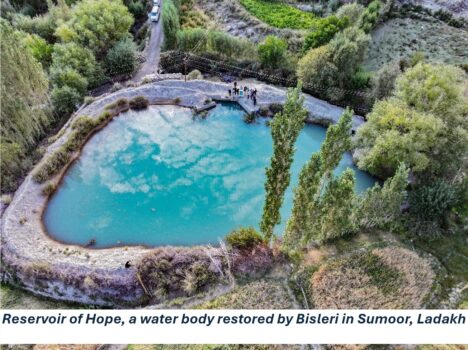 Project Nayi Umeed is Bisleri’s flagship water conservation initiative. It focuses on strengthening water security in drought-prone and water-stressed regions by creating and restoring decentralised water infrastructure such as check dams, reservoirs, lakes, ponds and rainwater harvesting systems. These interventions help arrest surface run-off, recharge groundwater, improve water availability for agriculture, and reduce the vulnerability of farming communities to erratic rainfall and climate stress.
The impact of Project Nayi Umeed lies not only in water conservation but also in livelihood resilience. By improving groundwater recharge and year-round water access, the initiative enables farmers to irrigate their land more reliably, support crop cultivation, and reduce dependence on uncertain seasonal rainfall. In FY 2025–26, the initiative harvested 1,564 million litres of rainwater and supported 280+ villages through recharged groundwater tables.
Since 2001, it has cumulatively harvested 31.4 billion litres of water, benefiting over 77,800 family members.
Bisleri, along with TERI, also developed a formalised water credit framework. This is significant because it shifts the conversation from simply replenishing water used by industry to recognising and quantifying broader conservation efforts, including groundwater recharge, wetland restoration and improved irrigation efficiency. The framework can be scaled to other industries and enable higher investments in ecosystem regeneration and community water access.