

 Mumbai, 5th October 2026: Allcargo Group, through its CSR arm Avashya Foundation, is continuing the Maitree Project in FY27 is scaling its flagship Project Maitree in FY27 with a target of 3,00,000 saplings across 81 villages in Maharashtra, creating sustainable livelihood opportunities for 5,000 farmers and their families.
The initiative seeks to integrate environmental conservation with sustainable livelihood development by supporting rural and tribal communities through plantation-based livelihood opportunities, while promoting greener communities and contributing to long-term economic resilience.
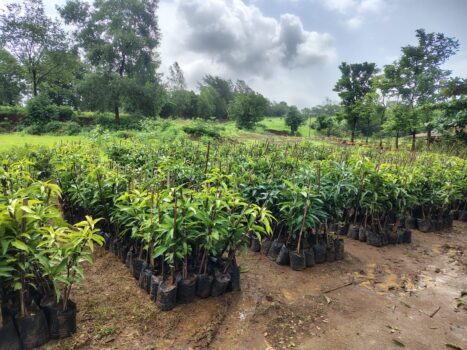
As part of the FY 2026–27 afforestation programme, approximately 3,00,000 plants were distributed across Palghar, Raigad, Nashik and Amravati districts of Maharashtra, supporting environmental sustainability while contributing to rural livelihoods.
In Palghar and Nashik, 2,20,000 plants were distributed, benefiting around 4,400 farmers. In Raigad/Karjat, a further 30,000 plants were distributed, benefiting approximately 600 farmers. In Amravati district, 50000 plants were distributed. These interventions supported farmers in integrating fruit tree-based cultivation into their agricultural practices, with the potential to strengthen long-term livelihood resilience while contributing to green cover.
In Amravati, 50,000 plants were planted through a community-based model, enabling the wider village community to participate in and benefit from the initiative. The approach encouraged collective ownership of the plantation effort and strengthened community participation in environmental conservation.
Overall, the programme combined environmental stewardship with community and livelihood development, reaching approximately 5,000 farmers Raigad, Palghar, Nashik and Amaravati districts
The programme has been promoting a diverse mix of fruit-bearing, timber and multipurpose species, including Mango, Cashew, Teak, Lemon, Guava, Custard Apple, Jackfruit and Bamboo. The approach is designed to create productive income generating assets that can generate value over time, while supporting greater green cover and sustainable land-use practices.
Commenting on the initiative, Dr. Nilratan Shende, Head – CSR, Allcargo Group, said, “Project Maitree is built on the belief that environmental conservation and livelihood creation can reinforce each other. By enabling farmers to develop productive plantation assets alongside their existing agricultural activities, we aim to create opportunities for additional income while strengthening the ecological resilience of rural communities. This year’s expansion will help us deepen that impact across more villages and households.”
A key focus of the programme is to create alternative livelihood opportunities closer to home. As the plantations mature, fruit-bearing and multipurpose species can become productive assets for participating households, supporting additional income and strengthening economic resilience. The initiative also seeks to reduce dependence on seasonal migration by enabling communities to develop livelihood opportunities within their villages.
The FY 2026–27 programme will be implemented with the support of Digant Swaraj Foundation, Light of Life Trust and Khoj Foundation, which will facilitate community mobilisation, plantation planning, sapling distribution, training and field-level monitoring.
The latest phase builds on Maitree’s larger environmental intervention, which has already facilitated the plantation of over 1.6 million trees across Maharashtra. With the addition of 3 lakh plantations this year, the initiative seeks to further connect environmental conservation with livelihood diversification and community development, creating impact that extends beyond the plantation season.
Through Project Maitree, Allcargo Group aims to strengthen a community-led model where plantation serves as both an environmental intervention and a long-term livelihood asset, supporting greener villages, diversified income opportunities and greater economic resilience for rural and tribal communities.