
 For a city that grew out of industrial mandate, Noida is something of an outlier when it comes to Indian urban development.
Widely cited as one of India’s greenest cities, the planned township boasts an estimated 50% green cover, built around botanical gardens, biodiversity parks, and green corridors. But the numbers also carry a caveat. Gautam Buddh Nagar district, of which Noida forms the urban core, has just 1.56% of its total geographical area under recorded forest cover. This is in sharp contrast to the city’s manicured green belts, and a reminder that planned landscaping and ecological forest cover are not the same thing.
Meanwhile, the ISFR 2023 puts India’s total forest and tree cover at 25.17% of national geographical area, with urban centres still lagging far behind the one-third benchmark set by the National Forest Policy.
The pressure on Noida’s green patches is real. Rapid residential and commercial expansion along its expressway corridors has steadily eaten into buffer zones. Even neighbouring Greater Noida recently acknowledged the problem, launching a CSR-backed urban forest initiative to plant one lakh native trees using the Miyawaki method, citing depleting green cover across the Delhi-NCR region as the trigger.
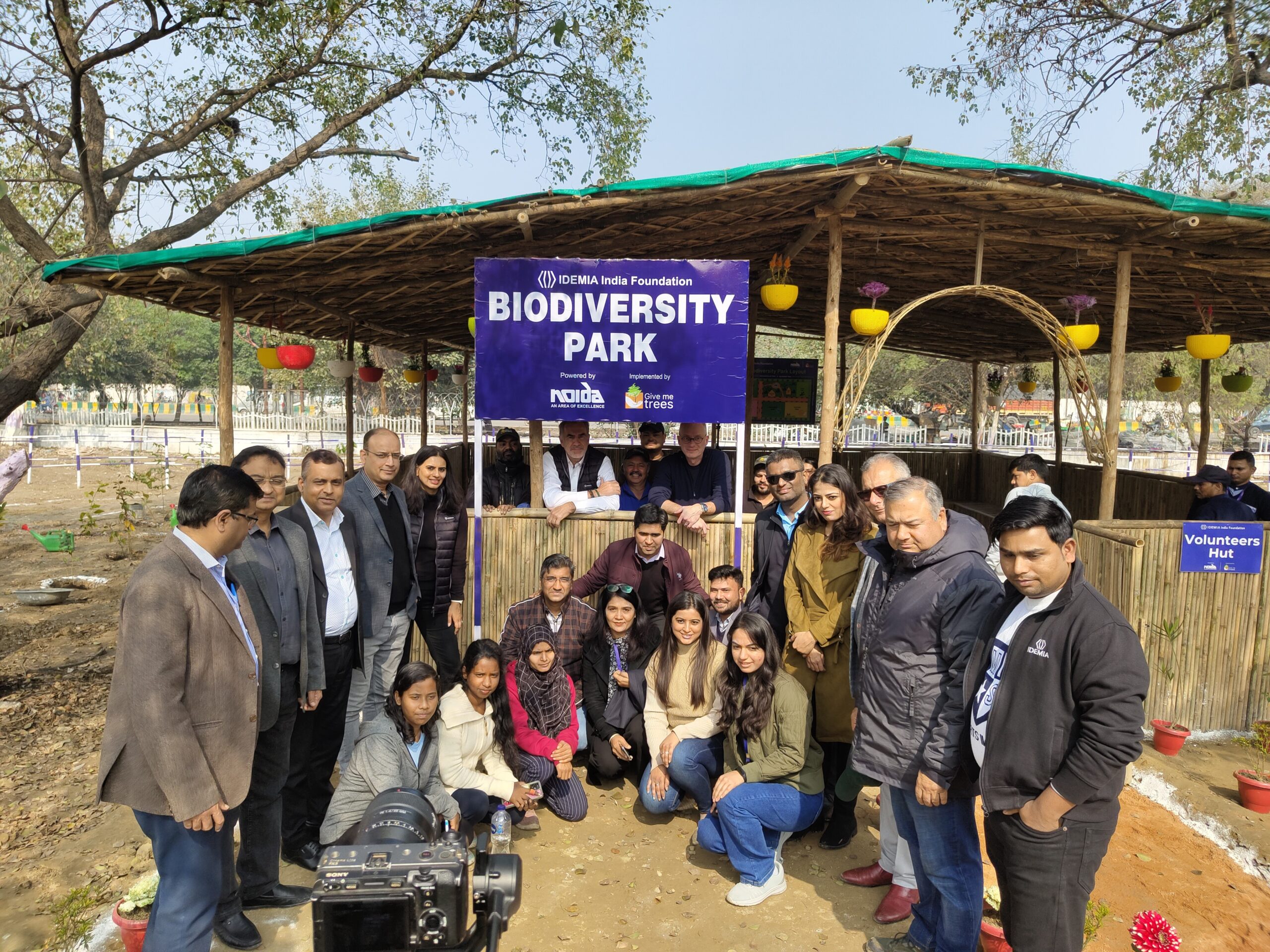
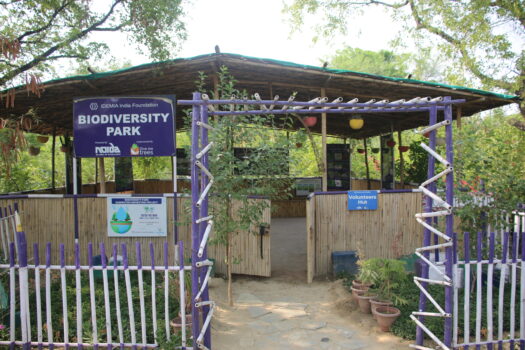
It is in this context that corporate interventions have started to matter. IDEMIA India Foundation, in partnership with the Noida Authority and the Give Me Trees Foundation, has converted 3.8 acres of former industrial dumping ground in Noida’s Phase 2 into a biodiversity park with 15,000 trees across 70-plus species. The site required six months of soil rejuvenation and debris clearance before a single sapling could take root.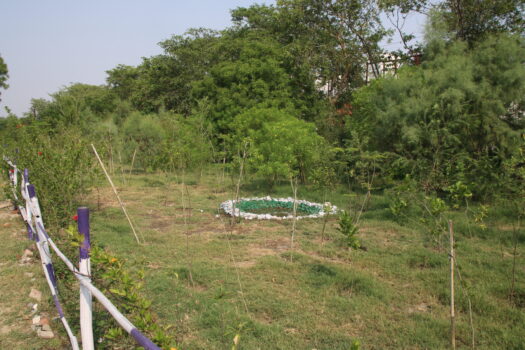
Manisha Dubey, Head of IDEMIA India Foundation, framed the effort in terms of broader corporate obligation: “We believe companies have a genuine obligation to the communities and ecosystems around them. That belief is what drove the IDEMIA India Foundation to transform 3.8 acres of industrial wasteland in Noida into a living biodiversity park, home to 15,000 trees spanning over 70 species. What was once barren ground is now a functioning urban ecosystem, built for future generations and maintained with the same rigour we bring to our technology.”
The sentiment points to something the city increasingly needs: not just tree-planting drives, but sustained ecological restoration that outlasts a single World Environment Day cycle. Noida’s green identity has been carefully constructed. As its industrial zones fill in, the tougher work will be to maintain it.