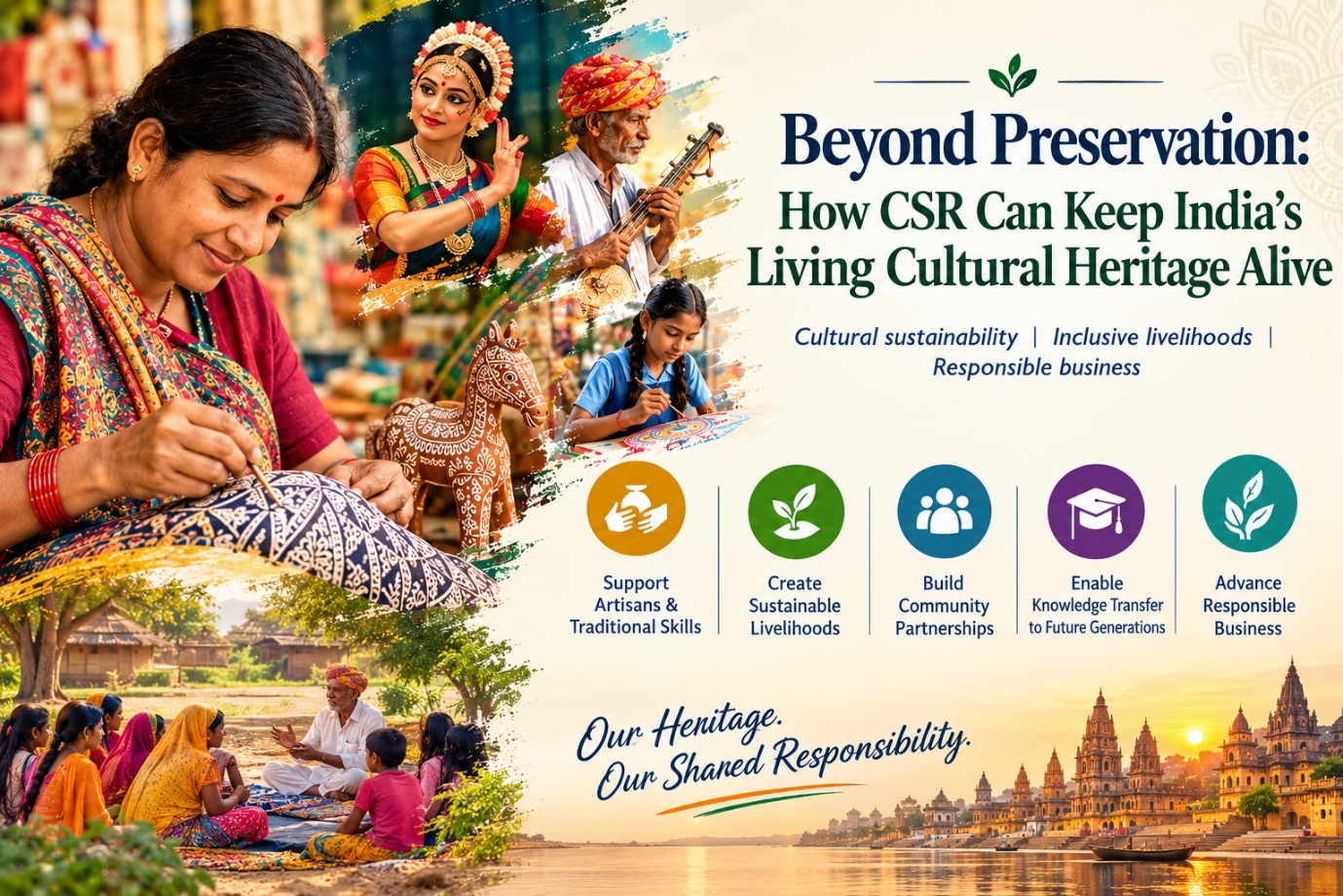
Culture is more than a reflection of our past; it is a living expression of our identity, values, creativity and collective wisdom. Across India, traditional handicrafts, folk music, dance forms, oral storytelling, indigenous knowledge, local festivals, culinary traditions and community practices connect generations and strengthen the social fabric of our society. However, rapid urbanisation, changing lifestyles, economic pressures and declining opportunities for traditional practitioners are putting many of these invaluable cultural traditions at risk.
The International Day of the Intangible Cultural Heritage, observed globally on 17 October, offers an important opportunity to recognise this living heritage and renew our collective commitment to safeguarding it. Proclaimed by UNESCO in 2023, the Day highlights the importance of protecting the traditions, skills and knowledge that communities inherit, practise and pass on to future generations.
In this context, Corporate Social Responsibility (CSR) can play a transformative role by bringing businesses, communities, civil society organisations and public institutions together to protect cultural heritage while creating sustainable livelihood opportunities.
Cultural Heritage: A Living Foundation of Sustainable Development
Intangible cultural heritage encompasses the practices, expressions, knowledge and skills that communities recognise as part of their cultural identity. Unlike physical monuments, this heritage lives through people—in the hands of artisans, the voices of folk artists, the knowledge of traditional practitioners and the wisdom of community elders.
Yet, cultural preservation cannot succeed through documentation and celebration alone. When traditional artisans struggle to earn a dignified income, young people abandon ancestral crafts for more secure employment, or local performers lack platforms to showcase their talents, the continuity of cultural knowledge becomes increasingly fragile.
Safeguarding heritage must therefore go beyond preserving objects or recording traditions. It must empower the people who sustain them, ensure fair economic opportunities and make cultural knowledge relevant to younger generations.
CSR: Transforming Cultural Responsibility into Community Impact
India has a significant opportunity to integrate cultural sustainability into its corporate responsibility agenda. Schedule VII of the Companies Act, 2013, explicitly includes the protection of national heritage, art and culture, public libraries, and the promotion and development of traditional arts and handicrafts among eligible CSR activities.
This provides a foundation for companies to design meaningful, community-centred initiatives that connect cultural preservation with inclusive development.
Businesses can support traditional artisans through skill development, access to modern tools, improved production facilities, market linkages, digital platforms and entrepreneurship training. CSR programmes can also help establish craft clusters, support folk artists, document endangered oral traditions, create community cultural centres and facilitate the transmission of traditional knowledge from experienced practitioners to younger learners.
Importantly, these interventions should be designed in consultation with the communities concerned. Cultural heritage belongs to the communities that practise and preserve it; corporate support should strengthen their agency rather than determine how their traditions are represented or commercialised.
From Cultural Preservation to Sustainable Livelihoods
One of the most powerful contributions of CSR is its ability to connect cultural heritage with economic inclusion.
Across rural and tribal communities, traditional crafts and performing arts represent not only cultural identity but also potential sources of employment, entrepreneurship and local economic development. Women artisans, indigenous knowledge holders, folk performers and traditional craft workers often possess exceptional skills but face barriers related to finance, market access, technology and recognition.
CSR-supported programmes can address these challenges by facilitating fair remuneration, strengthening producer collectives, promoting responsible cultural tourism and connecting artisans with domestic and international markets. Digital storytelling and e-commerce can expand their reach, provided that intellectual property, cultural sensitivities and community consent are respected.
Such initiatives can generate a positive cycle: stronger livelihoods encourage younger generations to learn traditional skills, continued practice sustains cultural diversity, and thriving cultural enterprises contribute to local economic resilience.