Driving Global Cooperation for Climate, Communities and Sustainable Development Beyond Borders
Ms. Maanisa Das
With each passing day, the world struggles to breathe under the weight of climate change, environmental degradation, unsustainable consumption, and mounting pressure on natural resources. Across the world, countries gather around negotiating tables to discuss economic policies, navigate the difficult terrain of growth and GDP, and pursue development that can strengthen their economies. But beneath the geographies of these strong countries,nature—and the millions of people who depend on it— is grappling with living conditions. In the worst of circumstances, lives and livelihoods are at stake; in others, vulnerable communities are either starving, making out everyday lives through water scarcity, or dealing with unpredictable climatic conditions.
Economic systems are increasingly interconnected, with countries relying on one another across trade, investment, technology, finance and supply chains. However, without strengthening every pillar of the economy, the benefits might not be reaped by everyone present in the ecosystem. Strengthening livelihoods still remains a focal point of discussions around sustainable development. “Globally, up to 40 per cent of land is degraded, weakening food production and livelihoods, and threatening the livelihoods of over three billion people, while droughts have increased in frequency and duration by 29 per cent since 2000,” according to the UN Convention to Combat Desertification (UNCCD). The Food and Agriculture Organization (FAO) offers similar staggering insights, “Conflicts and economic shocks push over 250 million people into acute food insecurity.” And the Himalayas are approaching a dangerous tipping point due to rapid glacier loss.
Considering only even environmental consequences, unsustainable development can take the economic and social progress years behind. As is the case with Nepal, where environmental and natural disasters disrupted infrastructure, livelihoods, communities and economic activity, setting development gains back significantly. No amount of economic sugarcoating can convince us at this stage that climate change will politely stay in the environmental section while economies carry on as usual. Heat, water scarcity, extreme weather conditions do not respect economic or fiscal boundaries. One by one, climate pressures are beginning to test people, livelihoods and economies alike. And once the cumulative consequences of environmental stress begin to burst the bubble of economic resilience, the question will no longer be whether climate change affects the economy, but how much economic stability can withstand it.
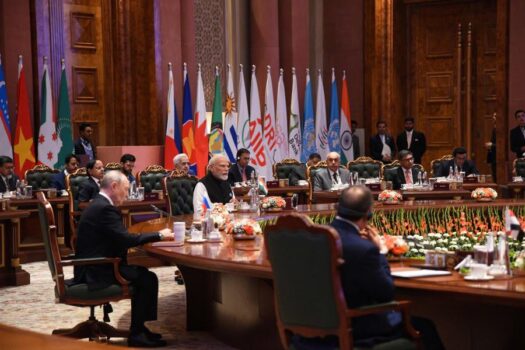
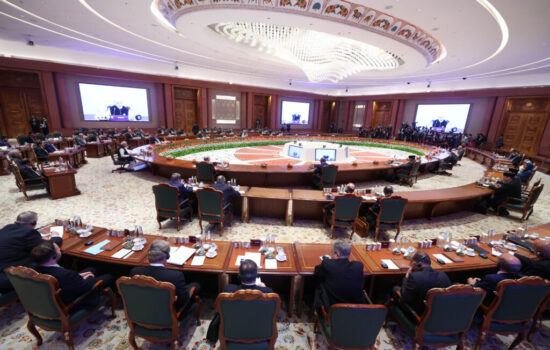
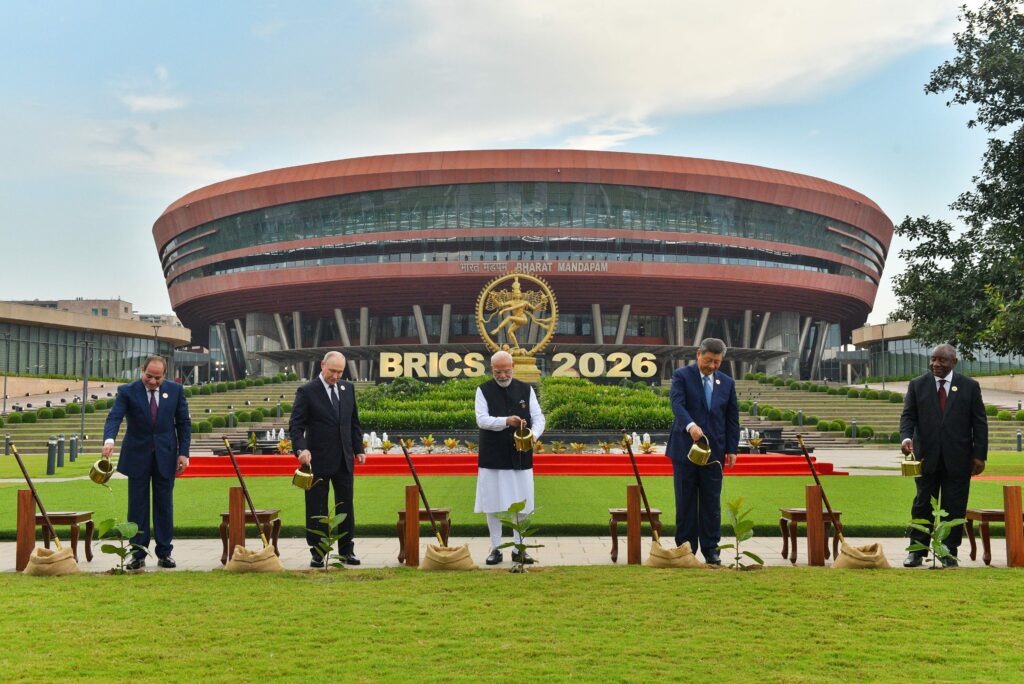
And oftentimes, the countries and economies contributing to greenhouse-gas emissions, air and water pollution, deforestation, over-extraction of natural resources, biodiversity loss, carbon-intensive industrialisation and resource-intensive consumption may not be the end sufferers. Sometimes the rising cost of industrialization also bleeds the vulnerable hands in third-world countries. The impacts can fall disproportionately on vulnerable communities. This makes collective cooperation essential, not as a response limited to moments of crisis, but as a sustained effort that works across levels, from local and national initiatives to regional and global platforms. Inclusive developments need the hands of all participating countries till no one is left behind. Needfully, BRICS has emerged as a key platform for coordinating economic policy among major emerging economies sustainably. It serves as the principal forum where these nations shape a common position on global governance. Under its 2026 Presidency, India hosted the 18th BRICS Summit in New Delhi on 12–13 September 2026, marking India’s fourth Chairship of BRICS in 2026. India’s Chairship was guided by the theme “Building for Resilience, Innovation, Cooperation and Sustainability.”
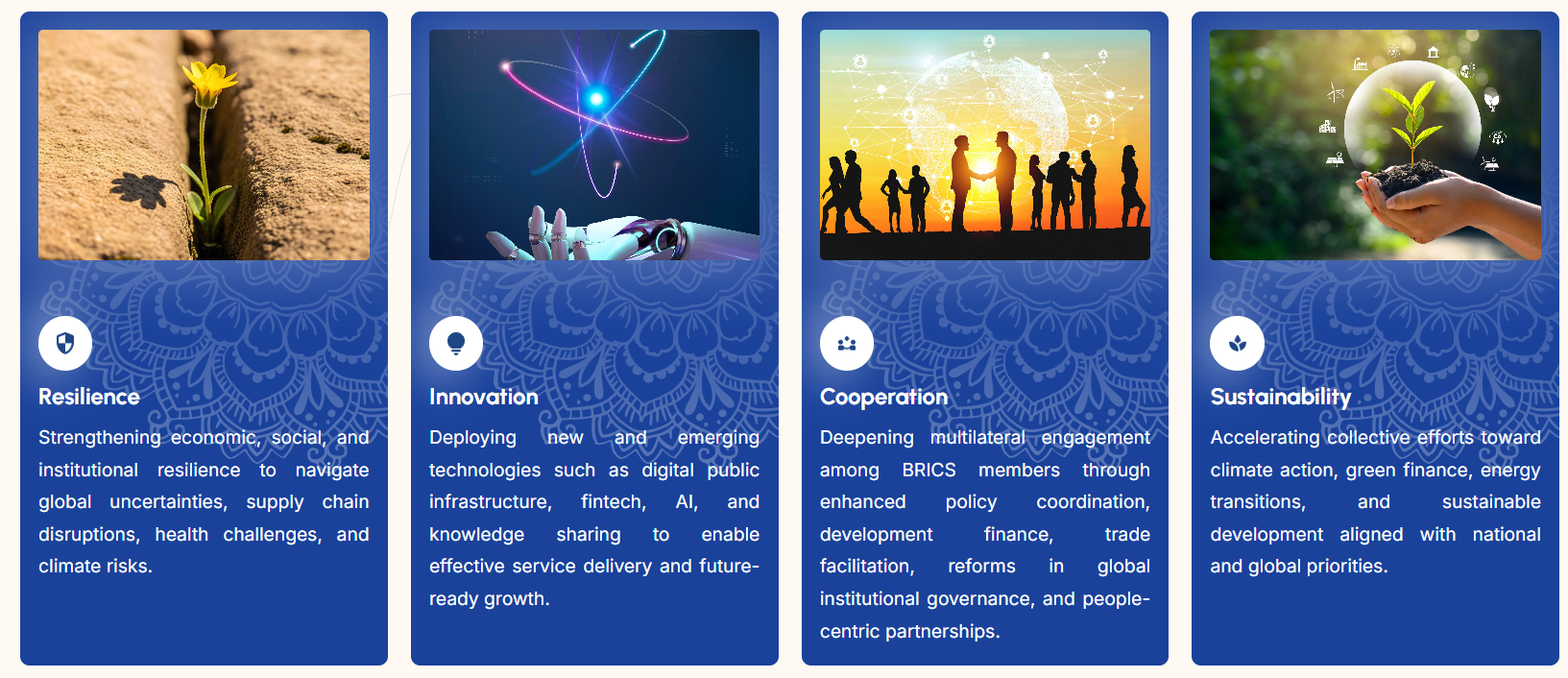
What began as recognition of climate and environmental concerns within BRICS has gradually evolved into a broader architecture of cooperation spanning clean energy, biodiversity, health, resilient infrastructure, disaster resilience, sustainable finance and inclusive development.
- The leaders affirmed the commitment to working tirelessly for the implementation of the 2030 Agenda for Sustainable Development and its far-reaching and people-centred Goals and targets in a balanced and integrated manner, in line with national policies and regulations, and recognize that eradicating poverty in all its forms and dimensions, including extreme poverty, is the greatest global challenge and an indispensable requirement for sustainable development.
- The leaders reiterated our commitment to the full implementation of United Nations Security Council Resolution 1325 (2000) and subsequent resolutions and to the advancement of the Women, Peace and Security (WPS) agenda. The underscored the importance of ensuring the full, equal, safe, and meaningful participation of women in decision-making at all levels of peace and security processes, including conflict prevention and resolution, humanitarian relief, mediation, peace operations, peacebuilding, and post-conflict reconstruction and development.
- The leaders recognised obesity and non-communicable diseases (NCDs) as major global public health challenges and reaffirmed their commitment to strengthening preventive and promotive healthcare through whole-of-government and whole-of-society approaches. They endorsed the launch of the BRICS Mission for Healthy Lifestyle and the BRICS Roadmap for the Joint Initiative on Healthy Lifestyle Promotion (2026–2029). We also welcome the Compendium of Replicable Best Practices on Healthy Lifestyle. They also recognised mental well-being as a vital pillar of health and sustainable development and supported the establishment of a BRICS Training Hub Network and Network of Centres of Excellence (CoE), coordinated by NIMHANS, to foster collaborative research, policy dialogue, knowledge exchange, and evidence-based mental health promotion across BRICS countries.
- The leaders reaffirmed the vital role of National Public Health Institutes (NPHIs) in strengthening health systems through policy support, workforce development, disease surveillance, preparedness, laboratory capacity, and applied research. They endorsed operational frameworks on NPHIs and diseases driven by social determinants of health (DD-SDH) to promote multisectoral collaboration, knowledge exchange, innovation, and greater health equity, while supporting the BRICS Vaccine R&D Centre and cooperation in nuclear medicine. They also emphasised strengthening health infrastructure, local production, surveillance and laboratory networks, digital health and AI, traditional medicine, regulatory systems, skilled health workforces, and collaborative R&D to enhance health emergency preparedness and ensure timely, affordable, and equitable access to essential healthcare, vaccines, therapeutics, and diagnostics.
- The leaders underscored the importance of strengthening infrastructure resilience against climate and disaster risks and recognised the role of the Coalition for Disaster Resilient Infrastructure (CDRI) in supporting countries through technical assistance, knowledge exchange, and enabling policy and financing approaches. They emphasised greater investment in sustainable resilience, prioritising prevention, anticipatory action, evidence-based policymaking, enhanced early warning systems, and risk-informed planning to strengthen preparedness and response capacities.
- The leaders recognised the disproportionate impacts of climate change, particularly on Emerging Markets and Developing Economies (EMDEs), which face significant climate-related risks, vulnerabilities, and financing gaps, especially for adaptation. They welcomed the report on the “Role of Central Banks towards Optimising Sustainable and Green Finance, including Adaptation,” highlighting efforts to strengthen sustainable finance and explore ways to make climate-related projects more bankable, both globally and across BRICS countries.
- The leaders highlighted the potential of the BRICS Climate Research Platform and BRICS Laboratory for Trade, Climate Change and Sustainable Development to advance climate action and strengthen resilience across BRICS Member Countries. Recalling the 2025 Leaders’ Framework Declaration on Climate Finance, they supported greater cooperation on carbon markets, particularly through capacity building and knowledge exchange, and welcomed the implementation of the BRICS Carbon Markets Partnership to support national climate strategies, complement mitigation efforts, and mobilise climate finance. They also appreciated knowledge-sharing through high-level dialogues on people-centric community-based adaptation and aligning carbon markets with adaptation goals.
- The BRICS members underscored the importance of the conservation and sustainable use of biodiversity, of the fair and equitable sharing of benefits arising from the utilization of genetic resources and of the effective implementation of the Convention on Biological Diversity, and its Protocols, and its Kunming-Montreal Global Biodiversity Framework. They welcomed the establishment of the Kunming Biodiversity Fund and initiatives such as the Action Initiative for the KMGBF, while calling for enhanced financial resources, capacity building, and technology transfer to support developing countries. They also welcomed India’s initiative to establish an International Big Cats Alliance and encouraged greater cooperation among BRICS countries for the conservation of big cats and other vulnerable species. Alliance and encourage BRICS countries to work together for the conservation of big cats.
- The leaders underscored the critical role of forests, including boreal and tropical forests, in conserving biodiversity, water and soils, regulating ecosystems, supporting livelihoods, and addressing desertification, land degradation, drought, and climate change through their role as carbon sinks. They encouraged the exchange of best practices on sustainable forest management and restoration and welcomed the BRICS Principles for Integrated Landscape-Based Greening and Land Restoration and the Common Understanding for Wildfire Preparedness & Response. They also welcomed the Tropical Forest Forever Facility as an innovative mechanism for long-term, results-based financing for tropical forest conservation, while recognising international initiatives such as “United for Our Forests” and the Mangrove Alliance for Climate as platforms for global cooperation.
- The leaders acknowledged critical environmental challenges, including water scarcity, desertification, drought, land degradation, sand and dust storms, and wildfires, which significantly affect ecosystems, agriculture, livelihoods, and socio-economic development. They reaffirmed their commitment to the integrated and sustainable management of mountains, water resources, forests, peatlands, mangroves, farmlands, grasslands, and deserts to promote holistic ecosystem restoration. They also recognised the importance of the 2026 UN Water Conference, to be held in Abu Dhabi from 8–10 December 2026, in advancing global efforts towards the implementation of Sustainable Development Goal 6 on Clean Water and Sanitation.
- The leaders recognised the growing scale and complexity of waste generation driven by urbanisation, industrialisation, and changing consumption patterns, and emphasised the need for integrated waste management systems supported by Extended Producer Responsibility (EPR), eco-design, sustainable public procurement, effective monitoring, and investment in recycling and recovery infrastructure. They welcomed the establishment of a Network of BRICS Institutions to advance knowledge-sharing, research, and innovation on sustainable lifestyles, as well as the possibility of organising a BRICS Sustainable Lifestyle Week in 2026.
Source: PIB