
 Building Opportunity at the Border: Transforming Schools in Uri
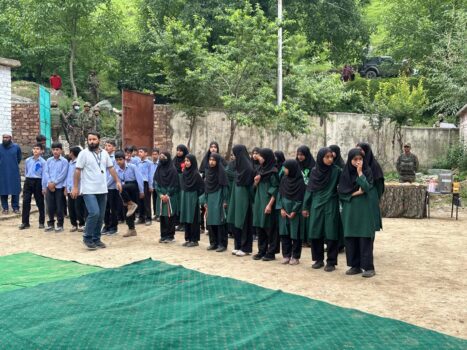
For children in Uri Tehsil, Baramulla district, Jammu & Kashmir, mountainous terrain, harsh winters and disruptions near the Line of Control create persistent barriers to education.
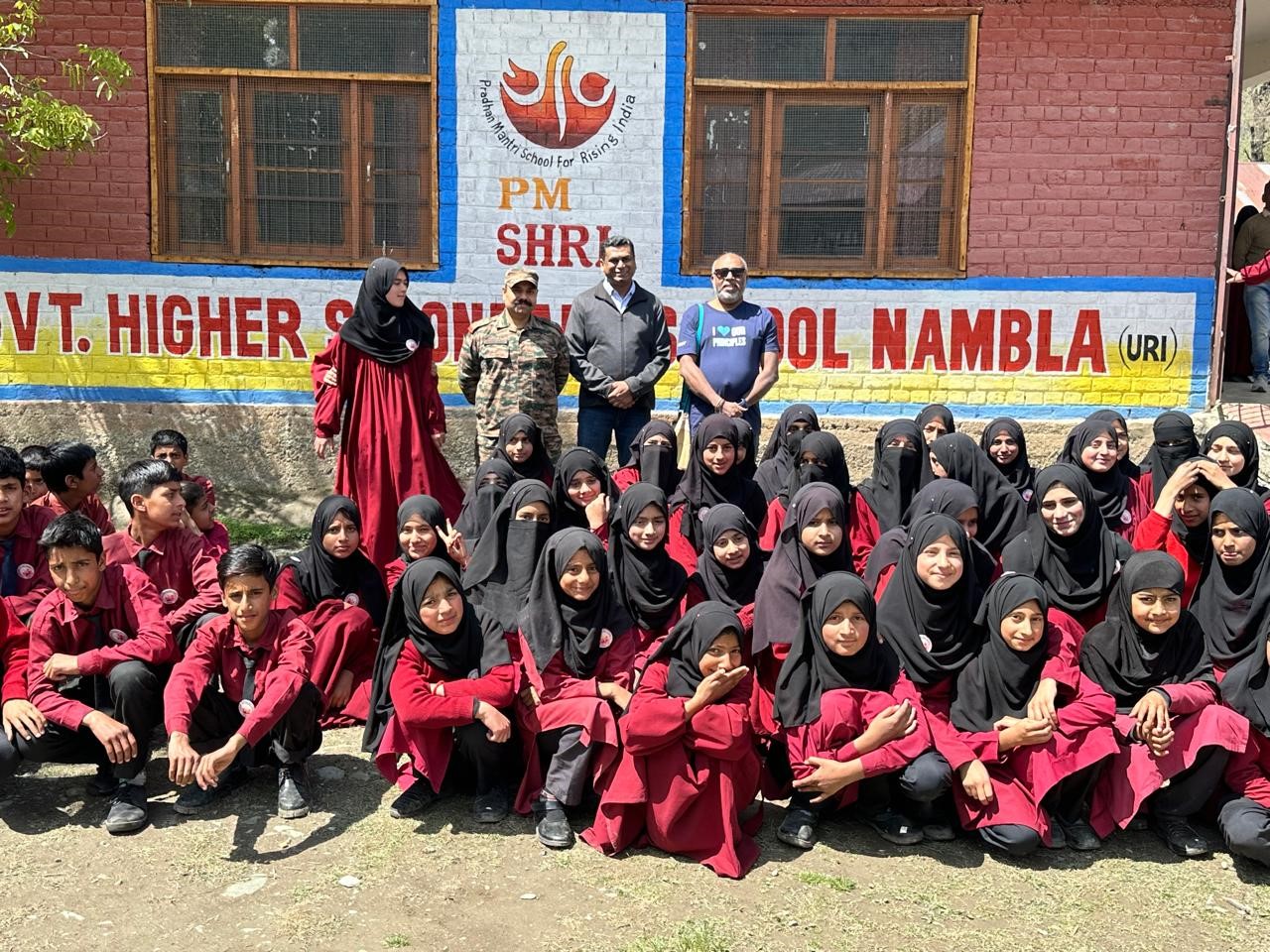
BNY’s multi-year infrastructure program at six government schools addresses a fundamental need: safe, functional schools where children can learn with dignity and continuity. Implemented with the International Association for Human Values (IAHV), with Indian Army coordination, it supports an India–Pakistan border area affected by conflict and underdevelopment.
Responding to a Demanding Context
Children often walk two to three kilometres through mountainous terrain, while deep snow affects the area for around four months annually. Security alerts and cross-border tensions further disrupt schooling. Overcrowded, dilapidated classrooms, inadequate sanitation, non-functional laboratories and libraries, and poor mid-day meal kitchens compound these challenges. A needs assessment involving the local Army unit and school authorities shaped interventions to improve everyday learning conditions, not merely repair buildings.
Upgrades covered classrooms, sanitation, laboratories, digital infrastructure, libraries and mid-day meal facilities.
 Project Goals and Alignment
- Improve foundational infrastructure in government schools in Uri.
- Provide equitable access to quality education in conflict-affected communities.
- Create safer, healthier learning environments through improved sanitation, buildings, and campus facilities.
- Support holistic and inclusive learning environments aligned with the National Education Policy (NEP) 2020.
- Engage young people in constructive learning opportunities, reducing vulnerability to negative influences.
A Partnership Built Around Practical Needs
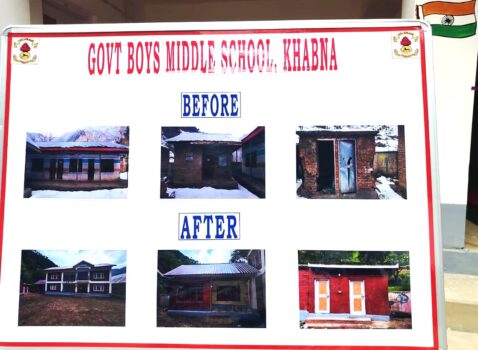
BNY provided INR 2.55 crore in CSR funding; IAHV led implementation, with Indian Army support for local coordination. Spanning FY 2023–2027, the program covers six schools serving around 1,300 children across approximately 15 villages: GHSS Nambla B, Girls High School Lagama, Boys Middle School Khabna, Boys Primary School Danna, Boys Middle School Machikrand and Boys Middle School Mothal. The approach combines essential infrastructure with learning resources to support equitable, NEP-aligned education.
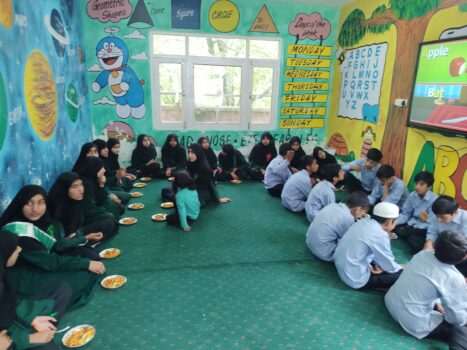
Priorities include classroom capacity, girls’ sanitation facilities, computer and science laboratories, reading spaces and nutrition support through mid-day meal rooms and kitchen upgrades.
Project Outcomes
Short-Term
- Direct benefit to 1300 children from marginalized backgrounds and broader community impact on 8,000+ villagers.
- 25–30% improvement in student-classroom ratio through capacity expansion and renovation
- 15–20% rise in girls’ attendance following construction of dedicated sanitation blocks
- 100% hands-on STEM exposure target enabled through functional computer and science labs
- Safer, more reliable school campuses in a region where harsh winters and LoC-adjacent instability routinely interrupt learning
 Long-Term
- Border-area resilience — dependable learning spaces that withstand seasonal disruption and geopolitical stress
- Girls’ retention and advancement — improved dignity and safety support sustained participation through secondary education
- STEM pipeline — practical exposure opens previously inaccessible higher education and employment pathways
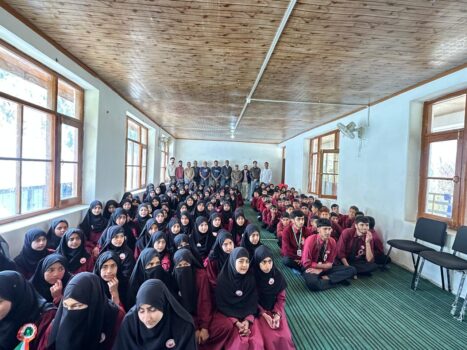
- Community anchoring — schools serving fifteen villages strengthen civic stability and social cohesion
- Replicable model — CSR’25 recognition (Pankh category) signals potential for civil-society and corporate partnerships in conflict-adjacent geographies
- Feedback from students, teachers, parents, officials and community members highlights the project’s impact:
- Students appreciated the new classrooms and digital resources, describing learning as more enjoyable and engaging.
- Teachers welcomed the library and laboratory facilities and reported improved attendance and greater student participation.
- Parents highlighted the positive effects of better sanitation and infrastructure on their children’s health and confidence.
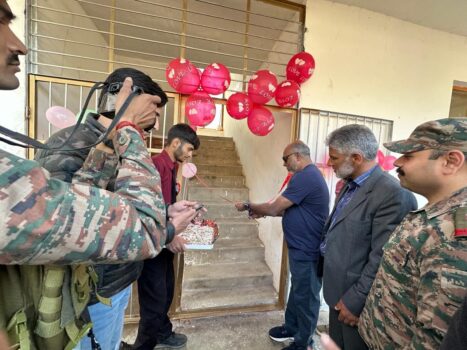
- Officials called the double-storey building transformational, highlighting benefits for students, many from the tribal community. They credited the BNY–IAHV partnership and hoped for replication in other border and interior schools.
- Community members praised stronger collaboration and constructive learning opportunities that reduce young people’s vulnerability to negative influences.
Sustainability
Durable, school-owned buildings, sanitation blocks, laboratories and kitchens remain beyond the project period. Phased investments in FY2024–25 and FY2025–26 strengthen continuity. Education officials, teachers, parents and community members support local ownership, sanitation hygiene, use of laboratories and libraries, and improved mid-day meal facilities.
The project received national recognition at the CSR’25 Awards (Pankh category), alongside strong stakeholder feedback.
The project also received the CSR Times 2026 Award – Gold with Commendation, the highest award in the education category.