
New Delhi, May 21, 2026: The National Association for the Blind (NAB Delhi) successfully hosted the India Inclusive Summit 2026 at Silver Oak, India Habitat Centre, New Delhi, bringing together policymakers, corporate leaders, accessibility experts, technology innovators, and members of the disability community to discuss the future of accessibility and inclusive development in India.
Organized by NAB Delhi with Knowledge Partner Tatsat Foundation, and in partnership with the Department of Empowerment of Persons with Disabilities (DEPwD), Ministry of Social Justice & Empowerment, Government of India, HCL Tech, HCL Foundation, and United Way of Delhi, the summit created a collaborative platform to address key issues around digital accessibility, inclusive workplaces, accessible technology, and empowerment of persons with disabilities (PwDs).
The summit commenced with an inaugural ceremony featuring a welcome address and context-setting by Mr. Prashant Ranjan Verma, General Secretary, NAB Delhi. A short film showcasing NAB Delhi’s initiatives and its ongoing efforts towards empowering visually impaired individuals through accessibility, education, training and advocacy, was also screened during the opening session.
Speaking on the occasion, Mr. Prashant Verma, General Secretary, National Association for the Blind (NAB Delhi) said, “India Inclusive Summit 2026 was envisioned as a platform to bring together diverse stakeholders to drive meaningful conversations around accessibility, inclusion, and empowerment. The summit reflects our commitment to ensuring that accessibility becomes an integral part of policy, technology, workplaces, and everyday experiences for persons with disabilities.”
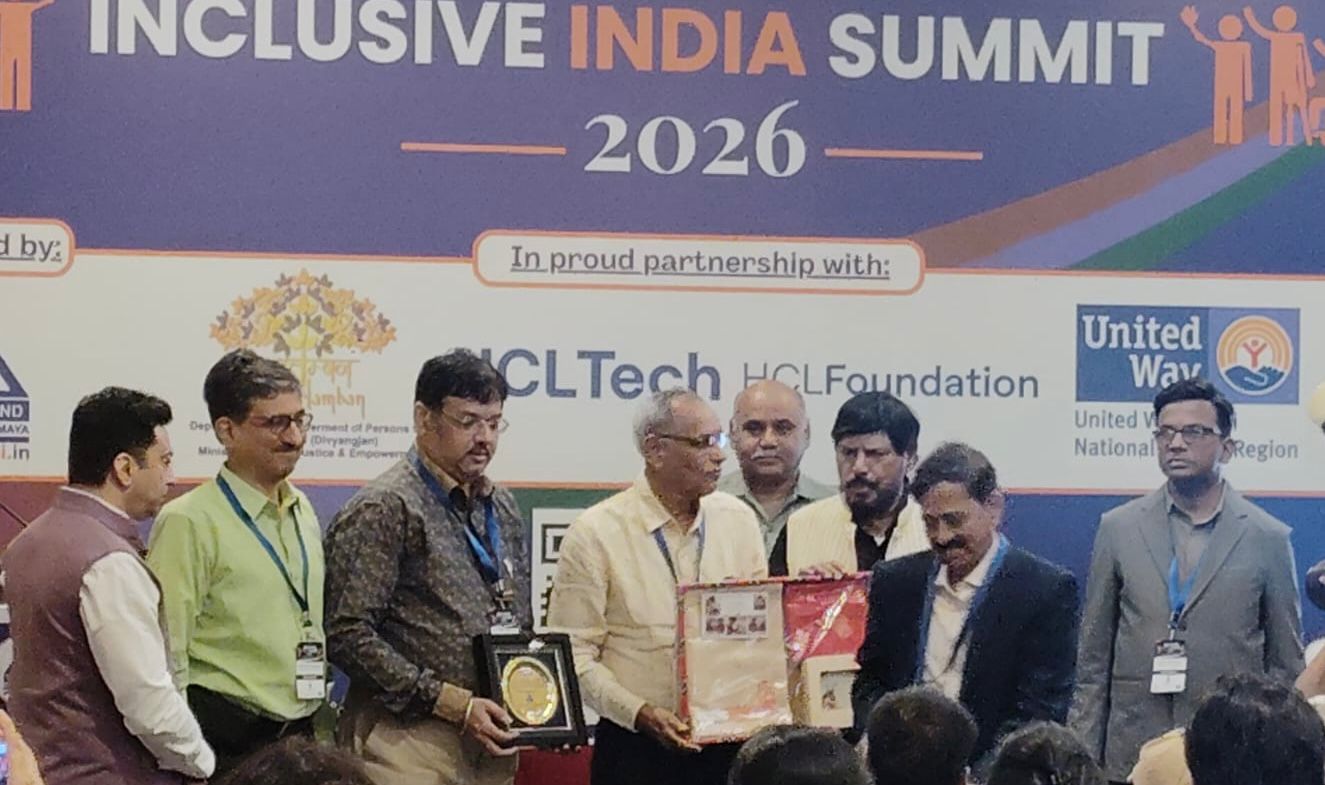
One of the key highlights of the event was the presentation of the Inclusive India Awards 2026, recognizing institutions, implementation agencies, and individuals for their exceptional contribution towards promoting accessibility and inclusion in society. Microsoft received the Best Institution Award for making their Windows Operating system inclusive and accessible for all, including persons with disabilities. Mumbai based company BarrierBreak received the Inclusive India Award, in the Best Service Provider category while the Best Individual award was given to the blind lawyer and accessibility expert Amar Jain.
The event was graced by Chief Guest Ramdas Athawale, Hon’ble Minister of Social Justice and Empowerment, Government of India, who emphasized the importance of creating equal opportunities and strengthening accessibility initiatives across sectors.
On this occasion, Ramdas Athawale said, “India’s progress must be inclusive and accessible for all citizens. The government remains committed to promoting equal opportunities, accessible infrastructure, digital inclusion, and empowerment of PwDs. Platforms such as the India Inclusive Summit play an important role in encouraging dialogue, innovation, and collective action towards building a more inclusive nation.”
The summit featured multiple keynote presentations and panel discussions focused on strengthening India’s accessibility ecosystem. A keynote session by the Microsoft Windows Narrator Team highlighted the growing role of assistive technologies and accessible digital experiences in enabling greater independence for PwDs.
A major discussion during the summit centered around ‘Policy to Practice: India’s Digital Accessibility Landscape’, where accessibility experts and policy leaders discussed India’s evolving legal frameworks, implementation challenges, and the need for stronger adoption of accessibility standards across digital platforms. The session also explored how public and private stakeholders can work together to ensure that accessibility commitments translate into meaningful and inclusive user experiences.
The session on ‘Accessibility as Business Strategy’ highlighted how accessibility is increasingly being recognized as a driver of innovation, customer engagement, workforce diversity, and long-term business value. Industry leaders from technology, accessibility, and academic sectors shared insights on integrating accessibility into product development, workplace culture, and organizational strategy rather than treating it solely as a compliance requirement.
Another important discussion focused on the ‘Impact of Accessible ICT on Lives of PwDs’, where speakers shared how accessible information and communication technologies are transforming education, employment, communication, and independent living for PwDs. The session also showcased initiatives such as the Sugamya Bharat App, Shravan Audio Library, and Aditi AI, highlighting the role of technology-led innovation in improving accessibility and inclusion at scale.
The summit also featured a keynote presentation by Google on accessibility initiatives and inclusive design practices. The session highlighted how global technology companies are increasingly prioritizing accessible innovation to create digital products and experiences that are inclusive for all users.
The final session of the summit, ‘Corporate Action on Empowerment of Persons with Disabilities’, explored the role of the corporate sector in driving inclusive employment, accessible workplaces, skill development, and sustainable social impact initiatives.
Dr. Sumi Gupta, Director, Tatsat Foundation, added, “Accessibility is essential for equitable growth and social participation. It is through education, training and inclusion, can a person with disabilities achieve financial independence. Through this summit, we aimed to encourage stronger collaboration between government, industry, and civil society to ensure that innovation and development remain inclusive and accessible for everyone.”
The summit concluded with a conference summary and networking session, reinforcing a shared commitment among stakeholders towards advancing accessibility-led innovation and creating a more inclusive future for India.