
Co-authored by Ms Rashmi Murali, Ms Manish Mishra, and Dr Amit Kumar Thakur
Hura Block in Purulia, West Bengal, is a rural region rich in natural and cultural diversity. However, difficult terrain, soil erosion, water scarcity, limited infrastructure and connectivity continue to affect agriculture and livelihoods. Many families, particularly from tribal communities, have limited income opportunities and are often forced to migrate in search of work. To address these challenges, Life Insurance Corporation–Housing Finance Limited (LIC-HFL), through its CSR initiative, launched Project HRIDAY in Hura Block. Implemented by The Energy and Resources Institute (TERI), the project focused on improving livelihoods in Bishpuria and Poramohuda through practical, sustainable solutions and creating opportunities for long-term income generation. TERI, with support from LIC-HFL, worked closely with community members to identify solutions, build awareness, and a sense of ownership.
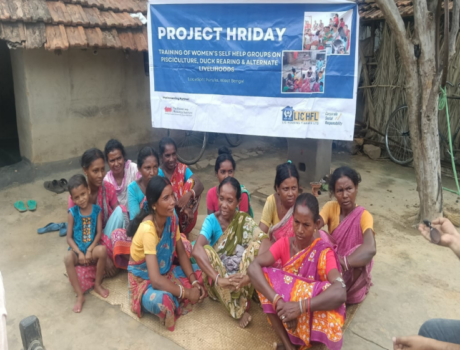
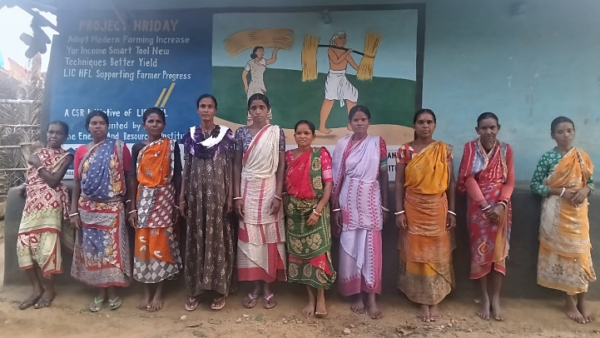
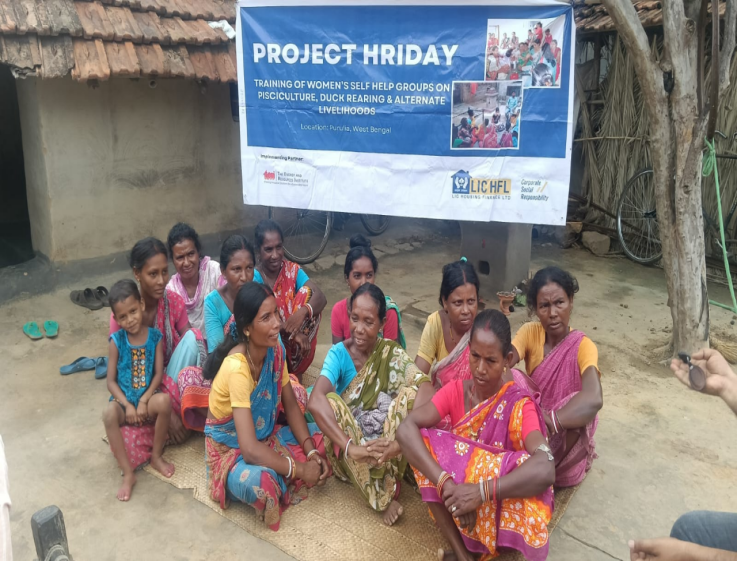
Figure 1 Participation of tribal women in Project HRIDAY
The project introduced livelihood activities such as fish farming, duck rearing and improved agricultural practices. These interventions were designed around existing local skills and practices, making them easier for communities to adopt while creating new opportunities to increase their incomes and reduce migration.
Pisciculture in Bishpuria
Project HRIDAY conceptualized the promotion of pisciculture in Bishpuria village with the objective of developing a nature-based intervention for empowering the local women. An enterprising Self-Help Group, the Maa Tara Mahila Samiti was selected to take up fish farming in the village. A suitably sized pond was selected by TERI to be leased for cultivating fish. The project supported the provision of fish fingerlings to the SHG and training the SHG members in the scientific methods to grow and harvest fish. Indigenous fish variety such as rohu, katla and mirigal were chosen to appeal to the local tastes. The women successfully completed three harvests of fish over a single production cycle, with each successive harvest yielding more fish. Around 500 kg of fish were harvested. Being sold at Rs. 150/kg, the harvest fetched more than Rs.61,800 in gross revenue. With a minimal investment of Rs.11,000 from the SHG towards labour charges, the business earned a net profit of Rs.50,800 which amounts to around Rs.17,000 average net profit per harvest. Around 50% of the profits are shared with the owner of the pond, making this a winning livelihood model for all stakeholders. For bulk fishing, the SHG has arranged for professional fishermen to be hired for future business expansion.
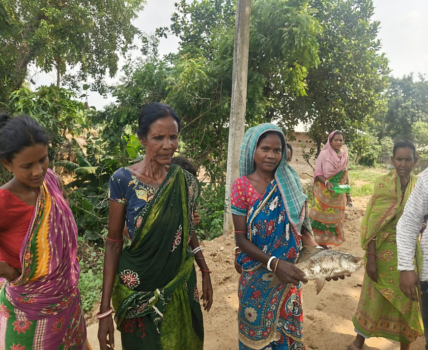
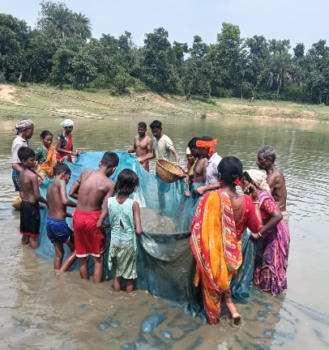
Figure 2 Women's SHG managing pisciculture in Bishpuria (left); community harvesting fish from a pond (right)
This model reflects a couple of key learnings. First, the successful harvest and sale of the fish in the very first cycle of production is a result of scientific pond management practices and an understanding of continuous feed optimisation between harvests. Second, this case reflects the enterprising vision of the SHG members who not only accepted the business proposition of fish harvesting, but actively and collectively engaged in the successful operation of the business through monitoring, optimal decision-making and reinvesting profits for business sustainability. Maa Tara Mahila Samiti members demonstrated how if women are provided the skills, mentorship and financial and marketing support, they can turn any livelihood into an empowerment opportunity.
Duck Farming in Poramohuda
Another initiative in the direction women’s empowerment was developing a duck rearing business for the Sari Sarna Mahila Samiti SHG to enhance their income-generation opportunities. Having survived on seasonal agricultural labour work to support their households, rearing ducks offered women a relatable yet economically rewarding avenue to secure their income. Project HRIDAY implemented this vision by providing 275 ducks to the SHG and rigorous training on technical aspects of duck rearing like optimal feeding regimes, housing management, hygiene requirements, vaccination protocols, and checking the early signs of disease.
This was not however devoid of challenges. Despite women’s active participation in managing and caring for the ducks, around 60 ducks were lost to diseases. The initial setback did not slow the women down. With a systematic vaccination programme and extra precautions maintained by the women, 174 ducks survived. The 112 female ducks were productive and collectively laid around 1680 eggs. Sold at Rs. 10 per egg, the SHG generated a monthly group income of Rs. 16,800. The women also sold around 41 ducks at Rs. 300 each (amounting to Rs. 12,300), demonstrating the economic viability of running a duck farming business. The SHG has projected to generate more than Rs. 2 lakhs through the annual sales of eggs and ducks.
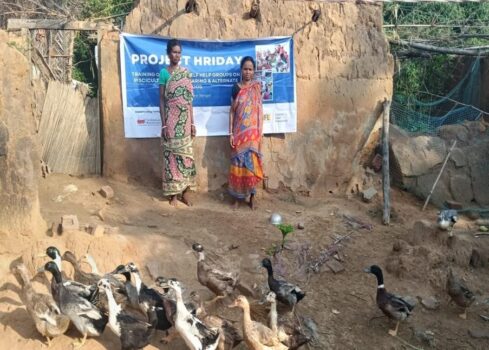
Women have demonstrated an exceptional learning curve by undertaking a business venture that had no precedents in the village but was relevant to their rural lifestyles. Their enthusiastic participation in trainings conducted by TERI helped them pre-empt the challenges that could occur in running a duck framing business, thus, ensuring minimal investment and maximum profits. From the sustainability view point, the SHG’s decision to reinvest the profits on more ducks, organic feed and health precautions, proved to be a wise decision in creating a resilient business model.
Supporting Farmers with Solar Irrigation, Tools and Implements
The geographic anomalies of the terrain in Purulia poses one of the biggest challenges to agriculture. The hard bedrock prevents water retention in the soil and harsh summers leave community wells and water sources dried. Under Hriday, solarized irrigation with borewell digging support was designed to provide uninterrupted access to water during the cultivation season in Bishpuria village. TERI undertook detailed discussions with several farmer groups and assessed the land, water table and cropping patterns to arrive at the appropriate technical design for the system, conducive to the local agro-climatic conditions.
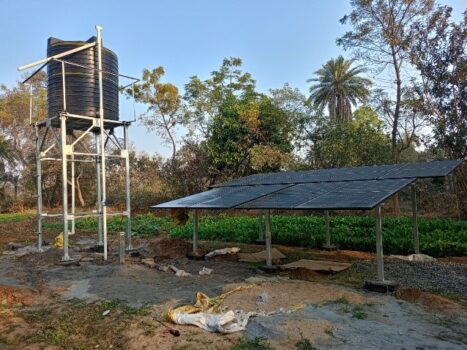
Around 17 farmers benefitted from the installation of 3 pumps (5 HP each) irrigating over 15 acres of land, replacing the previously used diesel pumps. The uniqueness of this model lies in the creation of a water management network amongst the farmers who also took responsibility for the system’s maintenance. The farmers also diversified cropping from paddy-only to additional vegetable cultivation, for additional income. HRIDAY further supported the farmers to transition from primitive cultivation methods to more efficient devices. Around 100 farmers were provided kits with essential farm tools like electric sprayers, threshers, pickaxe, and sickle among others. The farmers reported a reduction in drudgery and improved efficiencies.
The success of HRIDAY and its acceptance amongst community members testifies the impacts that could be created with need-based intervention planning and adopting science-backed approaches to addressing persistent local issues. One of the highlights of HRIDAY is the awareness it created among the community on sustainable livelihood enhancement, whose true impact shall be witnessed through future expansion of these interventions by the community.