
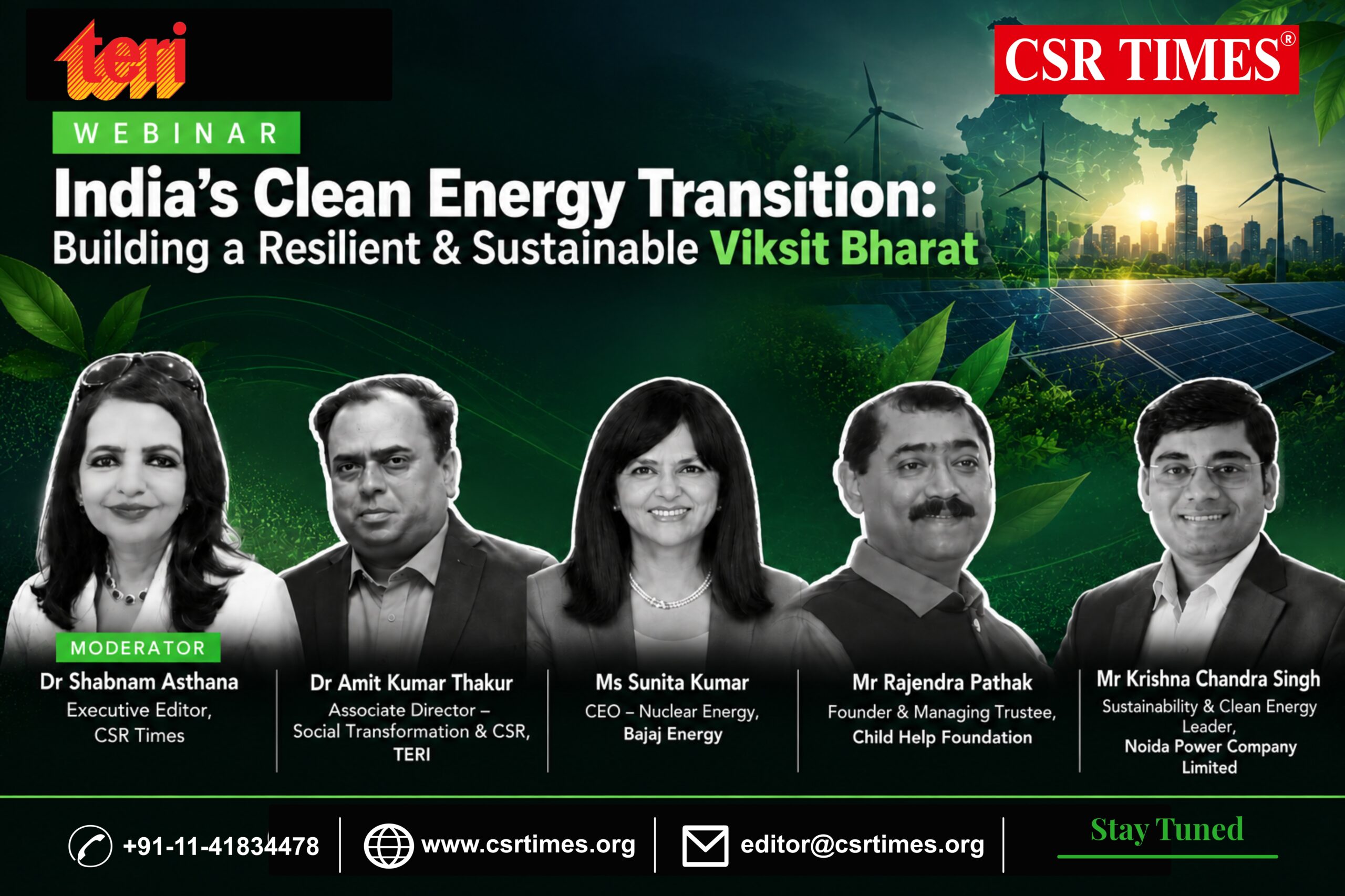
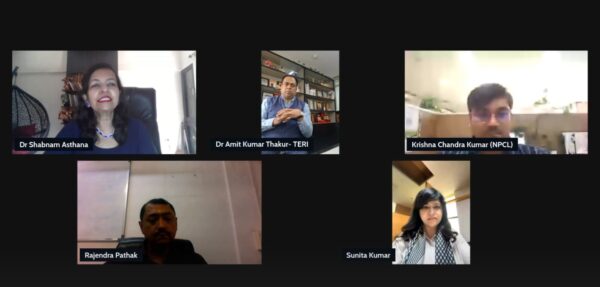
 TERI and CSR Times hosted webinar on 16th September 2026, bringing together diverse perspectives on inclusive energy access, resilient power systems, green livelihoods and India’s clean energy ambitions
India’s energy transition is no longer just about moving from conventional energy to renewables. It is about creating an energy ecosystem that is secure, affordable, resilient, and inclusive, while also ensuring that our economic growth remains sustainable. Setting the context for the discussion, Dr. Shabnam Asthana, Executive Editor, CSR Times, noted that the diversity of perspectives represented in the session offered an opportunity to look at India’s clean energy transition through multiple lenses.
Opening the discussion, Dr. Amit Kumar Thakur, Associate Director–Social Transformation & CSR, TERI, emphasised that India’s clean energy journey must go beyond large-scale renewable energy installations. “India’s clean energy transition cannot be measured only by the scale of renewable energy installations. Its real success will be determined by how effectively clean energy solutions reach people, livelihoods and communities at the last mile. The transition has to be people-centric. Distributed Renewable Energy solutions can bring clean power directly to rooftops, livelihoods, productive activities and cooking, making clean energy a part of everyday life. Any policy or programme becomes truly successful when it reaches the end user. That is where we can demonstrate which technologies are most relevant, useful and appropriate to the local context.”
Speaking on TERI’s Lighting a Billion Lives (LaBL) initiative, he highlighted how the programme was built around the idea that decentralised renewable energy could be taken to communities where grid connectivity remained limited. Through a community-centric approach, clean energy was positioned not merely as a source of electricity, but as an enabler of access, entrepreneurship and sustainable livelihoods.
Further to the discussion, Mr. Krishna Chandra Singh, Sustainability & Clean Energy Leader, Noida Power Company Limited, highlighted the evolving role of power distribution companies in India’s clean energy transition. “Power distribution is at an interesting intersection, with distributed energy resources, battery storage and electric vehicles increasingly becoming integrated with the grid. The key challenge for DISCOMs is to manage the intermittency of renewable energy while meeting peak demand and maintaining grid stability. The rapid adoption of electric vehicles is adding another dimension to peak-demand management, particularly as EV charging increasingly coincides with evening peak hours. As the share of EVs and renewable energy continues to grow, demand flexibility and intelligent energy management will become increasingly important for maintaining a reliable and resilient distribution network.”
In his concluding remarks, he emphasised that the future of power distribution in a Viksit Bharat will increasingly be shaped by distributed energy resources, smart grids, demand response and energy storage, with greater collaboration between DISCOMs and consumers enabling a more flexible and resilient electricity ecosystem.
Rajendra Pathak, Founder and Managing Trustee, Child Help Foundation, brought the community-development perspective to the conversation. “The clean energy transition should not be viewed merely as a shift from conventional energy to renewable energy; it should be seen as an opportunity for social and economic transformation. For underserved communities, clean energy can create livelihoods across sectors such as solar and wind energy, energy efficiency, e-mobility, green construction and waste management. Wind energy, in particular, can generate employment across project installation, civil and electrical works, operations and maintenance, supply chains, logistics and technical services. With appropriate skill development, particularly for young people and women, local communities can become active participants in the emerging green economy rather than remaining passive beneficiaries.”
On the importance of collaboration between CSR organisations, NGOs and corporates, he highlighted that Corporates can contribute technology, innovation, employee expertise and market linkages, while nonprofit organisations can bring grassroots understanding, implementation capabilities and a deeper connection with community needs.
Turning to the importance of a diversified energy portfolio, Ms Sunita Kumar, CEO – Nuclear Energy, Bajaj Energy, emphasised that India’s energy transition would require multiple technologies to work alongside one another rather than relying on a single source of energy. “It is important for every region of the country to have a diverse mix of energy technologies. Each source has its own strengths and limitations, and relying on a single type of energy or fuel can create vulnerabilities. A diversified energy mix allows the strengths of different technologies to complement one another and contributes to a more secure and resilient energy system. Even as India moves towards decarbonisation, thermal power is likely to continue playing a role in the energy mix. Nuclear power can provide reliable baseload capacity, while renewable energy can contribute significantly to decarbonisation. However, without adequate storage solutions, renewables alone cannot yet provide round-the-clock power consistently. Nuclear, renewables, hydro and thermal therefore need to be viewed as complementary components of a broader energy system.”
On the policy and investment priorities required to support the vision of Viksit Bharat, she highlighted the growing importance of nuclear energy and the need for an enabling policy environment. “India currently has around 9 GW of nuclear power capacity, with an ambition to reach 100 GW by 2047. Achieving this scale will require an appropriate policy framework that recognises the role of nuclear power as a reliable source of baseload electricity and creates the conditions necessary for greater investment and technological development.”
The discussion concluded with a shared emphasis that India’s clean energy transition must extend beyond decarbonisation to encompass resilience, inclusion, livelihoods and equitable development. The panellists highlighted the need to ensure that the benefits of emerging energy technologies reach underserved, rural and tribal communities, while creating opportunities for skills development, green entrepreneurship and local ownership.