“My mother died after her cancer was detected too late. Since then, I’ve always worried about my own health, but I never knew where to go for screening,” says Meena Kumari, 48, a homemaker from Solapur district, Maharashtra.
In Gaya, Bihar, 41-year-old Rekha Bai carried a different thought, but the same silence. “I had heard about breast cancer, but I thought screening was only for women who already had symptoms. No one had ever spoken to us about getting checked early.”
Behind Meena’s worry was a mother she had lost. Behind Rekha’s belief was a silence no one had ever broken. Neither was careless about her health. Both had simply never been met where they were.
Their stories are far from rare. Breast cancer is the most common cancer among Indian women, yet stigma, privacy concerns, cost and distance often keep early detection out of reach in underserved communities.
As Breast Cancer Awareness Month brings the conversation to the fore, their stories carry a quieter reminder: knowing that screening matters is only the first step. Between knowing and acting lie distance, cost and discomfort, and those are what this programme set out to remove.
What the women said
Whispering Wishes Foundation began not with a machine, but with questions. Through community conversations, provider consultations and a scoping study, the team listened as women explained what kept them away.
What they heard was gentle, and strikingly consistent. Some believed screening was only for when symptoms appear. Others worried whether an examination would feel private enough. For many, a clinic visit meant travel costs and a day away from the children, the kitchen and the household that depends on her. Awareness, distance, cost and discomfort were not four separate problems. They were one wall, built long before a doctor entered the picture.
Bringing care to her doorstep
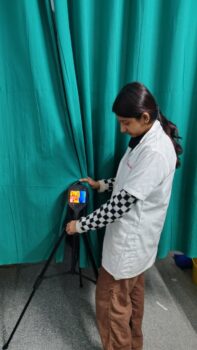
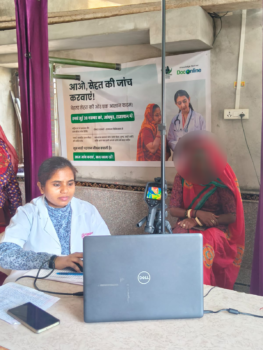
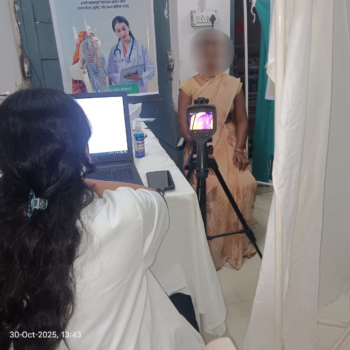
If women could not easily reach screening, the foundation decided, screening would have to reach them. Through its AI Based Breast Cancer Screening Camps, the programme set up camps inside communities, using AI-powered thermal imaging, a contactless, non-invasive and radiation-free way to assess breast health risk.
The technology was chosen not only for what it can detect, but because it spares a woman any physical contact. Held close to home, such a screening asks far less of a woman who is already hesitant, and she does not have to choose between her health and a day’s work at home. The camps did not diagnose. They identified who needed further evaluation, and guided each woman towards it.
More than a scan
Each camp was designed as a conversation as much as a scan. Every woman left knowing more than when she arrived: about risk factors, early detection, self breast examination and why follow-up matters. Blood pressure and BMI checks were part of every visit, a reminder that her whole health counts.
Not walking the path alone
The programme sought to help women act early, before symptoms progressed, and to see that care through to treatment where needed. Women who needed further evaluation were connected with government doctors and Community Health Centres for consultation and follow-up, with telemedicine consultations and referrals for ultrasound and mammography. Where screening indicated high risk, the project also facilitated a confirmatory mammography. Digital reports, health records and follow-up tracking helped the team keep sight of each woman’s journey.
A report with no pathway is only half a service. No woman, the foundation believed, should have to find her way through the healthcare system alone, or give up halfway for want of guidance.
What 1,044 women show
During FY 2025–26, the initiative conducted 29 AI-enabled screening camps across Bihar, Uttar Pradesh, Rajasthan and Maharashtra, covering Gaya, Varanasi, Jodhpur, Mumbai, Navi Mumbai and Solapur district. A total of 1,044 women were screened.
Thirteen women were identified as high-risk and referred for further diagnostic evaluation. Based on screening observations and clinical assessments, they were advised to undergo repeat thermal imaging or short-term re-screening, as appropriate.
By bringing AI-enabled pre-screening closer to communities, the programme helped identify women requiring further investigation, potentially reducing the need for unnecessary mammography visits. This not only improved the accessibility of initial screening but also helped spare women the discomfort associated with mammography unless further diagnostic evaluation was warranted.
Beyond October
October reminds the country to talk about breast cancer. The harder work is the other eleven months: making sure that conversation becomes a screening for a woman like Rekha, who never knew she could be checked early, and a woman like Meena, who has lived with her worry since losing her mother.
The real measure of this initiative lies in each woman who now knows what to look for, whom to see next, and that her health is worth her time.
Whispering Wishes Foundation’s conviction is a simple one. Every woman should have the opportunity to prioritise her health, access appropriate screening and receive guidance on the care she needs, regardless of where she lives or what stands in her way.