
India’s responsible business landscape is undergoing a significant transformation. The conversation is moving beyond what companies do and how much they spend towards a more fundamental question: What difference does responsible business actually make?
This question was particularly relevant at the 13th National CSR & ESG Summit and Awards 2026, organised by CSR Times on 4 August 2026 at Le Méridien, New Delhi. Held around the theme “Role of Responsible Businesses for Inclusive Bharat,” the Summit brought together more than 500 delegates, while over 2,500 participants joined through live streaming.
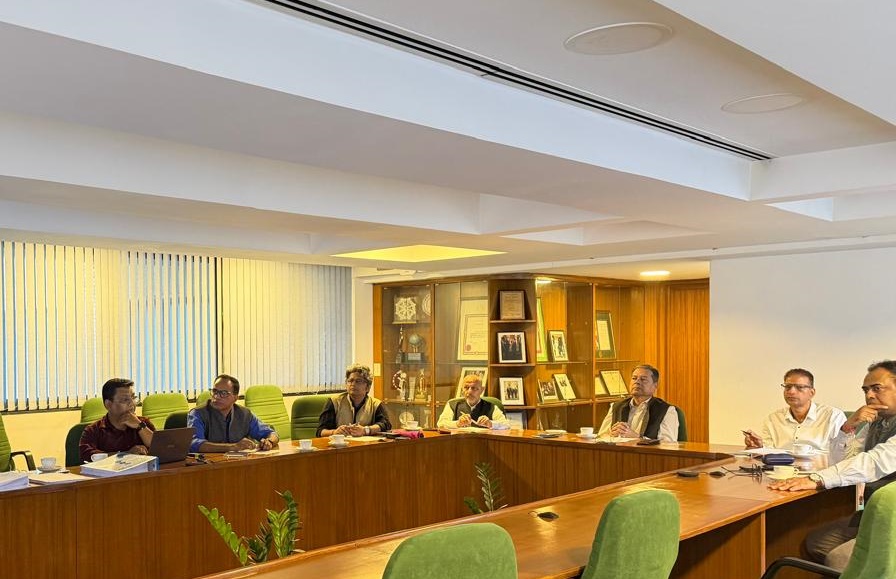
As a member of the Jury for the CSR Times and Bharat ESG & Sustainability Awards 2026, chaired by Dr. Bhaskar Chatterjee, Former Director General and CEO, Indian Institute of Corporate Affairs, I had the opportunity to review a diverse range of CSR and responsible-business initiatives. The Jury also comprised Air Marshal (Retd.) Vijay Rana, Chief Advisor, Himalaya Unnati Mission; Dr. Amit Kumar Thakur, Associate Director & Head CSR, TERI; Prof. Sanjoy Roy, Dean, Faculty of Social Sciences, University of Delhi; and myself, Dr. K.K. Upadhyay, Professor and Chairperson, Centre for Sustainability & CSR, BIMTECH.
The evaluation process reinforced an important principle: recognition should not be based simply on the scale of an initiative, the size of the CSR budget or the number of beneficiaries. It must consider the quality and durability of the change created.
The Jury’s evaluation therefore placed emphasis on measurable social impact, innovation, sustainability, scalability and governance.
For me, this distinction can be expressed through four simple words: Activity → Output → Outcome → Impact.
A training programme is an activity. The number of people trained is an output. Improved skills and employment may represent an outcome. But increased household income, greater economic security and sustained improvement in quality of life represent impact.
This is the transition that responsible business must increasingly make from counting activities to understanding change.
The Awards demonstrated that this transition is already taking place. Initiatives from organisations such as Bisleri International, Reliance Industries, Maruti Suzuki India, India Yamaha Motor, PepsiCo India, Hindustan Coca-Cola Beverages, Bajaj Electricals Foundation and DLF Foundation, among others, were recognised for their contributions to social and sustainable development.
The introduction of the CSR Times Platinum Award for Best CSR Project 2026, presented to NTPC Mouda Super Thermal Power Station for its integrated rural infrastructure development project, was particularly significant. The project was recognised for its innovation, scalability, sustainability and transformative contribution to community development precisely the dimensions that distinguish an intervention from a sustainable model of development.
The Summit also reinforced the broader evolution from CSR towards ESG and responsible business. Shri Gajendra Singh Shekhawat, Hon’ble Union Minister for Culture & Tourism, described CSR and ESG as instruments of nation-building and observed that ESG represents a step ahead of CSR by aligning Indian businesses with global benchmarks while encouraging value creation beyond economic returns.
Similarly, Dr. Vibha Dhawan, Director General, TERI, reminded us that protecting biodiversity and restoring ecosystems must remain at the heart of responsible business and sustainable development.
From a jury perspective, I believe the next chapter of India’s responsible business journey must focus on impact, evidence, community ownership and long-term sustainability. The most meaningful initiatives are not necessarily the largest. They are those that understand the problem deeply, involve communities, demonstrate measurable outcomes and create change that can endure beyond the project period.
Awards are valuable when they do more than celebrate success. They should set benchmarks, encourage learning and inspire replication of what works.
Ultimately, responsible business is not about asking only, “What did we do?” It is about asking:
“What changed because we did it—and will that change last?”
That, in my view, is the journey from activities to impact, and the true measure of responsible business in India.