
India’s ambitious used oil EPR targets cannot be achieved by recycling plants alone. The real transformation must begin with the people who collect used oil and CSR could provide the missing catalyst.
What happens to the oil after it is drained from a car engine?
- For the vehicle owner, the story usually ends there.
- For the mechanic, it is simply used oil that needs to be removed from the workshop.
But for India’s circular economy, that is where the story actually begins.
Every day, thousands of automobile workshops, garages, industrial units, factories, transport operators and machinery owners generate used lubricating oil. Once it leaves the engine or machine, it enters a complex network of collectors, aggregators, transporters and recyclers. Some of that oil ultimately reaches authorized recycling facilities, where valuable hydrocarbon resources can be recovered and converted into re-refined base oil. Some of it, however, travels through informal channels where its final destination is difficult to establish. It may be sold, mixed, diverted or used as an alternative fuel. Once it disappears from the traceable supply chain, nobody can say with certainty what happens to it.
This is more than a waste-management problem. It is an EPR problem, an air-pollution problem, a livelihood problem and a resource-security problem—all rolled into one.
And hidden within this challenge is an opportunity for India’s corporate sector: CSR can help transform the country’s fragmented used oil collection network into a skilled, formal and digitally traceable green workforce. That transformation could become one of the most practical ways for companies to create measurable environmental and social impact while contributing to India’s circular economy. The EPR challenge starts before the recycling plant. India’s Used Oil EPR framework came into effect in April 2024, fundamentally changing the way the industry looks at used oil. Producers are now required to fulfil progressively increasing recycling obligations. The targets began at 5% and are scheduled to rise over time, eventually reaching 50% from 2030–31 onwards.
The policy direction is clear: more used oil must be recycled.
But there is a simple question that sits underneath the entire EPR system: Where will the used oil required for recycling come from? The answer is collection.
India’s earlier assessments have indicated the scale of the challenge. A NITI Aayog assessment on the circular economy in used oil estimated annual used oil generation at around 1.4 million tons, with recycling levels below 20%. If only around 15–20% is currently being collected and channelized for formal recycling, that would represent approximately 210,000–280,000 tons from a 1.4-million-tonne annual generation base. In other words, more than 1 million tons could potentially remain outside the formal recycling pathway. These figures should be seen as an indication of the scale of the collection challenge rather than a precise current national measurement, particularly as India’s formal EPR reporting ecosystem is still developing.
But the underlying mathematics is difficult to dispute.
- If EPR targets Increase, Recycling must increase.
- If recycling must Increase, Feedstock must increase.
- And if feedstock must Increase, Collection must increase.
The recycling plant is only the last link. The first link is the collector – the person nobody talks about !
Let’s consider a typical automobile workshop. The workshop may generate several hundred litres of used oil over a period of time. It is not practical for a large recycling company to send a truck every time a small quantity becomes available. A local collector solves that problem. The collector visits several workshops, gathers relatively small quantities and aggregates them into commercially viable volumes. This process happens across cities, towns and industrial clusters throughout India. It is an enormous logistical network—but much of it remains invisible. The collector rarely appears in corporate sustainability reports. There are few conferences dedicated to the collector. Yet the collector may have first access to the used oil. That makes the collector one of the most strategically important people in the entire recycling chain. Without the collector, the recycler may not get the feedstock. Without the feedstock, the producer cannot effectively fulfil its EPR obligation. And without recycling, the resource remains lost.
The paradox is striking: The person closest to the waste is often the person furthest from the formal circular economy.
The informal sector is not the enemy. The instinctive response to informality is often to try to eliminate it. But that may not be the most effective solution. India’s informal collection network already exists. It has relationships, local knowledge, mobility and market understanding.
The Better Question may be: How can this existing workforce be upgraded and integrated into the formal circular economy?
A collector who is trained in safe handling, provided with appropriate equipment, connected to authorized recyclers and supported with digital tools can become a completely different kind of economic participant.
- Instead of an informal intermediary, that person becomes a trained collection professional.
- Instead of an untraceable transaction, there can be a digital record.
- Instead of uncertain disposal, there can be a documented route to an authorized recycler.
- Instead of a vulnerable livelihood, there can be a pathway towards a more stable green occupation.
This is where CSR can make a powerful intervention.
|
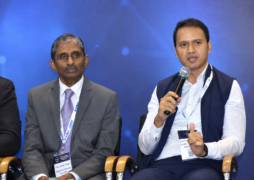 EOSA participated as a panelist at the ICIS Conference, 2026 to shade lights on the growing importance of CSR contributions by OEMS & OMCs.
CSR can build the missing first mile
For decades, CSR in India has supported education, healthcare, sanitation, rural development, skill development and environmental protection. Used oil collection offers the possibility of combining several of these objectives into a single programme.
Imagine a CSR project that identifies used oil collectors in a district or industrial cluster and provides them with:
- Technical training in safe used oil collection
- Occupational health and safety training
- Personal protective equipment
- Suitable collection and storage containers
- Training in spill prevention and emergency response
- Knowledge of hazardous-waste requirements
- Assistance with formal registration and documentation
- Digital record-keeping tools
- GPS-enabled transportation systems
- Financial and digital-payment literacy
- Linkages with authorized recyclers
- Awareness of EPR requirements
The result would not simply be more used oil collected. It would be a formalization programme for an emerging green workforce. That is where the environmental and social dimensions of CSR begin to intersect. From informal worker to green entrepreneur. The social story behind used oil recycling deserves as much attention as the environmental story. Many collectors depend on informal transactions and fluctuating commodity prices. Their work may involve direct contact with used oil without adequate protective equipment or awareness of safe handling practices.
- Formalization can change the equation.
- Training can improve safety.
- Better equipment can reduce exposure.
- Digital payments can improve transaction transparency.
- Business training can strengthen financial management.
- Formal linkages with recyclers can improve market access.
- Digital records can create a history of business activity.
Over time, some collectors could develop into small collection enterprises, creating additional employment within their communities. This is an important dimension of India’s green transition. The circular economy will not be built only by large recycling plants equipped with advanced technology. It will also be built by thousands of people involved in collection, aggregation, logistics, sorting, recycling and resource recovery.
These are green jobs. Used oil collection can become part of that emerging employment landscape. The air pollution connection. There is another reason why this issue deserves attention. When used oil does not reach an authorized recycling channel, it does not simply vanish. It can enter informal markets and be diverted to inappropriate end uses, including uncontrolled burning as an alternative fuel.
Used oil is fundamentally different from conventional fuels. During its use, it can accumulate contaminants and other impurities. Burning it without appropriate controls can therefore create environmental and occupational risks. Yet pollution generated through such informal practices can be difficult to identify. It may not appear in air-quality discussions as “used oil burning.” Instead, it can become part of a broader and largely unidentified industrial or combustion emission profile. This creates a hidden environmental problem.
- A used oil litre that is collected and responsibly recycled can become a resource.
- The same litre, if diverted and burned improperly, can become a pollution source.
The difference is created at the collection stage. This makes responsible collection an important, though often overlooked, component of pollution prevention. Making the invisible supply chain visible. Technology could become the next major catalyst.
The Traditional Collection Ecosystem has relied heavily on personal relationships, physical records and informal transactions. That model may have worked when volumes were smaller and regulatory requirements were limited. It becomes much more difficult when the country is trying to build a nationwide EPR ecosystem.
Traceability will become increasingly important. A digitally enabled collection system could record:
- Who generated the oil?
- Who collected it?
- How much was collected?
- When was it collected?
- Which vehicle transported it?
- Where was it delivered?
Which authorized recycler received it?
The combination of digital records, QR or barcode-based documentation, GPS tracking, digital weighment and electronic transactions can create an auditable chain. Technology therefore does more than improve compliance:
- It creates trust.
- For Producers, it can improve confidence in the recycling chain.
- For Recyclers, it can improve feedstock visibility.
- For Regulators, it can improve monitoring.
- For Collectors, it can create a formal digital identity within the value chain.
- And for CSR sponsors, it can make impact measurable.
What does Impact look like? This is perhaps the most attractive aspect of used oil collection as a CSR intervention. Companies increasingly want to demonstrate that their sustainability investments have measurable outcomes. A used oil CSR programme can potentially report metrics such as:
- 10,000+ collectors mapped
- 1,000 collectors trained
- 500 collectors formally onboarded
- 50,000 tons of used oil channelized
- X tons diverted from improper disposal
- X green jobs supported
- X collection points established
- X consignments digitally tracked
The exact targets would depend on the geography and programme design. But the principle is important.
Instead of reporting simply that “CSR funds were spent on environmental awareness”, a company can demonstrate tangible outcomes in tons, people, livelihoods and traceability. That is a much stronger ESG story. A three-dimensional ESG opportunity Used oil recycling fits naturally into all three pillars of ESG.
Environmental impact
Responsible collection and recycling can help:
- Increase resource recovery
- Reduce improper disposal
- Reduce the risk of uncontrolled burning
- Support re-refining
- Reduce dependence on virgin resources
- Strengthen circular material flows
Social impact
Collector-focused programmes can:
- Create green employment
- Improve worker safety
- Upgrade skills
- Support more stable livelihoods
- Promote financial inclusion
- Bring informal workers into the formal economy
Governance impact
Digital and formal systems can:
- Improve traceability
- Strengthen documentation
- Reduce leakages
- Support EPR compliance
- Improve accountability
- Build confidence among stakeholders
Few CSR projects can offer such a direct connection between environmental improvement, social inclusion and governance. The real prize is re-refining the resource. Collection alone is not the end goal. The larger objective is to ensure that the collected material reaches authorized recycling and re-refining facilities. Used oil contains valuable hydrocarbon resources that can be recovered through appropriate processes to produce re-refined base oil.
That creates a circular loop:
Lubricant → Use → Used Oil → Collection → Recycling/Re-refining → Re-refined Base Oil → Lubricant Manufacturing
The significance goes beyond waste management. India imports substantial quantities of petroleum resources and remains exposed to international commodity and crude-oil markets. Every ton of material that can be responsibly recovered and returned to productive use reduces pressure on virgin resources.
- For India’s recycling industry, this means a larger domestic feedstock base.
- For lubricant manufacturers, it can mean increased availability of secondary raw material.
- For producers, it strengthens the EPR ecosystem.
- For the country, it supports resource security and the broader Atmanirbhar Bharat ambition.
The objective should therefore not be merely to “dispose” of used oil. It should be to keep its value within the economy for as long as possible.
The business case for corporate India
Why should a corporate care about used oil if it is not itself a recycler?
Because used oil touches a surprisingly wide range of industries.
Automobile manufacturers and dealerships generate it. Fleet operators generate it. Manufacturing companies generate it. Power plants and industrial facilities generate it. Engineering companies generate it. Mining and infrastructure operations generate it. Lubricant producers have EPR obligations connected to it. For many companies, used oil is therefore already part of their operational ecosystem. A CSR programme can turn that existing connection into an opportunity.
A company could choose one city, district, industrial cluster or supply-chain geography and build a structured used oil collection programme around it.
- The project could begin with mapping. Then training. Then safety. Then formalization. Then digitalization. Then authorized recycling.
The result would be a closed-loop regional model that can subsequently be replicated elsewhere. That makes the project scalable.
EOSA’s role: connecting the missing links
This is the opportunity that the Enviro Oil Savers Association (EOSA) seeks to develop with corporate partners. EOSA’s experience across the used oil ecosystem provides a platform to connect collectors, recyclers, producers and other stakeholders and to support the transition towards a more formal, transparent and responsible collection network.
The focus is not simply on collecting more oil. It is on building the conditions that allow more oil to be responsibly collected, digitally tracked and channelized to authorized recycling facilities.
A CSR partnership with EOSA can therefore be designed around the specific needs of a corporate, its operating geography or its community-development priorities.
- For one company, the priority may be collector skill development.
- For another, it may be safety equipment.
- For another, digital traceability.
- For another, building a collection network around its dealerships, workshops or industrial ecosystem.
The common objective is to strengthen the first mile of India’s used oil EPR journey.
- A CSR project that can leave a lasting footprint. There is an important distinction between funding a project and building an ecosystem.
- A one-day awareness programme may create awareness.
- A long-term collector development programme can create a system.
- A donation of safety equipment provides short-term support.
- Training thousands of collectors in safe handling can create a lasting behavioral change.
- Collecting used oil for a few months creates temporary impact.
- Building a digital collection network connected to authorized recyclers can create permanent infrastructure.
|
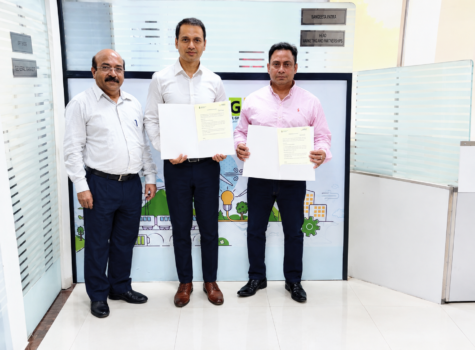 EOSA and Skill Council for Green Jobs (SCGJ) signed MoU to collaborate on training and development of human resource in the used oil recycling sector.
This is the kind of CSR intervention that can continue delivering value long after the initial funding cycle. And that is perhaps the strongest argument for responsible used oil collection as a CSR opportunity.
The road to 2030 begins with the first litre
India’s used oil EPR targets are becoming progressively more ambitious.
The destination is clear: significantly higher recycling and, ultimately, a 50% EPR target from 2030–31 onwards.
But the journey will not be completed by policy alone.
- It will require people.
- It will require collectors who are trained and equipped.
- It will require recyclers who receive legitimate feedstock.
- It will require producers that support responsible channelization.
- It will require technology that provides traceability.
- It will require regulators and industry working together.
- And it will require corporates willing to invest in the ecosystem through CSR and ESG initiatives.
The opportunity is therefore much bigger than used oil. It is about people, resources, pollution, employment and India’s transition to a circular economy. A small stream with a national impact Go back to that automobile workshop. The mechanic has drained the used oil. A collector arrives. That moment may appear insignificant. But the Decision Made at that point can determine whether the oil becomes a valuable secondary resource or an environmental liability. Multiply that decision across thousands of workshops and industrial establishments, and the scale becomes national. This is why the used oil collector deserves to move from the margins of India’s sustainability conversation to its Centre.
The country already has the people, the recycling technology and the policy framework. What it needs is a stronger bridge between them. And CSR can help build that bridge. By investing in training, safety, formalization, digitalization and responsible collection, corporate India can help create green jobs, improve livelihoods, strengthen EPR implementation, improve traceability, prevent harmful disposal and recover valuable resources.
EOSA believes that the future of used oil recycling lies in making the entire chain stronger—from the person who collects the first litre to the facility that converts it back into a useful industrial resource. Because circularity does not begin at the recycling plant. It begins where the waste is generated. And it begins with the person who makes sure that the waste does not disappear.
For corporates looking for a CSR initiative that combines measurable environmental impact with livelihood creation, green jobs, resource conservation and ESG value, responsible used oil collection presents an opportunity worth exploring. The Next Big Circular-Economy Success Story may not be found in a new recycling technology. It may begin with something much simpler: training, empowering and bringing the used oil collector into the mainstream.
