Beyond the Vaccine: Why the Fight Against Childhood Pneumonia Must Begin in the Community

You're here Home » Slider

Tanvi Chauhan and Ishaprasad Bhagwat[1]

[1] Tanvi Chauhan leads the Health and Nutrition Portfolio at Bal Raksha Bharat. Ishaprasad Bhagwat is the Technical Advisor
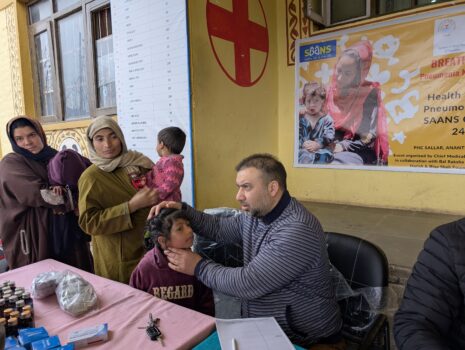
Children being screened

On Pneumonia Day, November 12, it is sobering to remember that Pneumonia continues to be one of the leading causes of infant and child mortality in India.

It need not be so, for the nation has a two-fold strategy to address this.

On one hand, there is the Pneumococcal Conjugate Vaccine (PCV), which was introduced in a phased manner since 2017, and, since 2021, is now part of the Universal Immunization Programme for children across India.

It is well known that vaccines are a cornerstone of public health, preventing infectious diseases, reducing illness and deaths, protecting vulnerable populations, and strengthening community-wide immunity.

But in case of Pneumonia, it is our well-reasoned opinion that the vaccine alone cannot eliminate the challenge. A simultaneous community based approach using the SAANS (Social Awareness and Action to Neutralise Pneumonia Successfully) Guidelines, which was launched in 2019, is more important. With feet on the ground, and mud on their boots, it is the demanding work of our Frontline Workers implementing the SAANS Guidelines that will result in India realizing its goal of reducing childhood pneumonia deaths to less than 3 per 1000.

Yes, achieving more than 90% coverage with PCV has been a monumental public health milestone. But the limitations of this need to be understood:

  • Pneumonia is caused by multiple pathogens. PCV protects against S Pneumoniae, but not against viruses such as the Respiratory Syncytial Virus;
  • Closing the “Last Mile” and District Disparities. An aggregate national coverage of over 90% often masks state and district-level disparities. The SAANS campaign utilizes frontline health workers to actively screen vulnerable, remote, or marginalized populations where vaccine coverage may still lag and where risk factors for pneumonia like malnutrition are high;
  • Directing Care-Seeking Behaviour. A major bottleneck in reducing child mortality is delayed healthcare-seeking by caregivers due to a lack of awareness. The SAANS 360-degree communication campaign specifically educates parents on identifying danger signs (such as chest indrawing and fast breathing), so they seek medical help before the condition becomes fatal, regardless of the child’s vaccination status; and
  • SAANS Guidelines are comprehensive, working with families and communities with a Prevent, Protect and Treat Approach. Besides generating awareness at the community level, it is designed to strengthen the entire primary health care chain, from the frontline workers to the District Hospitals.
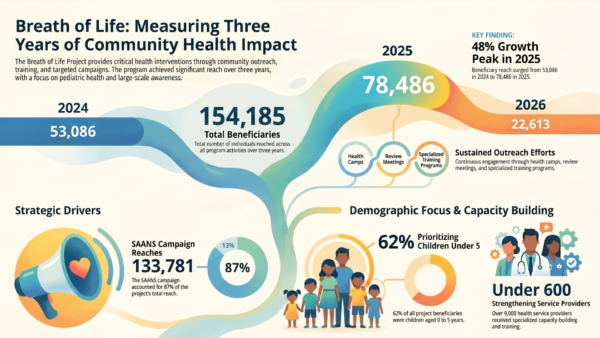
TREND REACH BOL 2024-2026
infograph

The question arises whether the guidelines are easily implemented, or do they add to the existing workload of the frontline health workers. In fact, they are designed in such a manner that the interventions merge into the ongoing work.

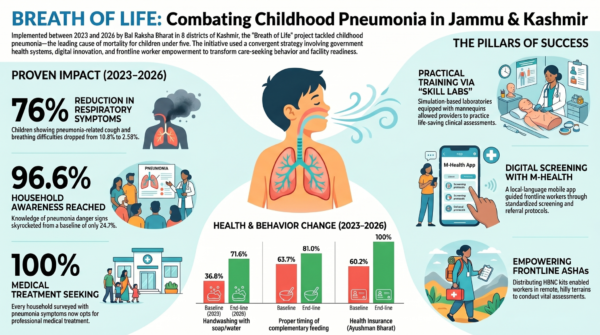
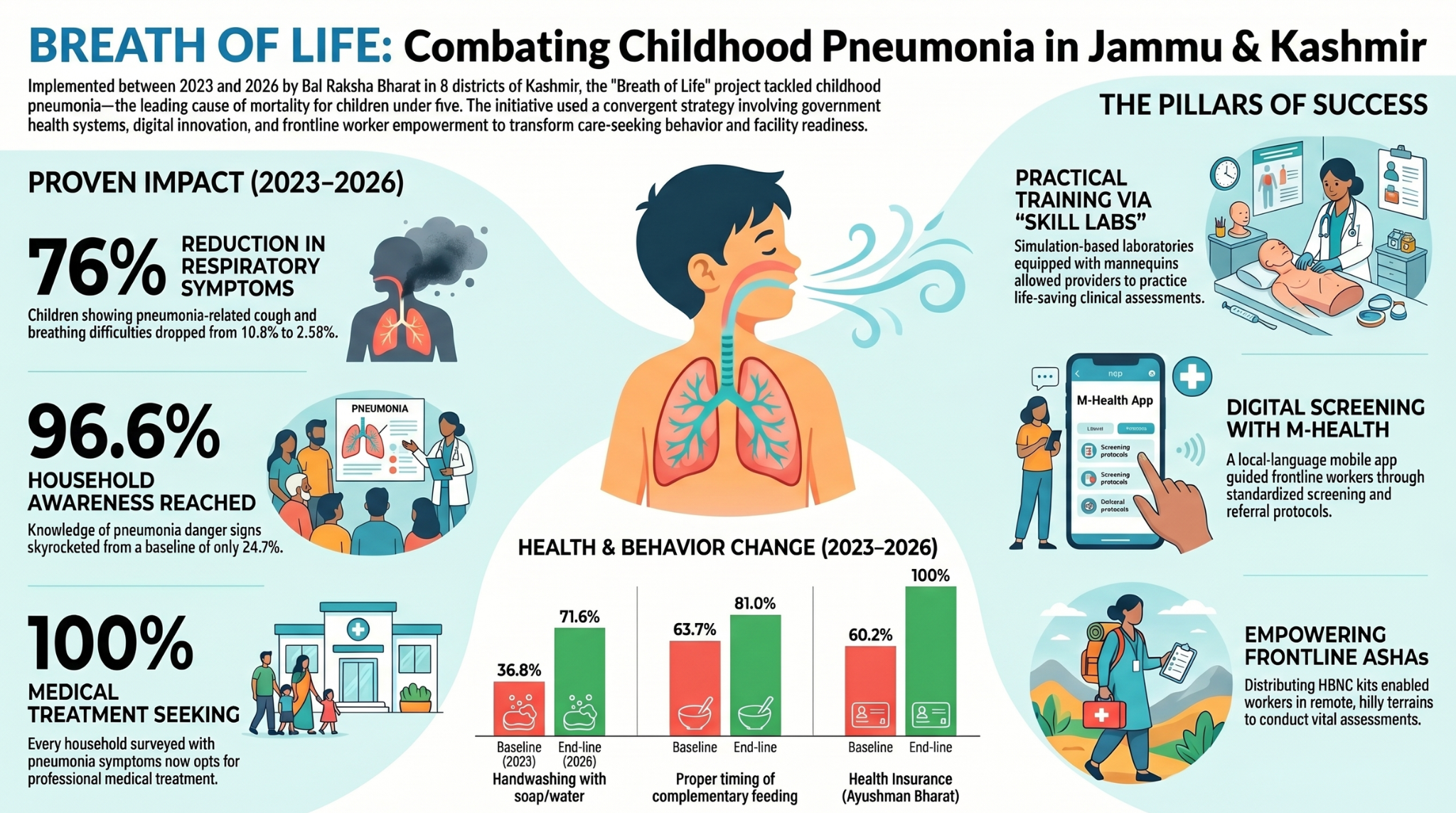
We speak from experience of implementing the SAANS Guidelines across eight districts of Jammu and Kashmir. Project Breath of Life was implemented in partnership with the Directorate of Health Services. Over a three year period, there was a 76% reduction in respiratory symptoms, 96% of the families and communities were aware of the danger signs, and 100% of the families are now seeking immediate professional medical assistance the moment they suspect a danger sign in their children.

At the outset, the project team realised that:

  1. The epidemiology of Pneumonia is well known, that is, the Government authorities knew which districts and blocks are worse affected;
  2. The seasonal distribution is recognized, and the SAANS Guidelines advocate awareness building during the months of October to February; and
  3. The PREVENT and PROTECT and Interventions are what the Frontline Health Workers are already aware of and are well trained. They are messages around breastfeeding, complementary feeding, Vitamin A supplementation, and about personal and environmental hygiene.

The project team then built three important interventions on this base:

  1. A Skills Lab was established, which provided annual practice to frontline health workers on life saving clinical assessments;
  2. A Digital App in the local language, for monitoring, and for guiding the frontline workers through standardized messaging, screening, and referral protocols; and
  3. A Home Based Newborn Care Kit, which enabled the frontline workers to make vital assessments in remote, hilly areas.

The District Health Authorities played a significant role by ensuring that all health facilities were well stocked with antibiotics and oxygen, needed in case a child with pneumonia was ever referred there.

Our experience is that the SAANS Guidelines are easily replicable, scalable, and sustainable. With the addition of the three interventions the project added to the existing guidelines, the Guidelines provide a template for elimination of Pneumonia as a challenge for newborn health across all the affected regions of our nation.

Our key message is that vaccination is indispensable, but protecting children from pneumonia requires much more than a vaccine. The availability and coverage of the vaccine should not overshadow the continuing importance of community-based prevention, early recognition of symptoms, timely care-seeking, appropriate nutrition, and reducing children’s exposure to risk factors through the timely interventions of the SAANS Guidelines.

Share:

Disclaimer: The opinions expressed in this section and articles contributed are those of the respective authors, who have submitted it as their original work. They do not reflect the opinions or views of CSR Times, or its employees, management and group publications. The accuracy and reliability of information presented has not been verified by CSR Times. CSR Times will not be held responsible in any way for the content of this article.

I/we Wish To...

Sustainability breeds its constant ongoing need for regularity, credibility, and a strong, collaborative ecosystem. Since 2014, CSR Times has been at the forefront in curating powerful stories, spotlighting transformative initiatives, and amplifying the voices of diverse organizations and individuals who are shaping India’s responsible growth narrative. Through its magazines and flagship events, CSR Times has built a trusted platform that bridges corporate vision with grassroots impact. And now the CSR TIMES Newsletter emerges as a timely and purposeful initiative designed to inform, inspire, and connect stakeholders across the corporate social responsibility ecosystem, designed to meet a different and more immediate need. 

The CSR TIMES Newsletter is your front-row pass to our magazine’s most loved moments: audience-favorite clips, our most popular features, powerful quotes, and the most important stories crafted for a fast-paced digital experience. Designed for today’s four-screen world, it delivers high-impact content straight to your inbox, allowing you to stay updated anytime, anywhere, and absolutely free of cost, so you never miss the conversations shaping the future of sustainability and responsible leadership. Ultimately, CSR TIMES Newsletter is about building an informed and inspired community of leaders who are committed to driving positive social and environmental change.

Subscribe to
CSR TIMES Newsletter

It's Free. And, you can unsubscribe anytime.