Blogs

You're here Home » Blogs » Page 5

Government and Corporate Social Responsibility in Bharat: A LEGACY OF GENEROSITY AND GROWTH

In ancient times, India or Bharat’s affluence as Golden Bird, was not merely a reflection of its material wealth but also of its rich cultural and spiritual heritage, which championed the values of generosity and compassion. A Flourishing Epicentre of Trade India’s economic prowess in the 1700s can be attributed to its diverse and advanced industries. The wealth generated from trade was not confined to the elite but permeated various strata of society, fostering an environment where knowledge, culture, and the arts flourished. A Tradition of Generosity Despite its material wealth, Bharat’s legacy lies in its tradition of generosity and social responsibility, deeply rooted in its spiritual and religious teachings. India’s major religions—Hinduism, Buddhism, Jainism, and later, Sikhism and Islam—all

Read More »

A HOLISTIC AND PARTICIPATORY ‘COMMUNITY SERVICE’

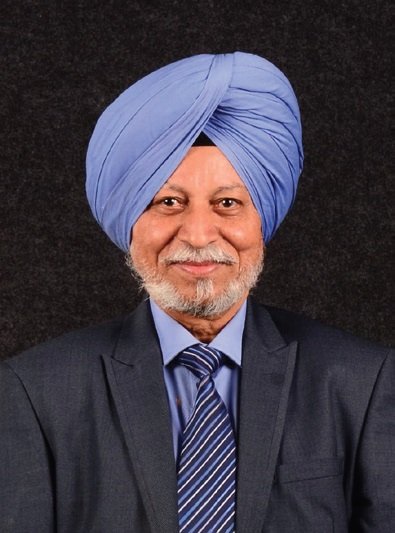
Srinivasan Services Trust (SST), the social services arm of TVS Motor Company and Sundaram-Clayton Limited, started working in villages in the mid-1990s. A precursor to Corporate Social Responsibility (CSR). Starting with a model of philanthropy, it matured into a model centred on community participation in all its projects. Swaran Singh, IAS (retired) CEO SST, explains this to M. Rajendran, Consulting Editor of CSR Times, ideas, projects, and plans of Srinivasan Services Trust in 2,500 villages in the country and the way they operate through a holistic and participatory approach to village development, working closely with the community and the government. What was the thinking SST behind a focused community service model? Development is a continuous process, and the community’s needs

Read More »

DIRECTIVE PRINCIPLES OF STATE POLICY: CSR IS THE KEY TO IMPLEMENTING IT

The DPSP is a critical catalyst for implementing CSR activities. The Constitution framers ensured they were incorporated in the most important document of India as a guiding light for effective, equitable governance. Undoubtedly, they remain the guiding principles of any government responsible for governing the country. – M.Rajendran The Indian Constitution categorically states that Directive Principles of State Policy are non-justiciable. However, the idea and the thought behind it are ‘fundamental in the governance of the country’, and the state must apply these principles in making laws. These lay down that the state shall strive to promote the welfare of people by securing and protecting, as effectively as it may, a social order in which justice-social, economic and political shall

Read More »

What is CSR?

Corporate Social Responsibility (CSR) has undergone remarkable changes over the years from merely dispensing cash through charity to organisations or NGOs engaged in social work to integrating CSR as a strategic business management concept.  We have seen the business sector generating wealth and value for the shareholders in the last 70 years, but simultaneously we also have the problems of poverty, unemployment, illiteracy, malnutrition etc. facing the nation. The corporate growth is sometimes seen as widening the gap between ‘India’ and ‘Bharat’ through its income-skewing capability. This gap needs to be bridged. While the Government undertakes extensive developmental initiatives through a series of sectoral programmes, the business sector also needs to take the responsibility of exhibiting socially responsible business practices

Read More »

The Promise of AI for Circular Economy in India

India, a land of contrasts, grapples with immense potential and pressing challenges. Waste management becomes a critical concern as our cities swell and our population burgeons. The convergence of AI and the Circular Economy in India presents a unique opportunity to address pressing environmental challenges while fostering economic growth. Embracing this synergy can pave the way for a future where prosperity is not at odds with sustainability but rather intricately intertwined, leading to a more resilient and thriving society. The traditional linear consumption model has led to resource depletion and environmental degradation. However, the Circular Economy paradigm offers a viable alternative, emphasising waste reduction, material reuse, and ecosystem regeneration. AI emerges as a silent force driving this transition, with its

Read More »

CSR is not a charity but a duty and responsibility towards society

Corporate Social Responsibility (CSR) guidelines define its philosophy wherein organizations serve the interest of society by taking responsibility for the impact of their activities on customers, employees, shareholders, communities and the environment in all aspects of their operations. Under these guidelines, the long-term CSR Plan is to match with the long-term Business Plan of the Organization. The activities under CSR are to be selected in such a manner that the benefits reach the smallest unit, i.e., village, panchayat, block or district, depending upon the operations and resource capability of the company. Corporate Social Responsibility (CSR) is not a charity but a duty & responsibility towards society inspired by the highest values of seeking to return to society a part of

Read More »

Quality of education foundation for sustainable living

By 2030, the United Nations hopes that all countries should ensure all learners acquire the knowledge and skills needed to promote sustainable development, including, among others, through education for sustainable development and sustainable lifestyles, human rights, gender equality, promotion of a culture of peace and non-violence, global citizenship and appreciation of cultural diversity and culture’s contribution to sustainable development. Obtaining a quality education is the foundation for improving people’s lives and sustainable development. Major progress has been made towards increasing access to education at all levels and increasing enrolment rates in schools, particularly for women and girls. Basic literacy skills have improved tremendously, yet bolder efforts are needed to make even greater strides in achieving universal education goals. For example,

Read More »

Invest In Women: Accelerate Progress

United Nations theme for Women’s International Day 2024A wake-up call to help Social and economic growth Women have fought with men as equals in health, communication, education, and administration, as caregivers, innovators, community organizers, and some of the most exemplary and effective national leaders in combating calamities and catastrophes. March 08, each year, is celebrated as International Women’s Day. All of us would agree that the efforts of women should be celebrated every day, but we fail to do that, even at home. Hence, this day is special for women and everyone to recognize their efforts and appreciate it. International days and weeks are occasions to educate the public on issues of concern, mobilize political will and resources to address

Read More »
CSR laws News in India

India’s lessons of sustainability for the world

The United Nations Environment Assembly (UNEA), at its Sixth Session held in Nairobi, Kenya, from 26 February – 1 March 2024, adopted on 1 March the resolution on sustainable lifestyles submitted by India. All participating Member States adopted the resolution on promoting sustainable lifestyles. The concept of LiFE, i.e. Lifestyle for Environment, was envisioned by India at the World Leaders’ Summit in Glasgow at COP26 when he called to rekindle a global pursuit to adopt environment-friendly lifestyles and practices. Mission LiFE was launched by Prime Minister Narendra Modi on 20 October 2022, in the presence of the UN Secretary-General António Guterres, at the Statue of Unity, Ekta Nagar, Gujarat. Mission LiFE aims to follow a three-pronged strategy for changing our collective

Read More »

Teaching sustainability to corporate

Understanding Sustainability is as simple as meeting the needs of the present without compromising the ability of future generations to meet theirs. So, if a company implements sustainable practices by reducing its consumption of limited resources or finds alternative resources with, for example, fewer environmental consequences, it understands the importance of Sustainability. Since the inception of the CSR provision in 2014, the CSR ecosystem has improved by improving the disclosures, simplifying the compliances, bringing in more objectivity and transparency, and entrusting more responsibility to the company’s board. These amendments inter-alia include mandatory registration of implementing agencies with the Ministry, treatment of unspent amount, impact assessment of CSR projects, modalities for creating and acquiring capital assets through CSR, etc. The Ministry

Read More »

Government and Corporate Social Responsibility in Bharat: A LEGACY OF GENEROSITY AND GROWTH

In ancient times, India or Bharat’s affluence as Golden Bird, was not merely a reflection of its material wealth but also of its rich cultural and spiritual heritage, which championed the values of generosity and compassion. A Flourishing Epicentre of Trade India’s economic prowess in the 1700s can be attributed to its diverse and advanced industries. The wealth generated from trade was not confined to the elite but permeated various strata of society, fostering an environment where knowledge, culture, and the arts flourished. A Tradition of Generosity Despite its material wealth, Bharat’s legacy lies in its tradition of generosity and social responsibility, deeply rooted in its spiritual and religious teachings. India’s major religions—Hinduism, Buddhism, Jainism, and later, Sikhism and Islam—all

Read More »

A HOLISTIC AND PARTICIPATORY ‘COMMUNITY SERVICE’

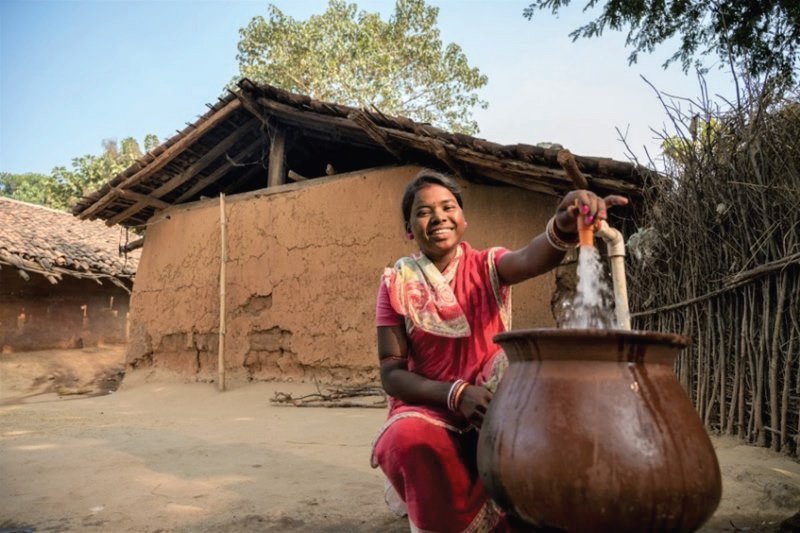
Srinivasan Services Trust (SST), the social services arm of TVS Motor Company and Sundaram-Clayton Limited, started working in villages in the mid-1990s. A precursor to Corporate Social Responsibility (CSR). Starting with a model of philanthropy, it matured into a model centred on community participation in all its projects. Swaran Singh, IAS (retired) CEO SST, explains this to M. Rajendran, Consulting Editor of CSR Times, ideas, projects, and plans of Srinivasan Services Trust in 2,500 villages in the country and the way they operate through a holistic and participatory approach to village development, working closely with the community and the government. What was the thinking SST behind a focused community service model? Development is a continuous process, and the community’s needs

Read More »

DIRECTIVE PRINCIPLES OF STATE POLICY: CSR IS THE KEY TO IMPLEMENTING IT

The DPSP is a critical catalyst for implementing CSR activities. The Constitution framers ensured they were incorporated in the most important document of India as a guiding light for effective, equitable governance. Undoubtedly, they remain the guiding principles of any government responsible for governing the country. – M.Rajendran The Indian Constitution categorically states that Directive Principles of State Policy are non-justiciable. However, the idea and the thought behind it are ‘fundamental in the governance of the country’, and the state must apply these principles in making laws. These lay down that the state shall strive to promote the welfare of people by securing and protecting, as effectively as it may, a social order in which justice-social, economic and political shall

Read More »

What is CSR?

Corporate Social Responsibility (CSR) has undergone remarkable changes over the years from merely dispensing cash through charity to organisations or NGOs engaged in social work to integrating CSR as a strategic business management concept.  We have seen the business sector generating wealth and value for the shareholders in the last 70 years, but simultaneously we also have the problems of poverty, unemployment, illiteracy, malnutrition etc. facing the nation. The corporate growth is sometimes seen as widening the gap between ‘India’ and ‘Bharat’ through its income-skewing capability. This gap needs to be bridged. While the Government undertakes extensive developmental initiatives through a series of sectoral programmes, the business sector also needs to take the responsibility of exhibiting socially responsible business practices

Read More »

The Promise of AI for Circular Economy in India

India, a land of contrasts, grapples with immense potential and pressing challenges. Waste management becomes a critical concern as our cities swell and our population burgeons. The convergence of AI and the Circular Economy in India presents a unique opportunity to address pressing environmental challenges while fostering economic growth. Embracing this synergy can pave the way for a future where prosperity is not at odds with sustainability but rather intricately intertwined, leading to a more resilient and thriving society. The traditional linear consumption model has led to resource depletion and environmental degradation. However, the Circular Economy paradigm offers a viable alternative, emphasising waste reduction, material reuse, and ecosystem regeneration. AI emerges as a silent force driving this transition, with its

Read More »

CSR is not a charity but a duty and responsibility towards society

Corporate Social Responsibility (CSR) guidelines define its philosophy wherein organizations serve the interest of society by taking responsibility for the impact of their activities on customers, employees, shareholders, communities and the environment in all aspects of their operations. Under these guidelines, the long-term CSR Plan is to match with the long-term Business Plan of the Organization. The activities under CSR are to be selected in such a manner that the benefits reach the smallest unit, i.e., village, panchayat, block or district, depending upon the operations and resource capability of the company. Corporate Social Responsibility (CSR) is not a charity but a duty & responsibility towards society inspired by the highest values of seeking to return to society a part of

Read More »

Quality of education foundation for sustainable living

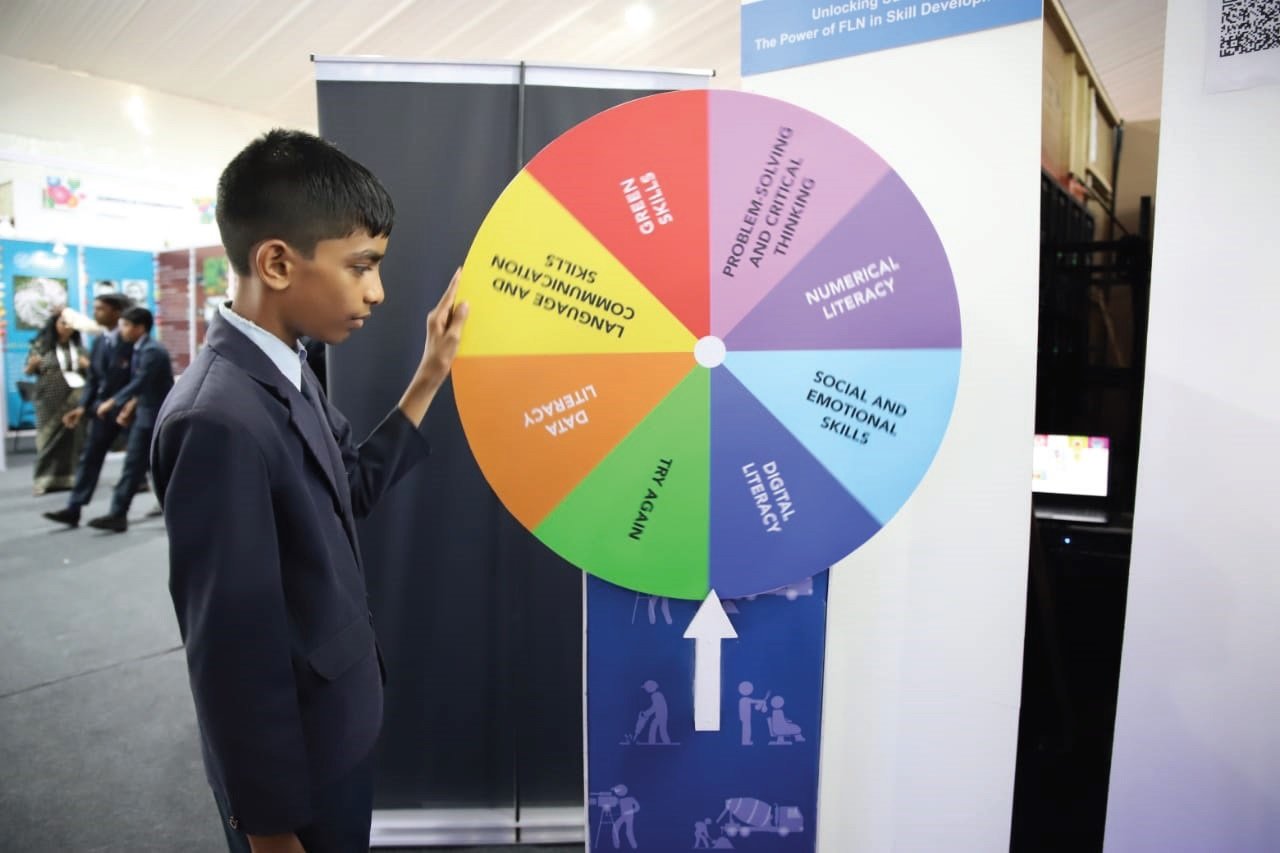
By 2030, the United Nations hopes that all countries should ensure all learners acquire the knowledge and skills needed to promote sustainable development, including, among others, through education for sustainable development and sustainable lifestyles, human rights, gender equality, promotion of a culture of peace and non-violence, global citizenship and appreciation of cultural diversity and culture’s contribution to sustainable development. Obtaining a quality education is the foundation for improving people’s lives and sustainable development. Major progress has been made towards increasing access to education at all levels and increasing enrolment rates in schools, particularly for women and girls. Basic literacy skills have improved tremendously, yet bolder efforts are needed to make even greater strides in achieving universal education goals. For example,

Read More »

Invest In Women: Accelerate Progress

United Nations theme for Women’s International Day 2024A wake-up call to help Social and economic growth Women have fought with men as equals in health, communication, education, and administration, as caregivers, innovators, community organizers, and some of the most exemplary and effective national leaders in combating calamities and catastrophes. March 08, each year, is celebrated as International Women’s Day. All of us would agree that the efforts of women should be celebrated every day, but we fail to do that, even at home. Hence, this day is special for women and everyone to recognize their efforts and appreciate it. International days and weeks are occasions to educate the public on issues of concern, mobilize political will and resources to address

Read More »
CSR laws News in India

India’s lessons of sustainability for the world

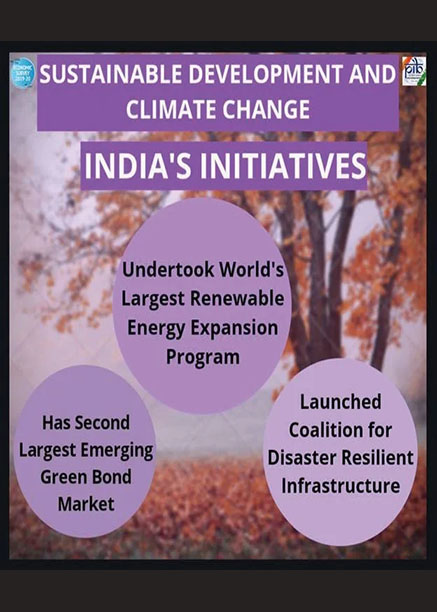
The United Nations Environment Assembly (UNEA), at its Sixth Session held in Nairobi, Kenya, from 26 February – 1 March 2024, adopted on 1 March the resolution on sustainable lifestyles submitted by India. All participating Member States adopted the resolution on promoting sustainable lifestyles. The concept of LiFE, i.e. Lifestyle for Environment, was envisioned by India at the World Leaders’ Summit in Glasgow at COP26 when he called to rekindle a global pursuit to adopt environment-friendly lifestyles and practices. Mission LiFE was launched by Prime Minister Narendra Modi on 20 October 2022, in the presence of the UN Secretary-General António Guterres, at the Statue of Unity, Ekta Nagar, Gujarat. Mission LiFE aims to follow a three-pronged strategy for changing our collective

Read More »

Teaching sustainability to corporate

Understanding Sustainability is as simple as meeting the needs of the present without compromising the ability of future generations to meet theirs. So, if a company implements sustainable practices by reducing its consumption of limited resources or finds alternative resources with, for example, fewer environmental consequences, it understands the importance of Sustainability. Since the inception of the CSR provision in 2014, the CSR ecosystem has improved by improving the disclosures, simplifying the compliances, bringing in more objectivity and transparency, and entrusting more responsibility to the company’s board. These amendments inter-alia include mandatory registration of implementing agencies with the Ministry, treatment of unspent amount, impact assessment of CSR projects, modalities for creating and acquiring capital assets through CSR, etc. The Ministry

Read More »

I/we Wish To...

Sustainability breeds its constant ongoing need for regularity, credibility, and a strong, collaborative ecosystem. Since 2014, CSR Times has been at the forefront in curating powerful stories, spotlighting transformative initiatives, and amplifying the voices of diverse organizations and individuals who are shaping India’s responsible growth narrative. Through its magazines and flagship events, CSR Times has built a trusted platform that bridges corporate vision with grassroots impact. And now the CSR TIMES Newsletter emerges as a timely and purposeful initiative designed to inform, inspire, and connect stakeholders across the corporate social responsibility ecosystem, designed to meet a different and more immediate need. 

The CSR TIMES Newsletter is your front-row pass to our magazine’s most loved moments: audience-favorite clips, our most popular features, powerful quotes, and the most important stories crafted for a fast-paced digital experience. Designed for today’s four-screen world, it delivers high-impact content straight to your inbox, allowing you to stay updated anytime, anywhere, and absolutely free of cost, so you never miss the conversations shaping the future of sustainability and responsible leadership. Ultimately, CSR TIMES Newsletter is about building an informed and inspired community of leaders who are committed to driving positive social and environmental change.

Subscribe to
CSR TIMES Newsletter

It's Free. And, you can unsubscribe anytime.